2013 MINI Paceman N16 Burned Exhaust Valve Repair and Restoration
Quick Summary
This is the repair follow-up to the initial diagnosis of this 2013 MINI Cooper Paceman Base, where a persistent cylinder 1 misfire was traced to near-zero compression and a burned exhaust valve. The cylinder head was removed with the engine in the car and all eight exhaust valves and the valve stem seals were replaced. Cylinder 1 now makes 170–180 PSI. Cooling, fuel, ignition and water-intrusion repairs were done in the same visit. The car still runs on a temporary bypass of the R6 ignition-coil relay, and intermittent idle misfires and a takeoff hesitation are not yet resolved. The owner needs it as a reliable work commuter, so the remaining work is being done in stages.
- Vehicle
- 2013 MINI Cooper Paceman Base (R61, N16 1.6L)
- Difficulty
- ★★★★☆
- Repair Time
- Staged restoration, ongoing
- Outcome
- The burned cylinder 1 exhaust valve was repaired with the head removed in the car; all eight exhaust valves and all 16 valve stem seals were replaced and compression was restored on cylinder 1. The timing chain, guides and tensioner were replaced while the engine was apart. Cooling, fuel, ignition and water-intrusion work was completed alongside. Coil power currently runs through a temporary R6 relay bypass, and intermittent idle misfires and a takeoff hesitation are not yet resolved.
Fault Codes
Engine-Oil Pressure Control, StaticFuel Mixture Adaptation, Idling, Per Time UnitIntake Camshaft SensorOxygen Sensor Before Catalytic Converter, ElectricOxygen Sensor Before Catalytic Converter, Nernst CableOxygen Sensor Heating After Catalytic Converter, Activation
Vehicle Information
| Year | 2013 |
|---|---|
| Model | Cooper Paceman Base |
| Chassis | R61 |
| Engine | N16 1.6L |
| Transmission | Automatic |
| Mileage | 128320 |
Repair Timeline
- Purchase inspection Complaint The owner had bought the Paceman used. An initial inspection showed it needed work; further problems only appeared later.
- Initial diagnosis Diagnosis A cylinder 1 misfire stayed put through coil and plug swaps. Cranking compression on cylinder 1 was near zero and a borescope showed a section missing from a cylinder 1 exhaust valve. Documented separately as the initial diagnostic phase.
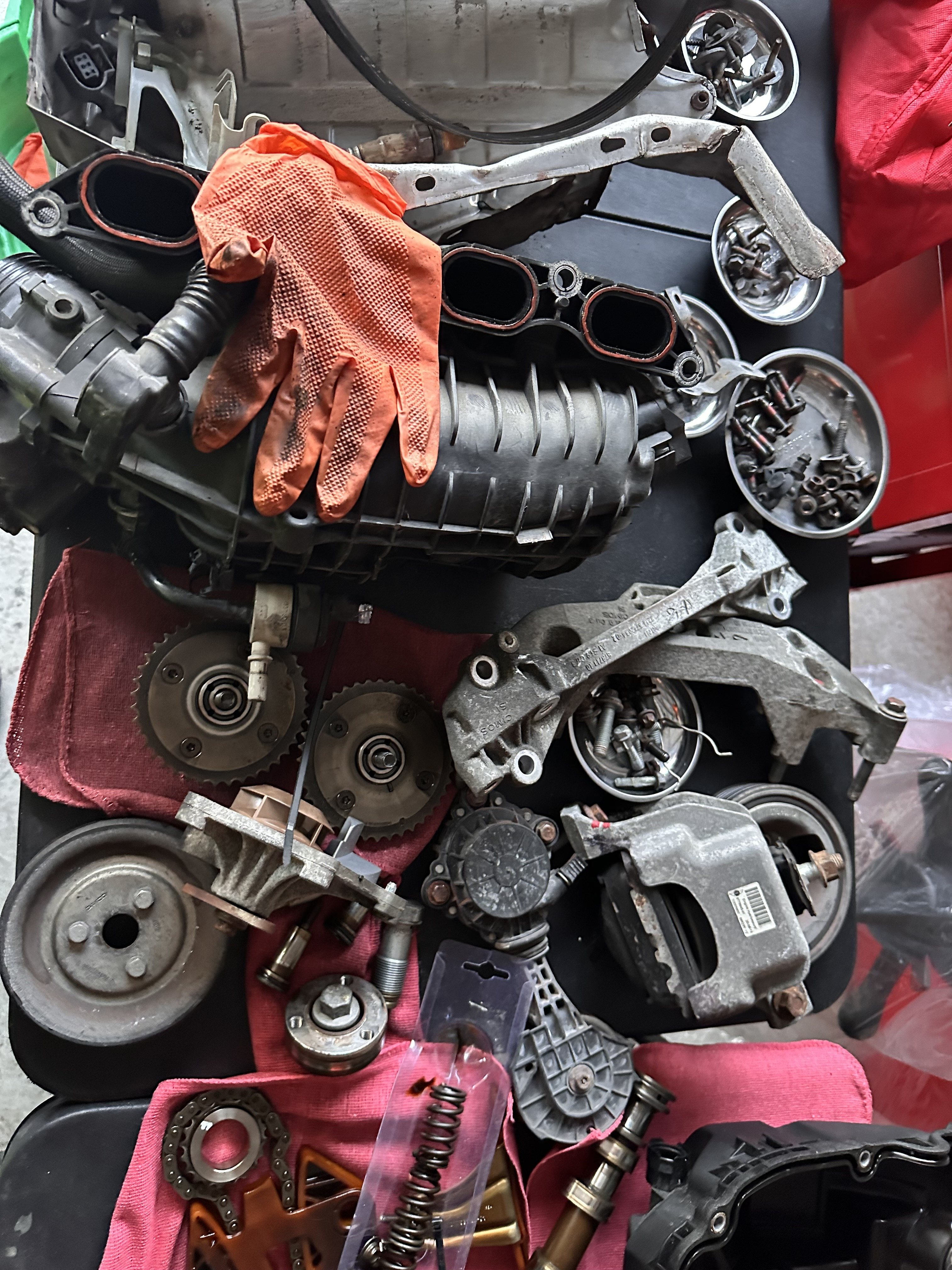
- Cylinder head repair Repair The cylinder head was removed with the engine in the car. All eight exhaust valves and all 16 valve stem seals were replaced; the intake camshaft, eccentric shaft and Valvetronic springs came out to reach the intake seals. The new valves were lapped to a continuous dull-grey contact ring, and the head was reassembled with a new timing chain, chain guides, tensioner and valve cover gasket.
- First start Diagnosis The engine would not start with relay R6 fitted because the ignition coils had no 12 V supply. Swapping relays did not help; the relay control side was missing its ground. Bridging the relay contacts let the engine start, and the car currently runs on that temporary bypass. The engine then misfired at idle, so the intake and exhaust camshaft sensors were swapped. The VANOS adaptation came within the scan tool's tolerances (exhaust spread 47.70°, target 35–67°; intake spread 154.90°, target 134–167°) and the Valvetronic was relearned.
- Post-repair testing Diagnosis First post-repair compression test, before the Valvetronic relearn, read 180, 115, 175 and 175 PSI (cylinder 2 rose to 210 PSI wet). After the relearn, a test with the engine half warmed up read 170, 185, 190 and 200 PSI.
- Smoke test Repair New NGK spark plugs were fitted. A smoke test then found a broken crankcase ventilation hose running from the valve cover to behind the throttle body, and the hose was replaced. Misfires after that were random and low in number.
- Follow-up at 128,320 miles Diagnosis All four smooth-running values sat close to zero at idle and the engine ran well at road speed. Intermittent idle misfires after a short drive, small idle dips and a hesitation on initial takeoff remain, with six DME faults stored.
- Planned Repair Permanent R6 circuit repair, both oxygen sensors, both camshaft position sensors, ignition coils, right rear brake sensor, passenger door cables and a starter are planned but not yet done.
Customer Complaint
The owner bought the Paceman used. An initial inspection showed it needed some work, but the more serious problems only appeared later, starting with a cylinder 1 misfire that would not go away. The owner needs a reliable car for getting to and from work. Customer identity, contact details and VIN are deliberately excluded from this public case study.
Symptoms
- Persistent cylinder 1 misfire with near-zero cranking compression on that cylinder (see the initial diagnosis).
- After reassembly, no start unless relay R6 was bypassed: the ignition coils had no 12 V supply.
- Rough idle on the first post-repair starts, improving as faults were found.
- Stalling, which the technician linked to the stored engine faults.
- Intermittent misfires at idle after a few minutes of driving and parking, which cleared after driving again.
- Small periodic dips in idle speed.
- Hesitation on initial takeoff; the engine runs well at road speed.
- Water entering the rear cargo area.
Diagnostic Process
The cylinder 1 diagnosis (coil and plug swaps, compression test and borescope) is documented in the initial diagnosis case study. The cylinder head came off with the engine in the car.
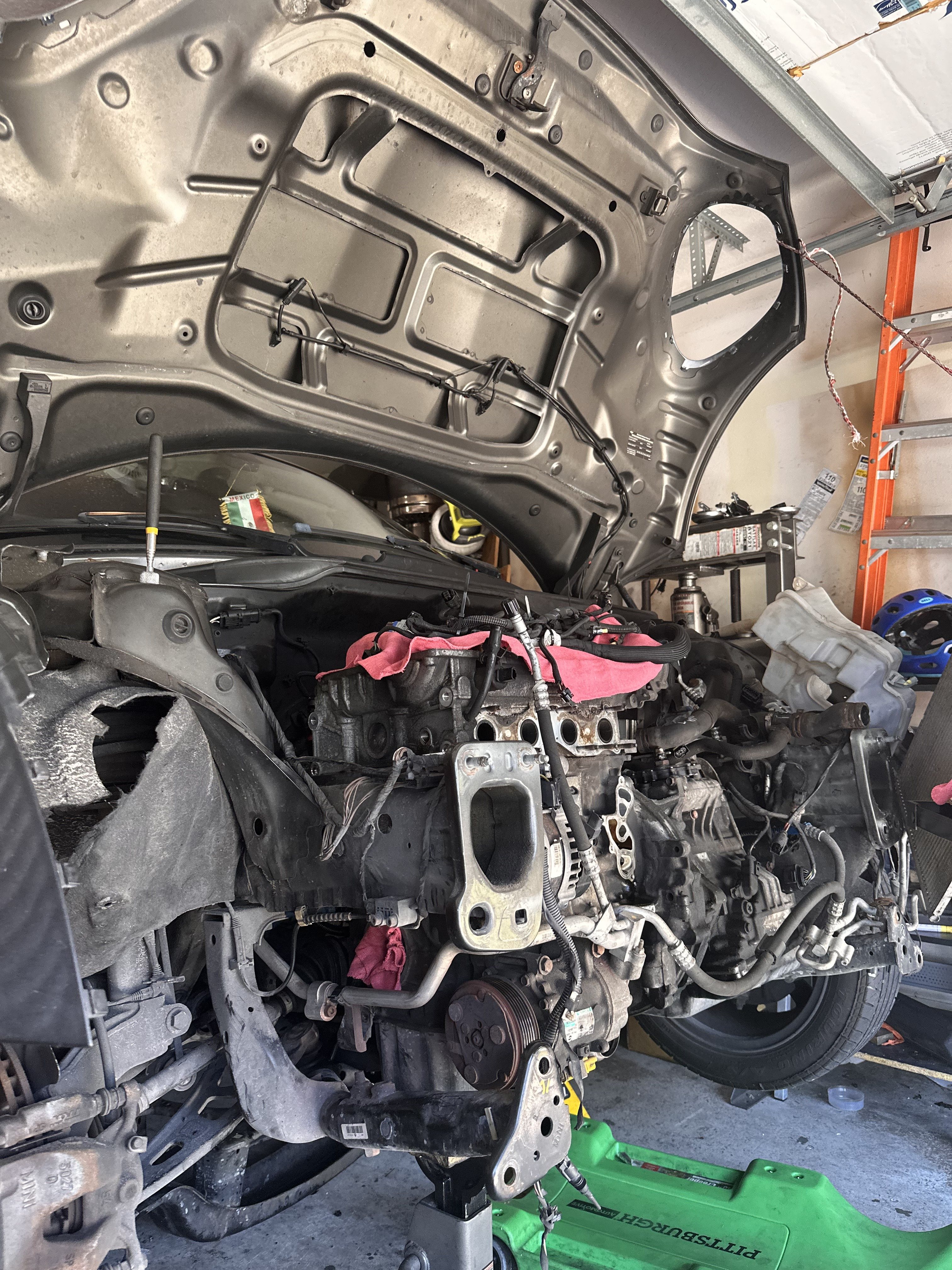
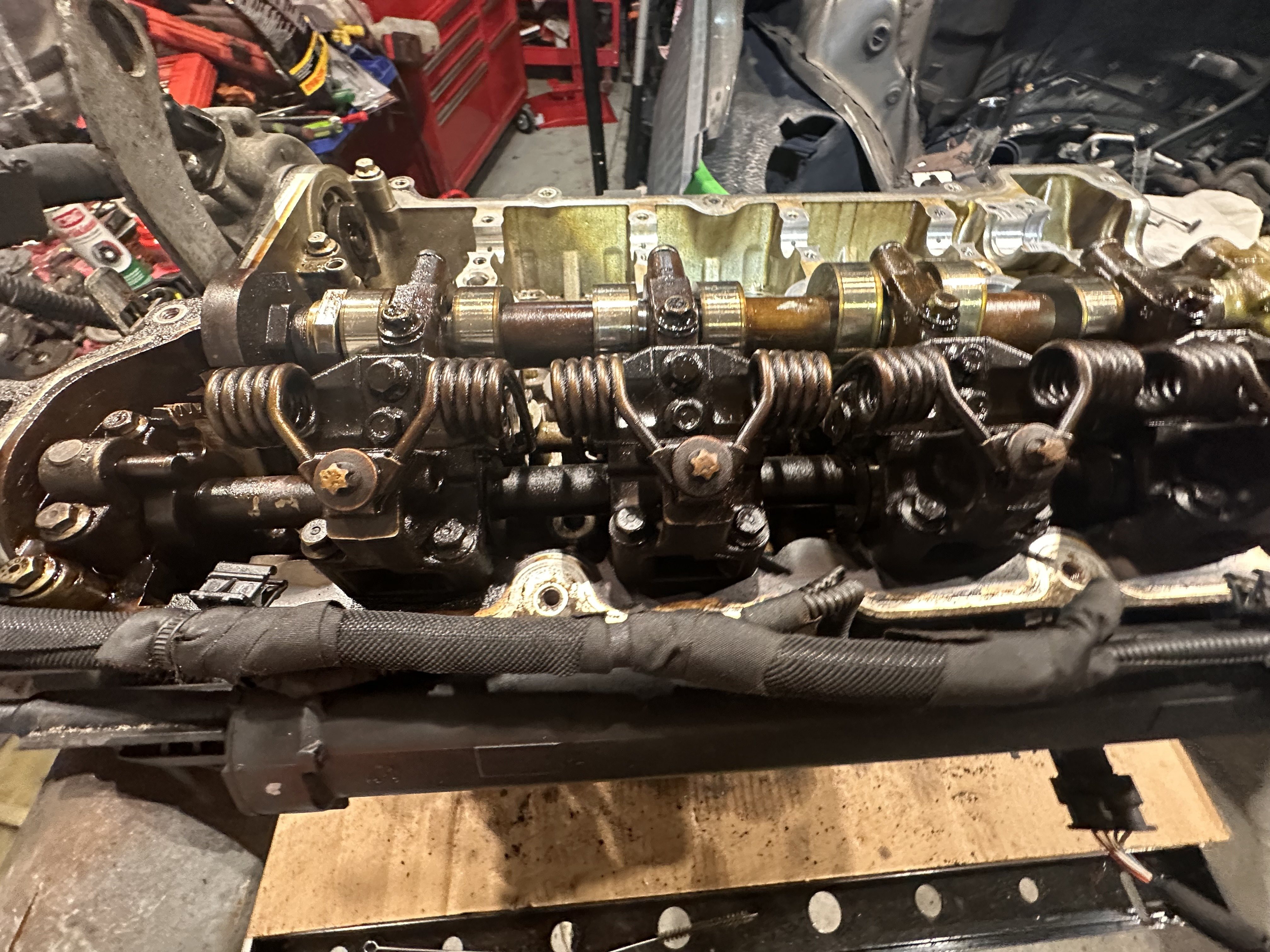
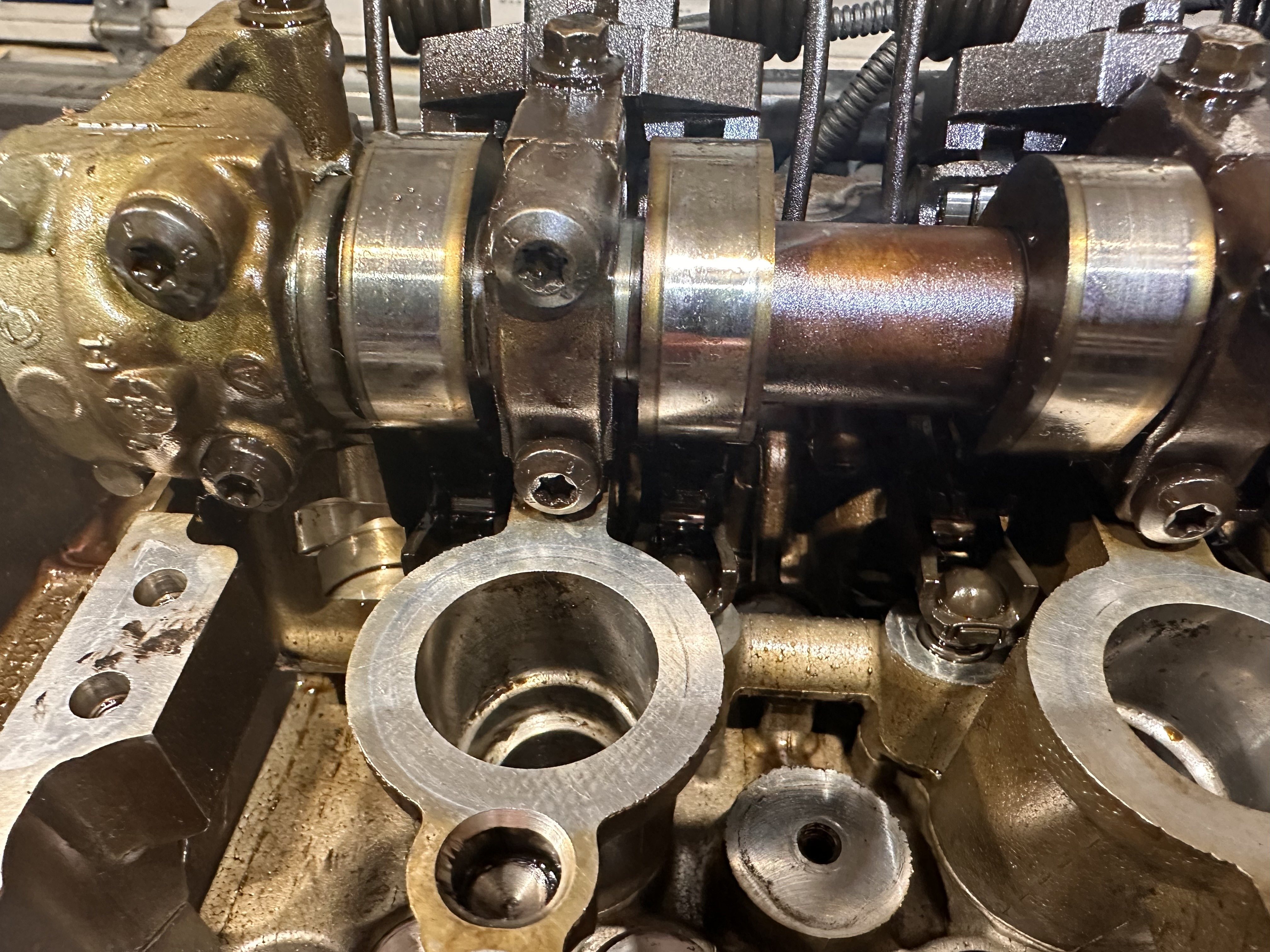
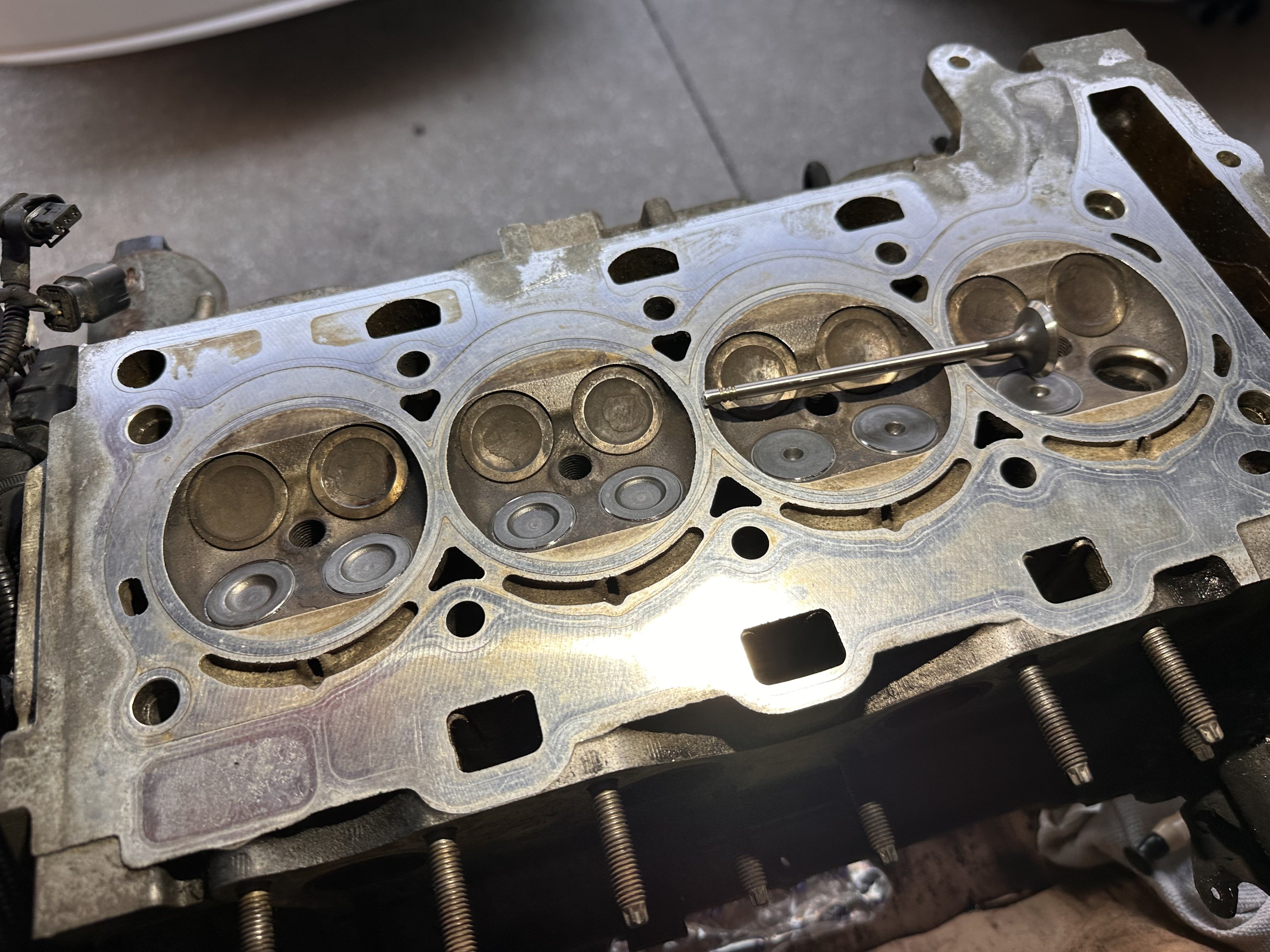
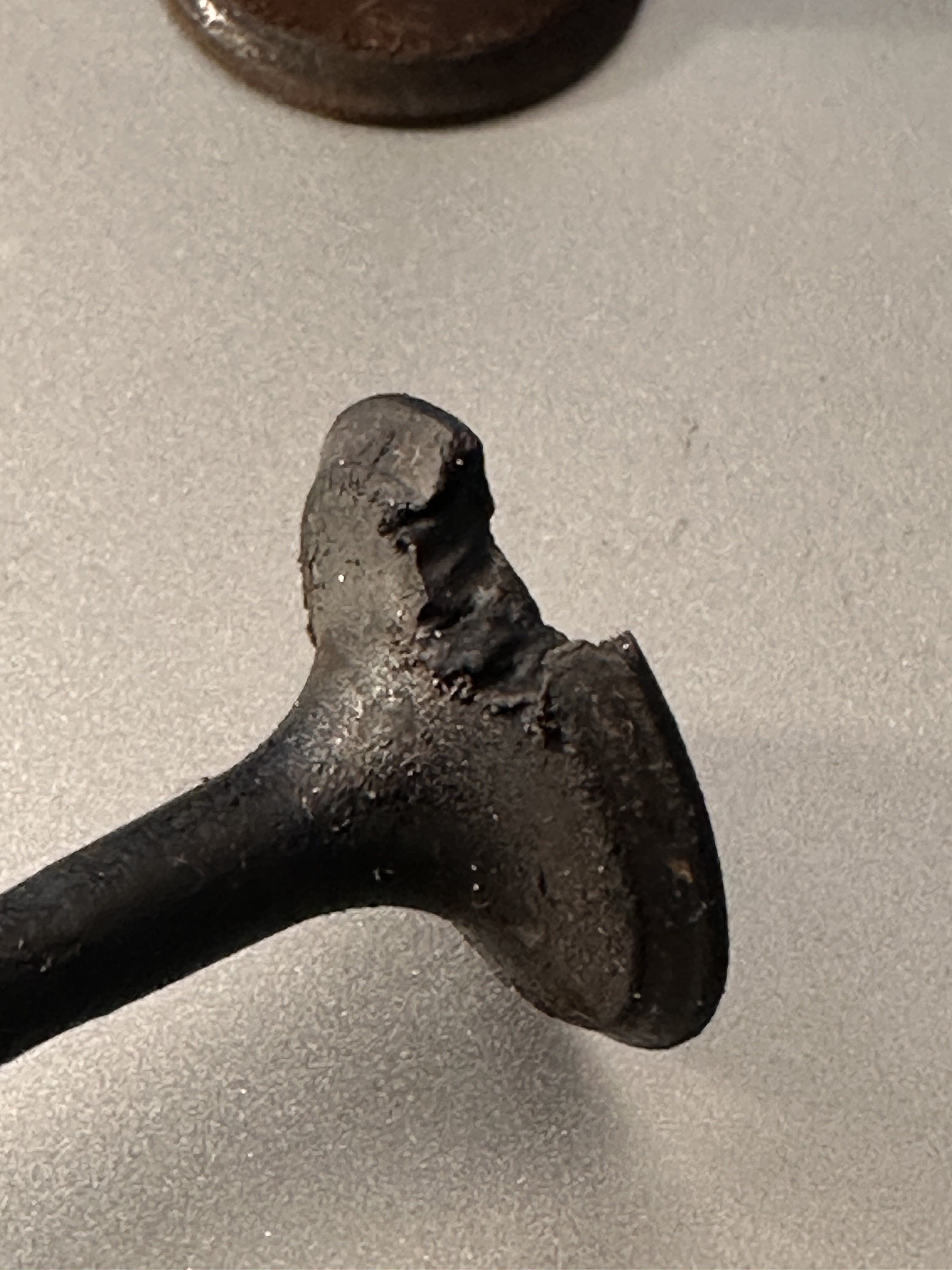
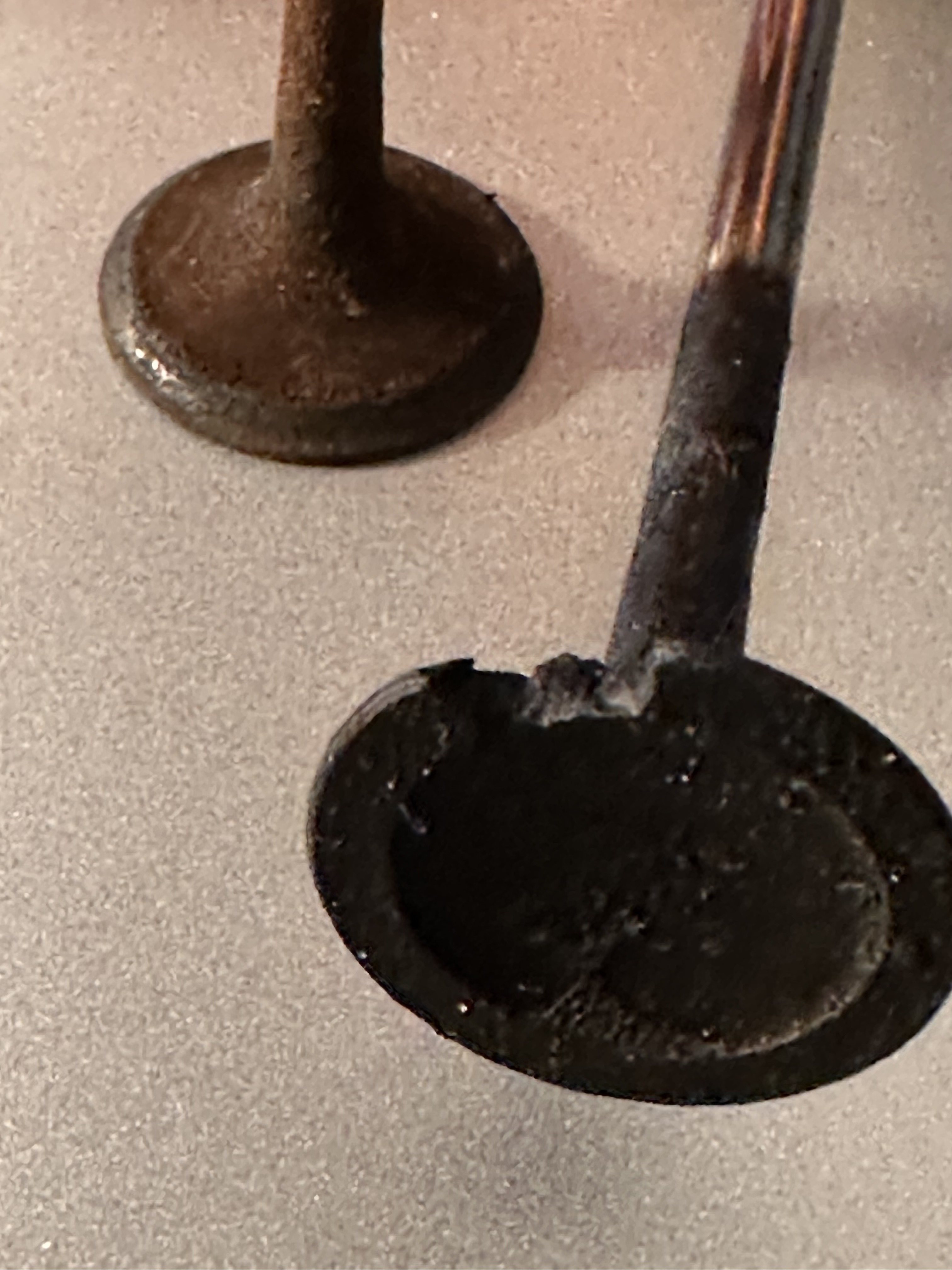
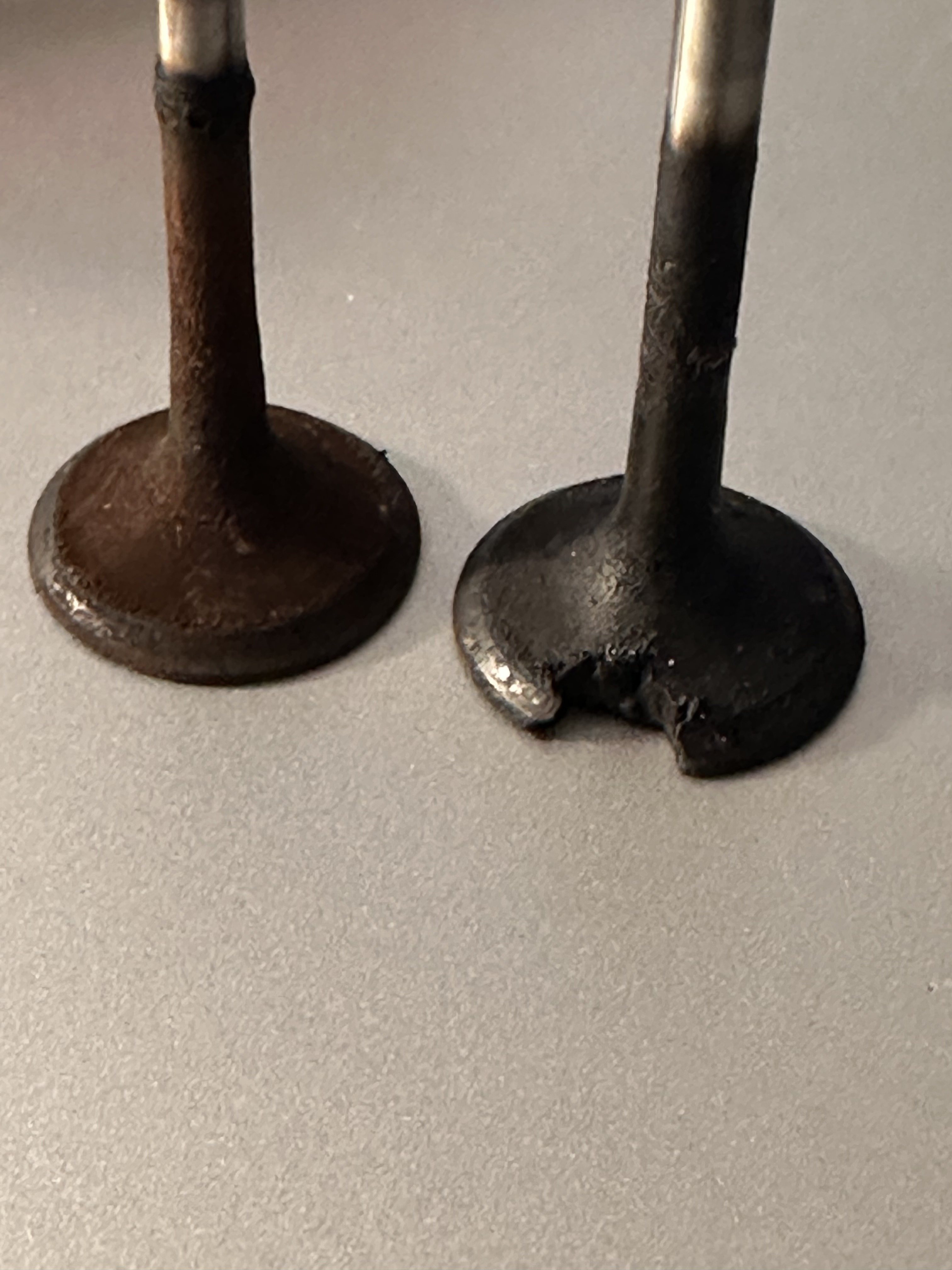
With the head apart, the cylinder 1 exhaust valve was found burned through at the edge of the valve head.
After reassembly the engine would not start. Relay R6 switches the 12 V supply to the four ignition coils, and with it fitted the coils had no power. Swapping in other relays made no difference. Testing the relay socket showed the positive feed was present but the relay's control side was not being grounded, so the relay never closed. Bridging the two relay contact terminals started the engine immediately. Which module provides that ground, and why it is missing, has not yet been established.
The engine ran smoothly for a few seconds and then misfired. An intake camshaft sensor fault (2968) came and went, so the intake and exhaust camshaft position sensors were swapped and a VANOS adaptation was run.
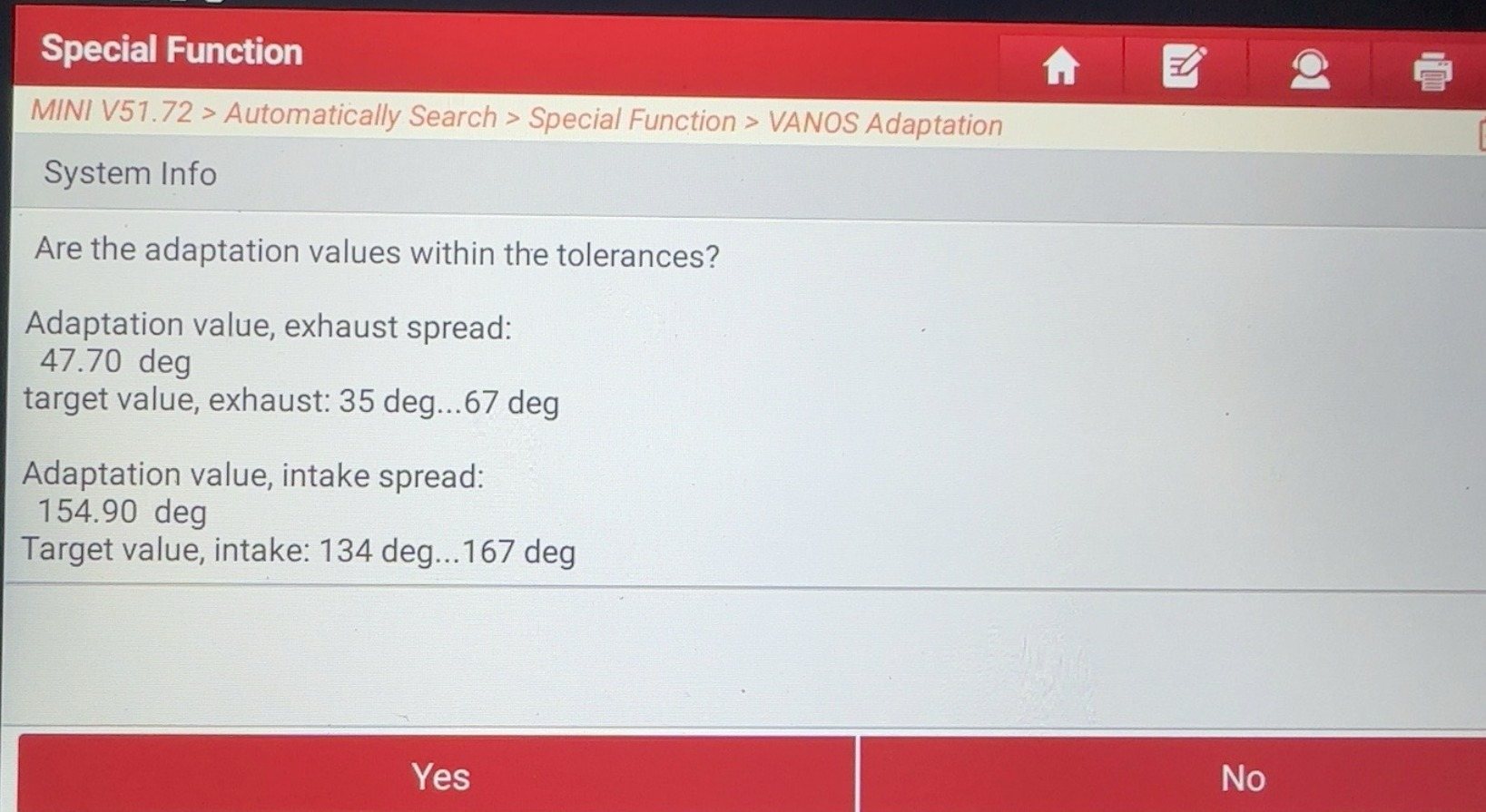
The VANOS adaptation came within the scan tool's tolerances (exhaust spread 47.70°, target 35–67°; intake spread 154.90°, target 134–167°). The Valvetronic was then relearned.
The first post-repair dry compression test, taken before the Valvetronic relearn, read 180, 115, 175 and 175 PSI. A little oil in cylinder 2 raised it to 210 PSI. Rather than reopen the engine, the test was repeated after the Valvetronic relearn with the engine half warmed up: 170, 185, 190 and 200 PSI. Whether that second test was dry was not recorded.
The correct NGK spark plugs were fitted next. A smoke test of the intake then found smoke escaping from behind the throttle body, where the crankcase ventilation hose from the valve cover had a clean break. After the hose was replaced, the upstream oxygen sensor reading dropped from about 1.50 to 1.25, misfires became random and low in number, and after a short drive the only engine fault stored was 2A53.
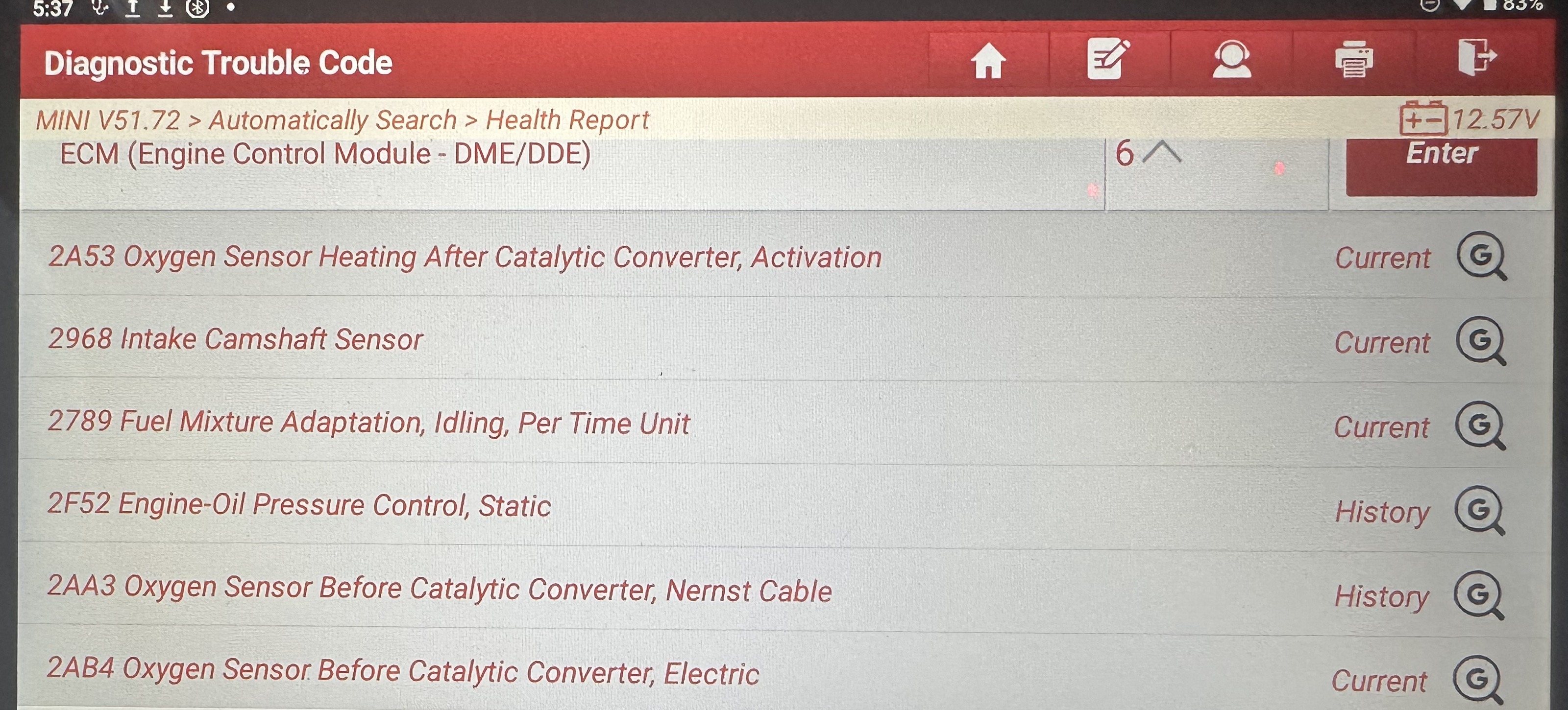
At the follow-up visit at 128,320 miles the DME held six faults:
| Code | Scan tool description | Status |
|---|---|---|
| 2A53 | Oxygen sensor heating after catalytic converter, activation | Current |
| 2968 | Intake camshaft sensor | Current |
| 2789 | Fuel mixture adaptation, idling, per time unit | Current |
| 2F52 | Engine-oil pressure control, static | History |
| 2AA3 | Oxygen sensor before catalytic converter, Nernst cable | History |
| 2AB4 | Oxygen sensor before catalytic converter, electric | Current |
Live data at idle showed engine speed holding around 900 RPM. A graph with three apparent spikes in air mass, throttle and RPM turned out to be three deliberate presses of the accelerator, with the engine returning to idle each time. The multiplicative mixture adaptation read 1.18 in an earlier session and 1.12 at the follow-up.
Repair Performed
Engine
- Removed the cylinder head with the engine in the car.
- Replaced all eight exhaust valves and all 16 valve stem seals. Reaching the intake seals meant removing the intake camshaft, eccentric shaft and Valvetronic springs; the intake valves were reused.
- Lapped the new valves; each showed a continuous, dull-grey contact ring.
- Replaced the timing chain, timing chain guides and timing chain tensioner.
- Reassembled the head with a new valve cover gasket.
- Replaced the broken crankcase ventilation hose found by the smoke test.
- Fitted new NGK Laser Iridium LZKBR7B8G spark plugs.
- Ran the VANOS adaptation (both camshafts within tolerance) and relearned the Valvetronic.
Cooling, fuel and electrical
- Replaced the water pump, water pump pulley, serpentine belt, coolant crossover pipe and thermostat.
- Replaced the fuel pump.
- Replaced the battery.
Water intrusion
- Secured the sunroof drain hoses with hose clamps.
- Patched holes in the rear lower drain outlet grommets that were letting water into the rear cargo area.
Temporary workaround, not a repair
- Relay R6 is bypassed so the ignition coils receive power. This was a troubleshooting step to get the engine running. It takes the coil supply out of the DME's control, it is not a recommended fix, and the circuit still needs a permanent diagnosis and repair before the car can be considered reliable for daily commuting.
Planned, not yet done
- Permanent repair of the R6 relay control circuit.
- Both oxygen sensors.
- Both camshaft position sensors.
- Ignition coils.
- Right rear brake sensor.
- Passenger door cables.
- Starter, replaced preventively because the owner depends on the car for work.
Parts Used
- Exhaust Valves Replacement (all eight)
- Valve Stem Seals Replacement
- Valve Cover Gasket Replacement
- Timing Chain Replacement
- Timing Chain Guides Replacement
- Timing Chain Tensioner Replacement
- Water Pump Replacement
- Water Pump Pulley Replacement
- Serpentine Belt Replacement
- Coolant Crossover Pipe Replacement
- Thermostat Assembly Replacement
- Fuel Pump Replacement
- Spark Plugs Replacement (NGK Laser Iridium LZKBR7B8G)
- Battery Replacement
- Crankcase Ventilation Hose Replacement
Verification
- Cylinder 1 compression: near zero before the repair, 180 PSI on the first post-repair test and 170 PSI on the second.
- VANOS adaptation within tolerance on both camshafts; Valvetronic relearned.
- Latest compression test, after the relearn, engine half warmed up: 170, 185, 190 and 200 PSI.
- Smooth-running values at idle after the repair stayed within roughly ±1 on all four cylinders, compared with the large cylinder 1 imbalance before the repair.
- Warm idle held at roughly 900 RPM, and the engine returned to idle after each throttle blip.
- The engine runs well at road speed.
- Not yet verified: operation with R6 working normally, the cause of the intermittent idle misfires and dips, and the takeoff hesitation.
Technician Notes
The valve repair itself looks sound: cylinder 1 went from near zero to the same range as the other cylinders, and the smooth-running data no longer singles it out. What remains are separate problems that the head job uncovered or that had been masked by the dead cylinder.
The low cylinder 2 reading on the first post-repair test was not taken as proof of ring damage. It was taken before the Valvetronic relearn, and cylinder 2 had been healthy before the head came off. The repeat test after the relearn brought it up to 185 PSI without anything being dismantled.
The R6 bypass got the engine running so the rest of the work could be checked, but the coils are now powered whenever the jumper is in place. The relay has its feed and is missing its ground command, and different relays behave the same way. That points at the control circuit, not the relay.
The faults now stored are observations, not a parts list. The two upstream oxygen sensor electrical faults and the idle mixture adaptation fault fit the intermittent idle behaviour. The intake camshaft fault returned after the sensors were swapped. Each still needs its circuit tested before parts are fitted.
Lessons Learned
- After a head repair, retest compression under consistent conditions before condemning another cylinder: on a Valvetronic engine, a test before the relearn can read low.
- A relay that does nothing even when swapped is usually missing its feed or its control ground. Measure both sides of the relay coil before buying parts.
- A relay bypass is a diagnostic step. Record it as temporary and do not hand the car back as finished while it is in place.
- Smoke-test the intake after reassembly. A cracked crankcase ventilation hose can produce lean readings and idle problems that look like a failed repair.
- On a used car with an unknown history, separate the original fault from the problems found along the way and fix them in order of reliability, not convenience.
- Check the sunroof drain hoses and the rear drain outlet grommets when water shows up in the cargo area.
Final Outcome
Valve repair completed; restoration ongoing. All eight exhaust valves and all 16 valve stem seals were replaced and cylinder 1 compression is restored. The timing chain, guides and tensioner, cooling-system, fuel pump, battery, spark plug, crankcase ventilation hose and sunroof drain work is done. The car is not yet ready to be called a reliable commuter: the R6 relay bypass is temporary and the coil power circuit still needs a permanent repair, and intermittent idle misfires and a takeoff hesitation are still being diagnosed. Oxygen sensors, camshaft sensors, coils, a right rear brake sensor, passenger door cables and a starter are planned for the next stages.
Customer Feedback
Not yet recorded.
Questions About This Repair
Was the whole cylinder head rebuilt?
Not entirely. All eight exhaust valves and all 16 valve stem seals were replaced and the new valves were lapped in. The intake valves were reused; reaching their seals meant removing the intake camshaft, eccentric shaft and springs.
Did the valve repair restore compression?
Cylinder 1 went from near zero before the repair to 170–180 PSI afterwards. The latest test, with the engine half warmed up, read 170, 185, 190 and 200 PSI.
Why does the car run with relay R6 bypassed?
With R6 fitted the ignition coils got no 12 V because the relay's control side was not being grounded. Bridging the relay contacts lets the engine run while the circuit is diagnosed. It is a temporary workaround, not a repair.
Is the misfire completely fixed?
Not yet. Combustion is balanced at idle in the post-repair readings, but intermittent idle misfires after short drives and a hesitation on takeoff are still being diagnosed.
Why was water getting into the rear cargo area?
The sunroof drain hoses were not secured and the rear lower drain outlet grommets had holes. The hoses were clamped and the grommets patched.
Repairs Like This One
- 15 documented Electrical repairs. See them all →
- 13 documented Diagnosis repairs. See them all →
- 10 documented Engine repairs. See them all →
- 7 documented Cooling repairs. See them all →