2013 MINI Cooper S Limp Mode: Wastegate Would Not Close
Quick Summary
A 2013 MINI Cooper S Convertible repeatedly entered reduced-power or limp mode after several prior diagnostic attempts. The engine scan contained multiple faults, but two entries matched the complaint especially closely: 2C57 reported implausibly low charge pressure and 2CB3 reported suspicion of a wastegate-activation fault. Those codes directed the test; they did not decide the repair.
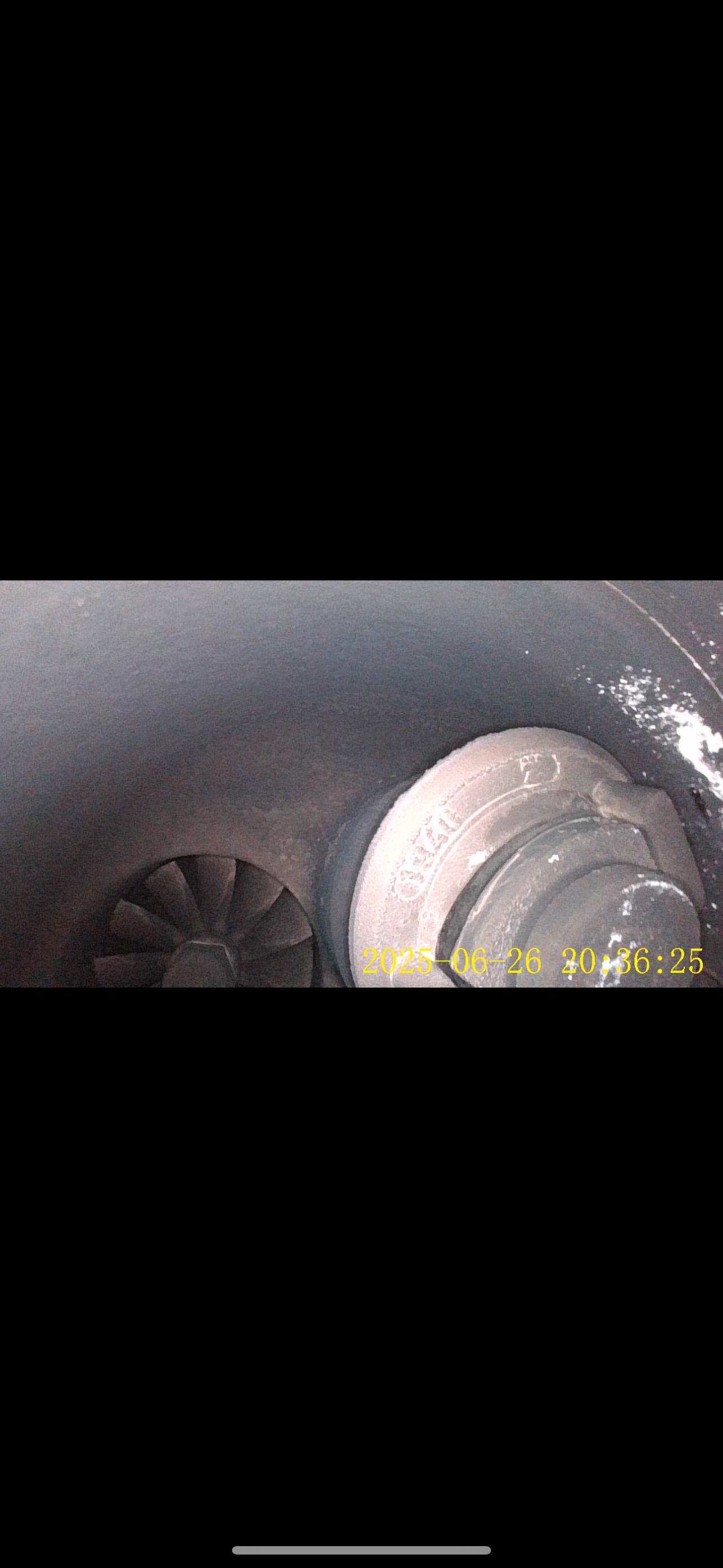
Vacuum was applied manually to the wastegate actuator diaphragm while a camera watched the valve inside the turbocharger. The actuator moved the mechanism, but the wastegate did not seat completely closed. With a path still open around the turbine, the engine could not rely on the turbocharger to build the requested boost. The customer sourced a replacement turbo from AutoZone. The turbo and its supporting oil, coolant and exhaust-sealing components were replaced, and the original reduced-power/check-engine warning did not return.
- Vehicle
- 2013 MINI Cooper S Convertible (R57)
- Difficulty
- ★★★★☆
- Repair Time
- Not documented hours
- Outcome
- A wastegate that did not fully close under applied vacuum was confirmed by camera inspection; the customer-sourced turbocharger and its supporting oil, coolant, filter and exhaust-sealing components were replaced, and the reduced-power/check-engine warning did not return
Fault Codes
2C57 Charging Pressure Control, Plausibility Pressure Too Low003429 — Engine-Oil Pressure Sensor Plausibility Before Start29E0 — Charge-Air Temperature Sensor Electrical, Short To B+29E2 — Charge-Air Temperature Sensor Voltage Change Too Fast2CB3 — Wastegate Valve Activation, Suspicion Of FaultP007B — Charge Air Cooler Temperature Sensor Range/Performance, Bank 1P007D — Charge Air Cooler Temperature Sensor Circuit High, Bank 1
Vehicle Information
| Year | 2013 |
|---|---|
| Model | Cooper S Convertible |
| Chassis | R57 |
| Transmission | Automatic |
| Mileage | 84207 |
Repair Timeline
- Customer concern Complaint The 2013 Cooper S Convertible repeatedly entered reduced-power or limp mode after several prior diagnostic attempts. One outside shop reportedly recommended timing-drive work.
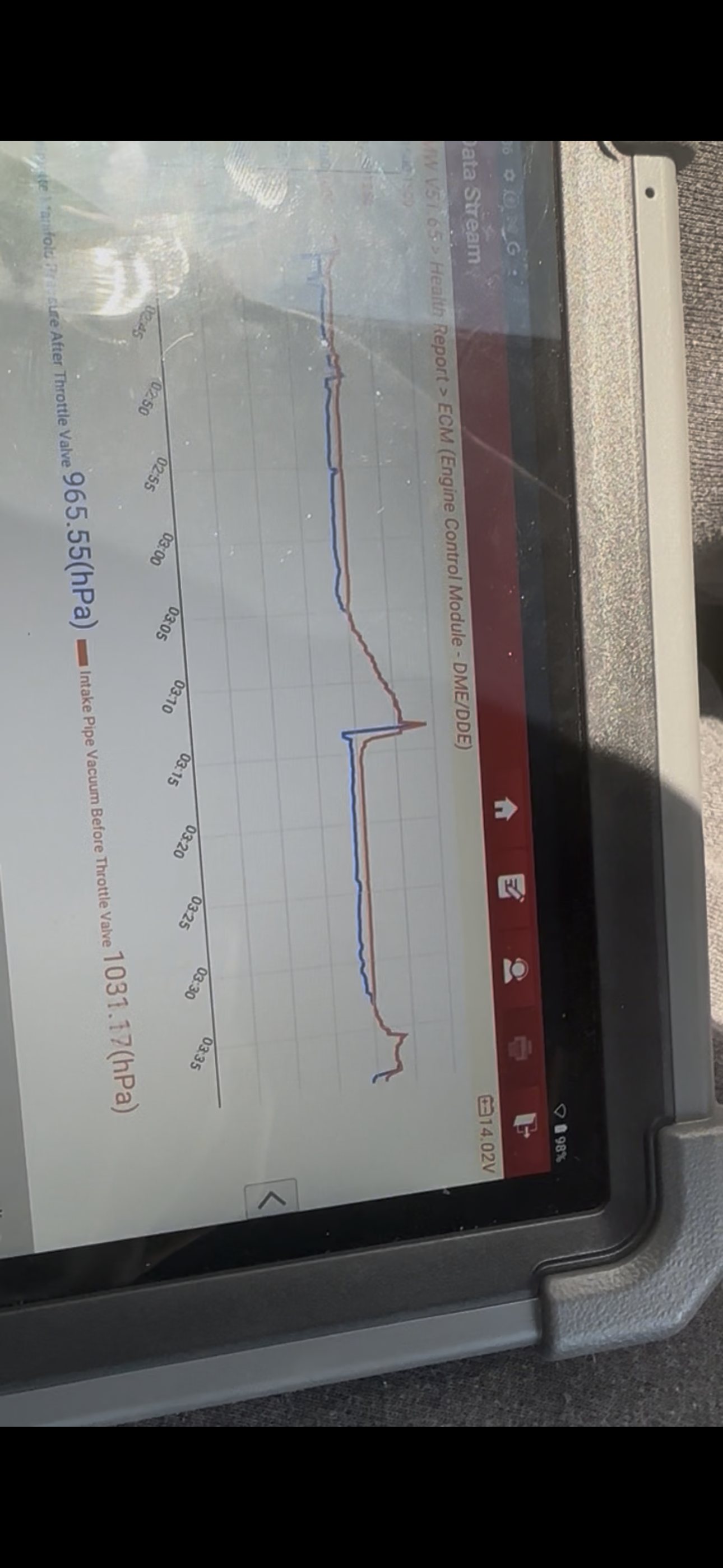
- Initial diagnosis Diagnosis The engine scan recorded boost-control, wastegate, oil-pressure-sensor plausibility and charge-air-temperature faults. Intake pressure channels were also graphed as supporting data rather than treated as a component verdict.
- Mechanical test Diagnosis Vacuum was manually applied to the wastegate actuator diaphragm while a camera was positioned to watch the valve. The wastegate moved but did not close completely.
- Repair plan Repair Turbocharger replacement was selected from the physical wastegate finding and the matching low-boost and wastegate-activation faults. The customer sourced the replacement turbocharger from AutoZone.
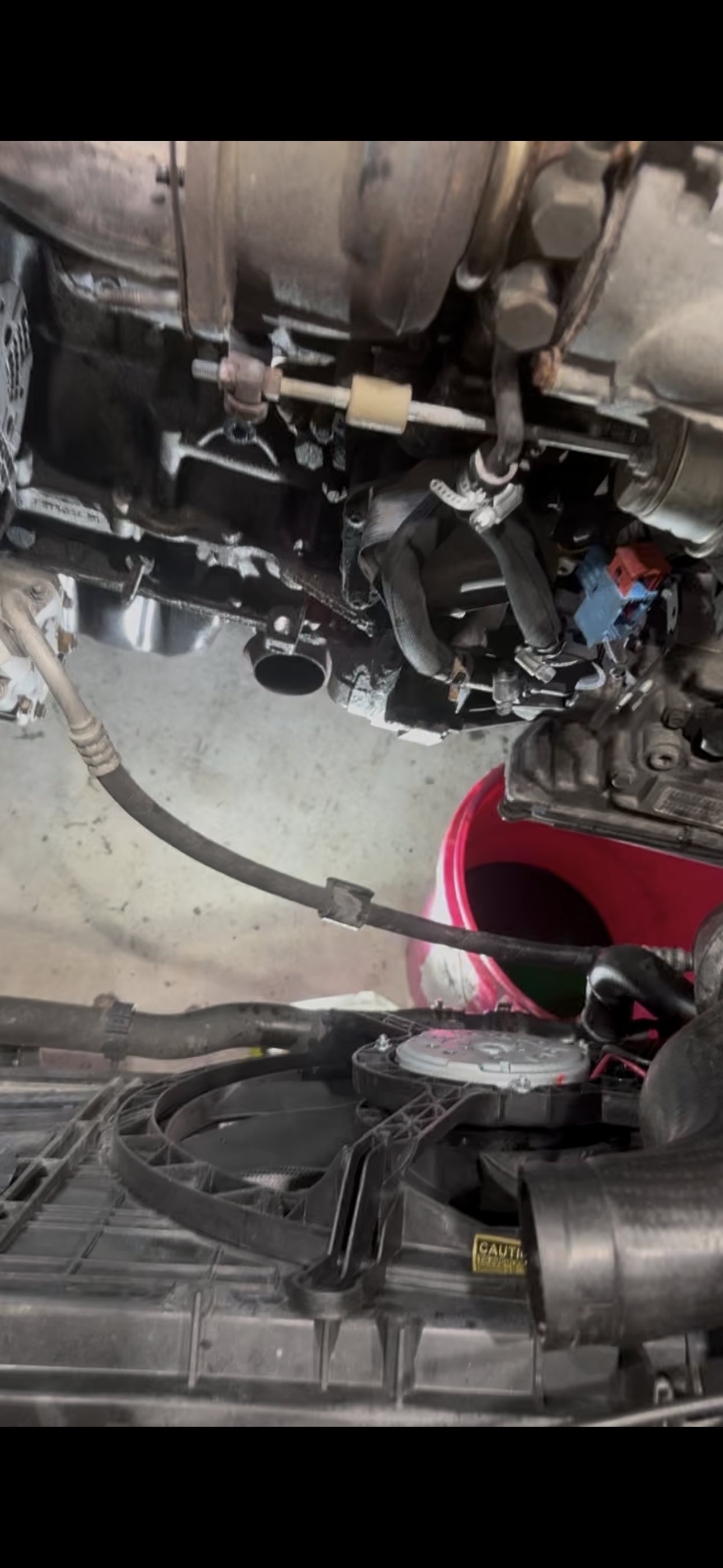
- Turbocharger replacement Repair The replacement turbo was pre-oiled and installed with renewed feed and return oil lines, coolant connections, oil-filter-housing gasket, oil and filter, coolant and exhaust sealing components.
- Post-repair operation Verification The reduced-power/check-engine warning did not return after the turbocharger replacement, and the customer reported being happy with the result.
Customer Complaint
The owner reported recurring limp mode or reduced engine power. Several mechanics had already looked at the MINI, and one outside shop reportedly recommended a timing-related repair. No work by those shops is identified here, and their names are deliberately omitted.
The useful question was not whether the car had several codes. It was whether the evidence showed a fault capable of preventing the turbocharger from producing the boost the engine management system requested.
Symptoms
- Repeated reduced-power or limp-mode operation reported by the owner
- Check-engine warning visible during operation
- 84,207 miles recorded on the instrument display
- 2C57 charge-pressure plausibility fault with pressure reported too low
- 2CB3 wastegate-activation suspicion fault
- Additional oil-pressure-sensor and charge-air-temperature faults stored in the same scan
Diagnostic Process
Record the complete scan without turning it into a shopping list. The scanner displayed five manufacturer-specific entries plus two EOBD equivalents:
| Scanner code | Scanner-displayed description | Diagnostic relevance in this case |
|---|---|---|
003429 |
Engine-oil pressure sensor, plausibility: pressure too high before engine start | Recorded separately; the supplied evidence does not connect it to the wastegate failure. |
002C57 |
Charging pressure control, plausibility: pressure too low | Consistent with a turbocharger system that could not reach requested boost. |
002CB3 |
Wastegate valve, activation: suspicion of fault in wastegate activation | Directed testing toward the wastegate mechanism and actuator. |
0029E0 / P007D |
Charge-air temperature sensor, electrical: short circuit to B+ / circuit high, bank 1 | A separate charge-air-temperature circuit finding, not treated as proof of turbo failure. |
0029E2 / P007B |
Charge-air temperature sensor, voltage change too fast / circuit range-performance, bank 1 | Also documented separately because no evidence tied it to the mechanical wastegate result. |
The wording above is a transcription of this scan tool's report. It records what the tool showed; it is not a claim that every entry represented a failed component.
Use live data as context, not as a verdict. The supplied graph plotted intake-manifold pressure after the throttle and intake-pipe pressure before the throttle. Visible snapshots were close to atmospheric pressure, approximately 966 and 1,032 hPa. The image does not record requested boost, throttle position, engine load or the exact test condition, so the graph by itself cannot condemn a turbocharger.
Test the wastegate mechanically. Vacuum was applied directly to the wastegate actuator diaphragm. A camera was positioned so the valve could be watched while vacuum moved the actuator. The mechanism moved, but the wastegate did not close 100 percent. This was the critical finding: the control input was applied, yet the mechanical valve still did not seat.
Connect the finding to the two relevant codes. A wastegate regulates how much exhaust gas bypasses the turbine. When it should be closed but remains partly open, some exhaust energy takes the bypass path instead of accelerating the turbine. The resulting boost can stay below the engine computer's request, which is consistent with 2C57. At the same time, the commanded wastegate action does not produce the expected result, which is consistent with the 2CB3 wastegate-activation suspicion. The oil-pressure and charge-air-temperature codes were not needed to reach that mechanical conclusion.
Repair Performed
The customer sourced the replacement turbocharger from AutoZone. The supplied record does not identify its brand or part number, so neither is claimed here.
The replacement was treated as an oil, coolant and exhaust-system repair rather than a bare turbo swap:
- Removed the original turbocharger after opening the required intake, exhaust, oil and coolant connections
- Installed the customer-supplied replacement turbocharger
- Replaced the turbo oil inlet/feed line and oil outlet/return line
- Replaced the turbo coolant inlet and outlet hoses and coolant hoses at the oil filter housing
- Replaced the oil filter housing gasket
- Replaced the exhaust pipe/manifold sealing gasket
- Replaced the engine-oil drain plug and seal ring
- Installed a new oil filter and engine oil
- Refilled the cooling system with new coolant
- Pre-lubricated the replacement turbocharger with clean engine oil before first startup
The documented supporting-parts list for this 1.6L turbocharged application included a Vaico V240021 oil filter, a Dorman 625826 turbocharger oil return line, an Edelmann 1056 supply tube, an Elring 375580 exhaust pipe flange gasket at the turbocharger, an Elring 523470 oil drain plug with seal ring and a Mahle/Clevite B32690 oil filter adapter gasket. Those identifiers describe the supporting parts that were listed for the job; none of them identifies the customer-supplied turbocharger itself.
Parts Used
- Turbocharger Customer-supplied replacement sourced from AutoZone
- Turbo Oil Feed Line Replacement
- Turbo Oil Return Line Replacement
- Turbocharger Coolant Hoses Replacement
- Oil Filter Housing Coolant Hoses Replacement
- Oil Filter Housing Gasket Replacement
- Exhaust Manifold Gasket Replacement
- Engine Oil Filter Replacement
- Engine Oil Drain Plug Replacement with seal ring
- Engine Oil Replacement
- Engine Coolant Replacement
Verification
After the turbocharger replacement, the reduced-engine-power/check-engine warning that had prompted the repair did not return. The customer reported being happy with the result.
The available evidence confirms the symptom outcome. It does not include a post-repair scan report, final boost log, oil-pressure measurement or recorded leak-check results, so none of those is claimed.
Technician Notes
The decisive test separated command from mechanical result. Applying vacuum directly to the actuator removed the engine computer and boost-control command from that part of the question. Watching with the camera then showed what the linkage alone could not prove: the wastegate moved but did not seal fully. That is stronger evidence than replacing a turbo because a scan tool printed the word “wastegate.”
The oil-feed line deserves the same attention as the turbocharger. It carries pressurised oil to a bearing assembly operating beside the hottest parts of the exhaust system. After engine shutdown, oil can remain stationary in the line while heat radiates from the turbine housing and manifold. Repeated heat soak can contribute to oil coking and a restricted feed path.
That is why the feed-line heat shield is functional protection, not decorative trim. It belongs between the line and the major heat source, wrapped and secured as designed so it reduces direct radiant exposure. A shield cannot clean an old restricted line, which is why the feed line itself was renewed. The new line, clean oil, turbo pre-lubrication and correctly fitted shield work together to protect the replacement turbo from an avoidable lubrication failure.
Pre-oiling mattered for the same reason. A replacement turbo should not begin its first rotation with a dry bearing housing while the engine's oil system is still filling the new line. Clean oil was introduced before first startup, and the new feed and return paths avoided reusing lines whose internal condition could not be proven from the outside.
Lessons Learned
- Limp mode is a protective response, not a diagnosis. The fault that triggered it still has to be found.
- Use 2C57 to investigate why requested boost was not achieved; do not treat it as a command to replace a turbocharger.
- A 2CB3 wastegate-activation suspicion becomes much more useful when actuator movement and actual valve seating are observed together.
- Applying vacuum to the actuator and watching the gate with a camera can distinguish an electrical-control theory from a mechanical valve that does not fully close.
- Multiple codes can describe separate problems. Keep unrelated sensor plausibility and circuit entries separate unless testing establishes a common cause.
- A turbo replacement includes its support systems. Clean feed and return oil paths, cooling connections, exhaust sealing and pre-oiling protect the new component.
- Refit the turbo oil-feed heat shield. Restricting heat transfer into the stationary oil in the line helps reduce the conditions that promote carbon deposits and oil-flow restriction.
- Verify the original symptom after the repair. A successful installation is not the same as proving the reduced-power complaint is gone.
Final Outcome
The original timing-related recommendation was not followed. Scan evidence directed attention toward the boost-control system, then a manual vacuum test and camera inspection confirmed that the wastegate did not close completely. The customer supplied a replacement turbocharger from AutoZone, and the repair renewed the supporting oil, coolant, filter and exhaust-sealing items rather than reusing uncertain connections around the new component.
After replacement, the reduced-power/check-engine warning did not return. The physical finding, the relevant low-boost and wastegate codes, and the post-repair symptom result all support the turbocharger wastegate as the cause of this limp-mode complaint.
Customer Feedback
The customer was happy with the result after the replacement turbocharger was installed and the reduced-power/check-engine warning stopped appearing. No verbatim customer quotation was provided.
Photos From This Repair
Questions About This Repair
How was the wastegate failure confirmed?
Vacuum was applied directly to the wastegate actuator diaphragm while a camera watched the valve. The linkage moved, but the wastegate did not seat fully closed. That physical result supported the scan faults instead of treating the code list as a parts list.
Why can a wastegate that does not close cause 2C57?
A partly open wastegate lets exhaust gas bypass the turbine when the engine is trying to build boost. The turbo may then produce less charge pressure than requested, which is consistent with the scanner's 2C57 pressure-too-low description.
Why is the turbo oil-feed-line heat shield important?
The feed line sits close to the turbocharger and exhaust heat. After shutdown, heat can soak into oil remaining in the line and contribute to carbon or coke deposits that restrict lubrication. The shield reduces direct heat exposure; it does not replace the need for a clean, unrestricted feed line.
Did every recorded fault code mean a failed part?
No. The low-boost and wastegate-activation entries fit the confirmed mechanical finding. The oil-pressure-sensor plausibility and charge-air-temperature circuit entries were recorded separately because the supplied evidence did not connect them to the wastegate failure.
Was the replacement turbocharger supplied by the shop?
No. The customer sourced the replacement turbocharger from AutoZone. No brand or turbocharger part number was supplied for publication.
Repairs Like This One
- 9 documented Diagnosis repairs. See them all →
- 8 documented Engine repairs. See them all →
- 5 documented Cooling repairs. See them all →