2011 MINI Cooper Coolant Leak: Rear Crossover Pipe Repair
Quick Summary
A 2011 MINI Cooper Base arrived with coolant pooling on top of the transmission, puddles under the car overnight and coolant loss fast enough that the owner could not drive far without topping it up. Following the coolant upward identified the rear coolant crossover pipe as the source: the plastic end of the pipe where it enters the water pump had deteriorated, so the O-ring had no usable sealing surface left to seal against. Replacing the O-ring alone would not have been a repair. Because the thermostat sits within the same access, the owner was advised to replace the thermostat assembly at the same time and approved both. The crossover pipe and thermostat were replaced, the water pump connection was inspected and cleaned, and the cooling system was vacuum tested, vacuum filled with fresh MINI-compatible coolant, brought to operating temperature and rechecked cold with no further leakage.
- Vehicle
- 2011 MINI Cooper (R56, N16 1.6L)
- Difficulty
- ★★★☆☆
- Repair Time
- Not documented hours
- Outcome
- Deteriorated rear coolant crossover pipe replaced along with the thermostat assembly, cooling system vacuum tested and vacuum filled, with no further leakage through a full heat cycle
Vehicle Information
| Year | 2011 |
|---|---|
| Model | Cooper |
| Chassis | R56 |
| Engine | N16 1.6L |
| Transmission | Not documented |
| Mileage | Not documented |
Repair Timeline
- Customer contact Complaint Owner reports coolant collecting on top of the transmission, puddles under the car overnight and repeated coolant loss, and says the car cannot be driven far without adding coolant.
- Initial inspection Diagnosis Coolant found pooling on top of the transmission, indicating a leak from a component above it rather than from the transmission area itself.
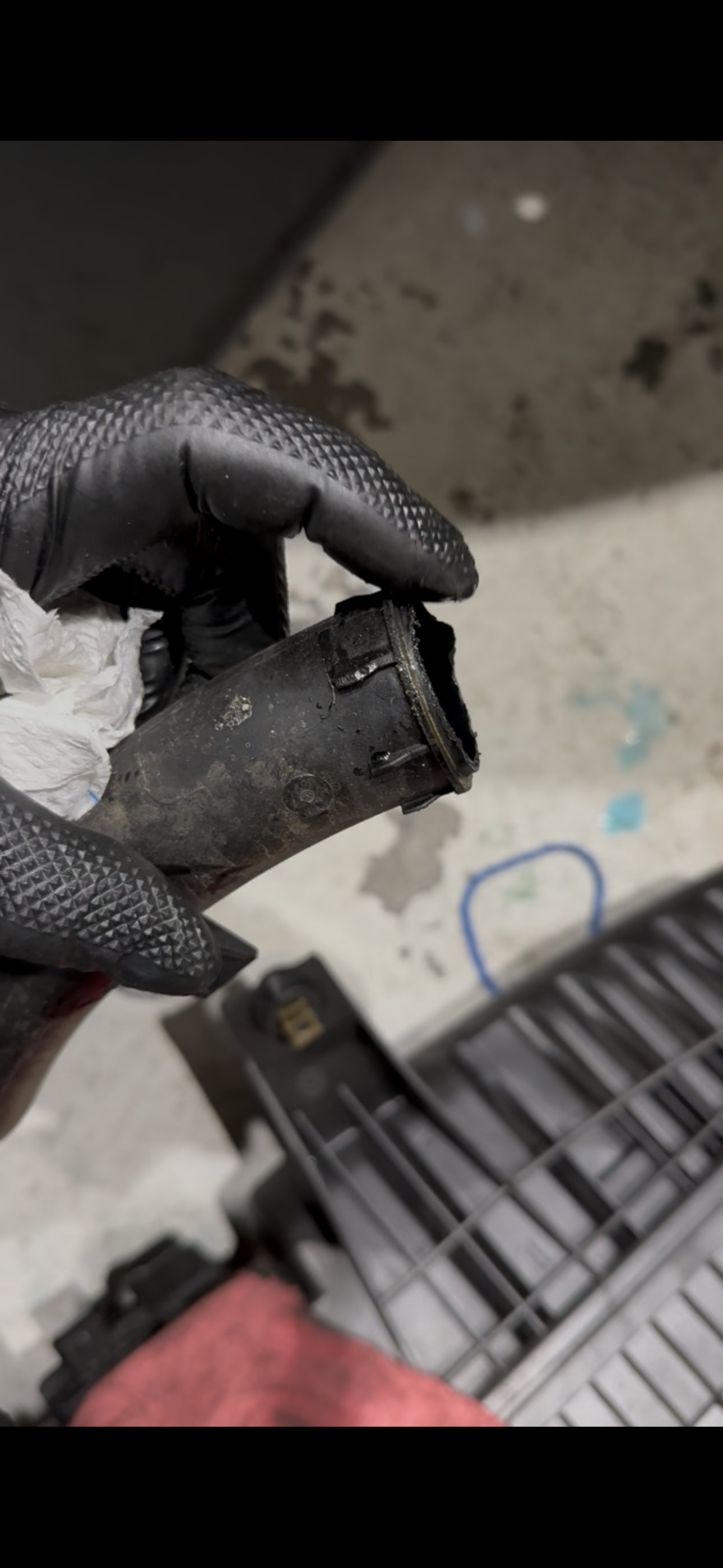
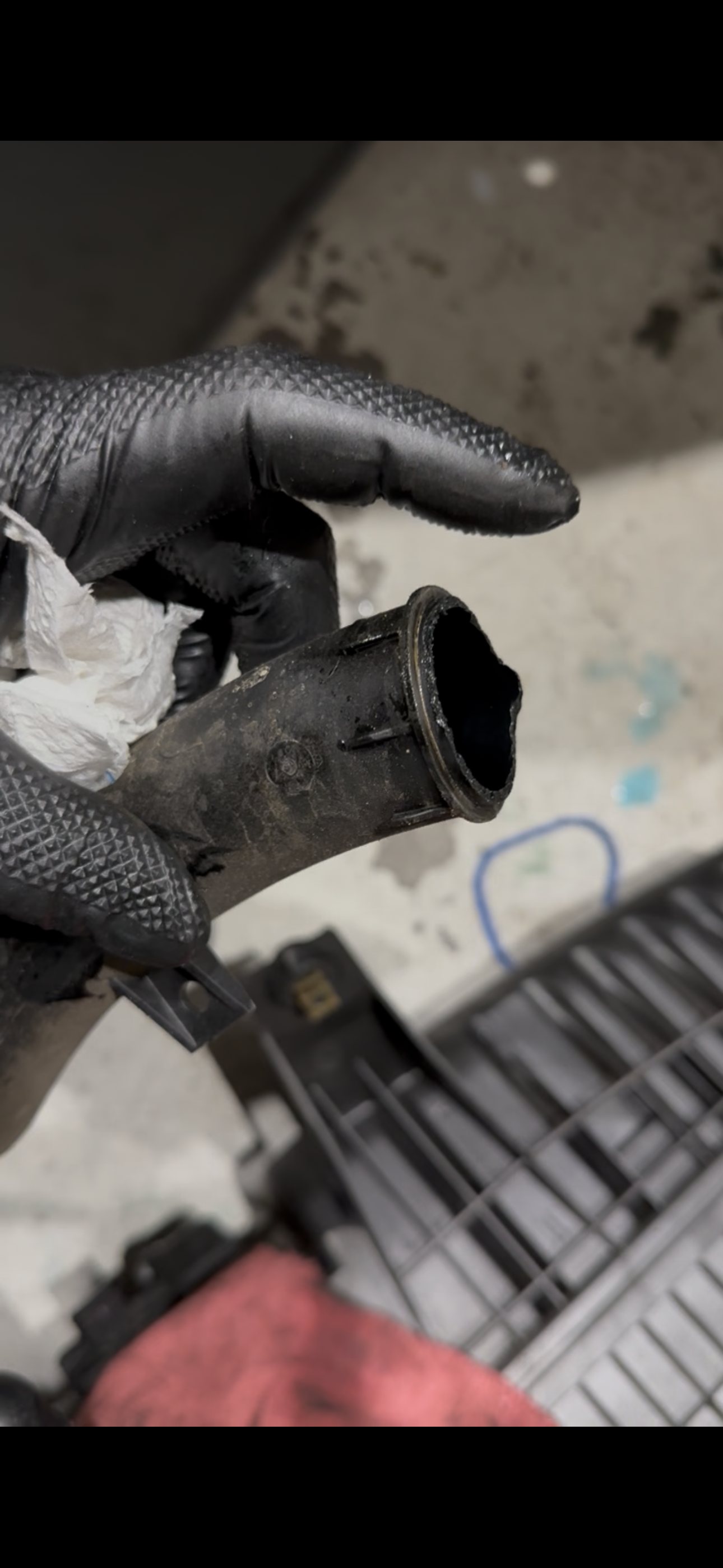
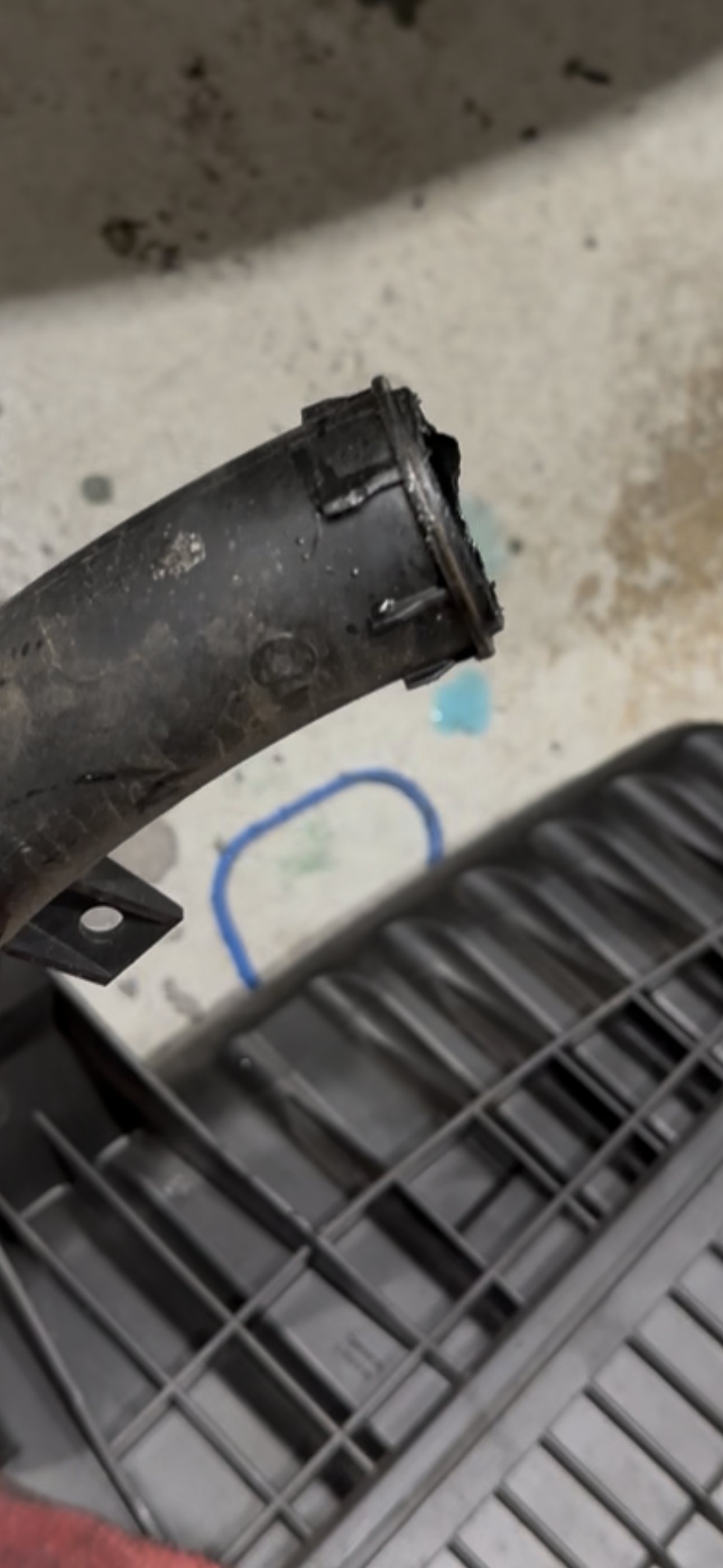
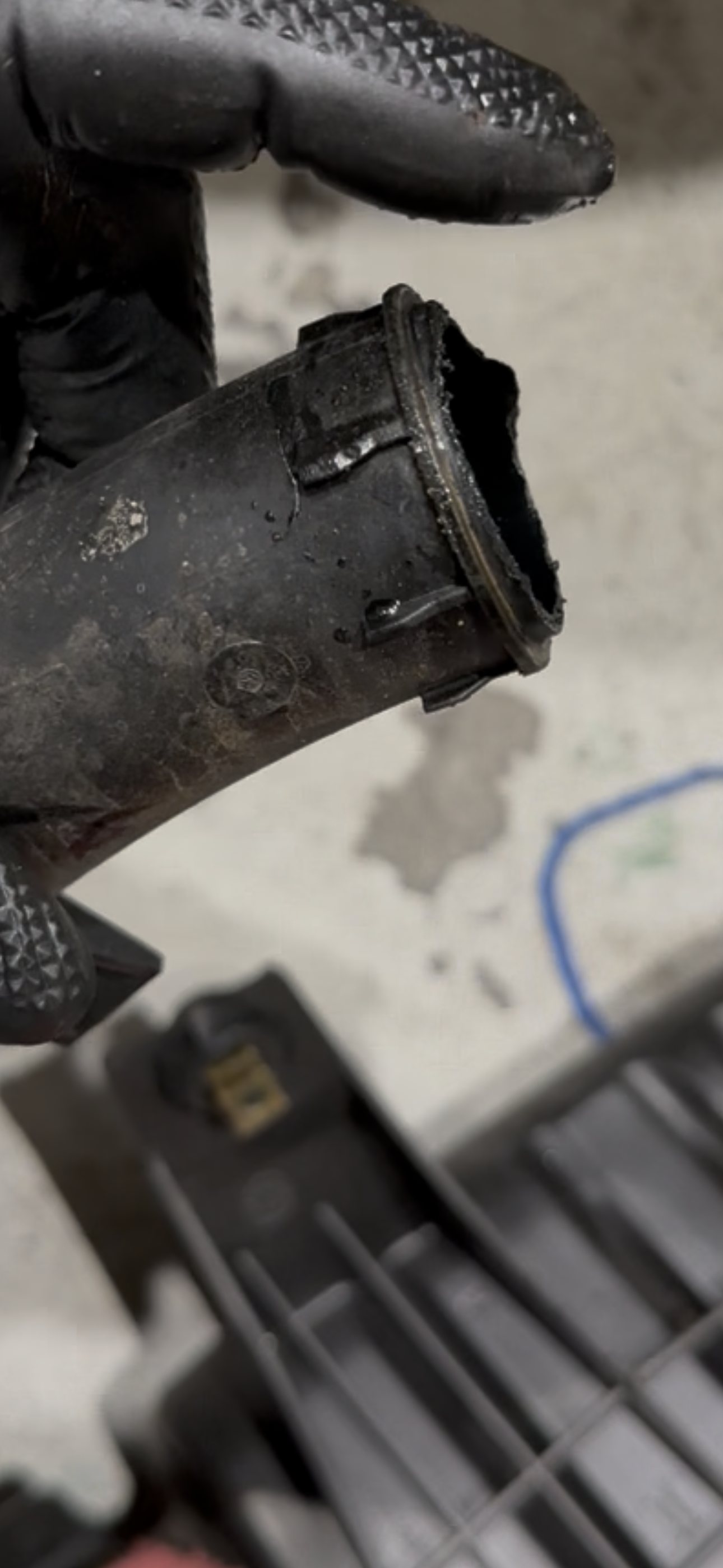
- Diagnosis Diagnosis The rear coolant crossover pipe is identified as the source. The plastic pipe end that connects to the water pump has deteriorated, so the O-ring can no longer seal against it.
- Recommendation History Because the thermostat sits in the same access area, the owner is advised to replace the thermostat assembly alongside the crossover pipe rather than pay for overlapping labour twice. The owner approves both.
- Repair Repair Intake and surrounding components removed, deteriorated crossover pipe and thermostat assembly replaced, water pump connection inspected and sealing surfaces cleaned, new seals fitted.
- Verification Verification Cooling system vacuum tested, vacuum filled with fresh MINI-compatible coolant, brought to operating temperature and rechecked cold. No further leakage observed at the repaired area.
Customer Complaint
The owner noticed a puddle of coolant sitting on top of the transmission and brought the car in before it got worse. They also reported coolant puddles underneath the vehicle after it sat overnight, frequent coolant loss, and that the car could not be driven very far before it needed more coolant. Their main concern was that continuing to drive it would overheat the engine.
Because the coolant was visible near the transmission, the description alone did not identify the source.
Symptoms
- Coolant collecting on top of the transmission case
- Coolant puddles under the vehicle after it sat overnight
- Repeated coolant loss requiring frequent topping up
- Short driving range before coolant needed to be added again
- No overheating reported yet, but the loss rate made it likely
Diagnostic Process
Treat the puddle as the low point, not the source. Coolant on top of the transmission means something above the transmission is leaking. It does not narrow the list on its own, because coolant travels along the block, hoses, wiring, brackets and the transmission housing before it becomes visible. Candidates in this area include the rear coolant crossover pipe, the thermostat housing, hose connections, a temperature-sensor seal, cylinder-head or block coolant connections, and a leak from somewhere else entirely that simply collects here.
Follow the trail upward to the highest fresh wet point. Working up from the transmission put the leak at the rear of the engine, at the crossover pipe's connection to the water pump.
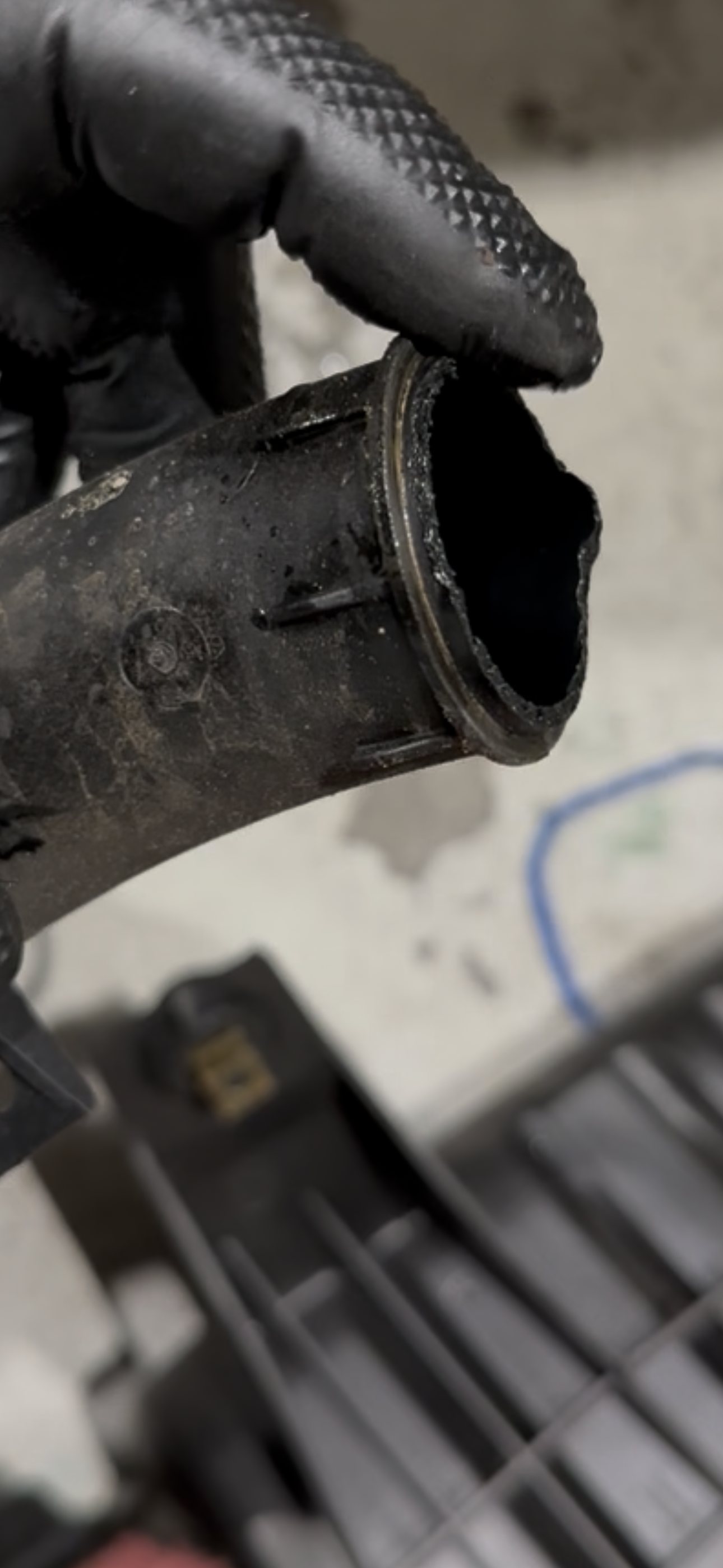
Inspect the failed joint rather than assuming the seal. With the pipe out, the end that enters the water pump was visibly deteriorated - the rim that carries and supports the O-ring was eaten away and no longer a continuous, flat sealing surface. That is what allowed coolant past the joint. The photographs of the removed pipe show the damage clearly: the plastic looks serviceable along its length, and only the sealing rim has failed.
Do not repair a seal when the part behind the seal has failed. A new O-ring fitted to a deteriorated, distorted pipe end would have leaked again, probably soon, and after all the same labour. The pipe had to be replaced.
Price the access, then decide what else belongs in the job. Reaching the crossover pipe requires removing intake and surrounding components in the same area as the thermostat. The owner was advised that replacing the thermostat assembly at the same time would avoid paying for that overlapping labour again if the original thermostat or housing failed shortly afterwards. This was presented as a preventive recommendation - based on the car's age, the condition of the surrounding plastic, and the amount of shared labour - not as a rule that every thermostat must come out with every crossover pipe. The owner approved both.
Repair Performed
- Removed the intake and surrounding components needed to reach the rear cooling-system connections
- Removed the deteriorated rear coolant crossover pipe
- Removed the existing thermostat assembly
- Inspected the water pump connection and mating surfaces for debris, old O-ring material, corrosion and damage
- Cleaned the sealing areas without damaging the aluminium or plastic surfaces
- Installed the replacement crossover pipe with new seals, lightly lubricated and confirmed seated
- Installed the replacement thermostat assembly
- Reconnected all coolant hoses, electrical connectors, brackets and removed components
- Inspected the nearby coolant hoses and plastic fittings for deterioration while access was open
- Vacuum tested the cooling system, then vacuum filled it with fresh MINI-compatible coolant
Parts Used
- Coolant Crossover Pipe Replacement
- Thermostat Assembly Replacement
- Coolant Pipe O-Ring Replacement
- Engine Coolant Replacement
Verification
- Cooling system held vacuum before refilling, confirming system integrity ahead of the coolant going in
- Repaired area checked for leaks after filling
- Engine brought to operating temperature, with coolant circulation and heater operation confirmed
- No abnormal coolant-temperature behaviour and normal radiator fan operation observed
- Coolant level rechecked after the engine had cooled completely, with the expansion tank level stable
- No coolant odour or fresh residue at the water pump connection, the thermostat or the hose joints
- Original complaint of coolant on the transmission and puddles under the car resolved
Technician Notes
The whole diagnosis on this car came down to refusing to accept where the coolant was sitting. Coolant on top of a transmission is a place coolant ends up, not a place it comes from. The useful question is which is the highest point that is freshly wet, and on this car that was the back of the engine where the crossover pipe meets the water pump.
What the photographs show is worth dwelling on, because it is the argument against the cheap version of this repair. The pipe is not shattered. Most of its length is fine. The only thing that has failed is the rim at the water-pump end - the surface the O-ring has to squeeze against - and it has been eaten away into a ragged, incomplete edge. That is enough to lose the entire cooling system's worth of coolant. It is also exactly the kind of damage that gets misread as "the O-ring is old," which leads to a new seal being fitted to a surface that cannot hold one, and a car that comes back leaking.
Plastic cooling parts on these engines age from heat cycling rather than from any single event. They go brittle, distort, soften around the sealing face, and often break during removal even if they were still sealing on the way in. That is why, once the area is open, everything plastic nearby gets looked at. A hose or fitting that is already marginal is far cheaper to deal with now than after the car has been reassembled.
The thermostat recommendation was about labour, not suspicion. Most of the work in this job is getting to the area, and the thermostat lives in it. Replacing an aging thermostat while it is already exposed costs a fraction of what it costs on its own visit. I explain it that way rather than presenting it as a required part of the repair, because it is a decision that depends on the car's age, mileage, prior cooling-system work and the owner's budget.
Vacuum filling is what makes the repair stick from the customer's point of view. Air left in the system after opening a coolant joint produces weak heat, wandering temperatures and coolant pushed out of the expansion tank, and the owner experiences all of that as the repair having failed. The vacuum stage also proves the system holds before a drop of coolant goes in.
Lessons Learned
- Coolant found on top of the transmission almost always originates above it. Follow the trail up to the highest fresh wet point before deciding anything.
- Do not replace only the O-ring when the component that supports the O-ring has deteriorated. A seal needs a sealing surface.
- Plastic cooling-system parts fail from age and heat cycling without necessarily cracking. Damage confined to the sealing rim can still empty the system.
- Inspect the water pump opening for old pipe fragments, seal material, corrosion and scratches before fitting the new pipe. A new part will still leak past debris left in the joint.
- Lubricate the new O-ring with clean coolant or an approved coolant-compatible lubricant. A dry or twisted seal gets cut or rolled out of position on installation.
- Never use the mounting hardware to pull a coolant pipe into place. If it does not seat by hand, stop and look for a displaced seal, debris, misalignment or the wrong part.
- Bundle repairs that share substantial access, but explain the recommendation as a labour decision the customer gets to make, not as a required part of the repair.
- Vacuum test before vacuum filling. The vacuum stage is a free integrity check as well as a way to keep air out.
- The coolant level only means something when the engine is completely cold, and it is worth rechecking after a few full heat cycles.
- A car losing enough coolant to leave overnight puddles should not be driven. The temperature warning is not a reliable backstop when the loss is rapid enough to put air around the sensor.
- Confirm coolant specification and capacity against service information for the exact engine and production date, and never mix incompatible coolant types or fill with tap water.
Final Outcome
The deteriorated rear coolant crossover pipe and the thermostat assembly were replaced, the water pump connection was cleaned and inspected before assembly, and the cooling system was vacuum tested and vacuum filled with fresh MINI-compatible coolant. The car was run through a full operating-temperature cycle, checked for leaks, and the coolant level rechecked once cold. No further leakage was observed at the repaired area, and the owner's original complaint of coolant collecting on the transmission and puddling under the car was resolved.
Customer Feedback
The owner's concern throughout was overheating rather than the leak itself - they had already worked out that the car could not be driven far and wanted to know whether continuing to top it up was safe. It was not, and they were told so plainly. When the overlapping labour between the crossover pipe and the thermostat was explained, they approved both rather than risk paying for the same access twice.
Photos From This Repair
Questions About This Repair
Why was coolant collecting on top of the transmission?
Because the leak was above it. The rear coolant crossover pipe connects to the water pump at the back of the engine, and coolant escaping that joint runs down and settles on the transmission case. Where coolant collects is rarely where it comes from - it travels along the block, hoses, brackets and harnesses before it becomes visible.
Could the leak have been fixed with just a new O-ring?
No. The O-ring seals against the plastic pipe end, and on this car that pipe end had deteriorated. A new seal pressed against a damaged, distorted sealing surface has nothing to seal to. When the component supporting the O-ring has failed, the component is the repair.
Why replace the thermostat at the same time?
The thermostat sits in the same service area, so most of the labour needed to reach the crossover pipe is also the labour needed to reach the thermostat. Doing both at once avoided the owner paying for that access twice if the aging thermostat failed shortly afterwards. This was a judgement call based on the car's age and the overlapping labour, not a rule that a thermostat must always be replaced with a crossover pipe.
Why do plastic coolant pipes fail on these engines?
Heat cycling. The plastic is repeatedly heated and cooled for years, and it gradually becomes brittle, distorts, softens around the sealing area or cracks. The failure can be severe enough to leak badly while the pipe still looks intact at a glance - the damage on this one was confined to the rim that the O-ring seals against.
Why vacuum fill the cooling system instead of just topping it up?
These systems trap air after being opened. Vacuum filling pulls the air out first, then draws coolant in, and the vacuum stage doubles as an integrity check before any coolant goes in. Trapped air causes false temperature readings, weak cabin heat, localised hot spots and coolant being pushed out of the expansion tank - all of which get mistaken for a repair that is still leaking.
Is it safe to keep driving a MINI that is losing coolant this quickly?
No. A car leaving puddles overnight should not be driven until it is repaired. The dashboard temperature warning is not a reliable safety net either, because rapid coolant loss can leave air around the temperature sensor and the gauge may not reflect the hottest part of the engine.
Repairs Like This One
- 7 documented Engine repairs. See them all →
- 5 documented Cooling repairs. See them all →