2012 MINI Cooper S 100,000-Mile Service: What It Took
Quick Summary
A 2012 MINI Cooper S came in for a 100,000-mile service. Rather than quoting a generic package, the documented service history was reviewed first: brake fluid had been done regularly, the spark plugs and all four coils had been replaced at around 45,000 miles, and there was no record of the coolant, the gearbox fluid or the serpentine belt ever being serviced. That produced a list built around what the car had actually missed. The plugs went back on the list because at 100,000 miles they had about 55,000 miles on them, right at the factory interval — but the coils were deliberately left alone at the same age. Work performed was oil and filter, coolant drain and refill, brake fluid flush, manual transmission fluid service, engine air filter, cabin air filter, serpentine belt and spark plugs, with a leak inspection and a reset of the oil and brake fluid service intervals. Two items outside the maintenance list were also corrected: the aftermarket angel eye halo wiring in both headlights was rewired, and a corroded tire valve stem was replaced.
- Vehicle
- 2012 MINI Cooper S (R56, N18 1.6L Turbo)
- Difficulty
- ★★☆☆☆
- Repair Time
- Single weekend visit
- Outcome
- Full 100k service completed, service intervals reset, two extra faults corrected
Vehicle Information
| Year | 2012 |
|---|---|
| Model | Cooper S |
| Chassis | R56 |
| Engine | N18 1.6L Turbo |
| Transmission | 6-speed manual |
| Mileage | 100000 |
Repair Timeline
- Approximately 45,000 miles History Spark plugs and all four ignition coils replaced by a previous shop. Brake fluid serviced regularly. No record of coolant, transmission fluid or serpentine belt service.
- July 2026 Complaint Owner requests a 100,000-mile service on her 2012 Cooper S and asks for a time and cost estimate.
- July 2026 Diagnosis Service history reviewed against the factory intervals. Coolant, gearbox fluid and belt identified as never done; plugs at roughly 55,000 miles of service and included. Coils deliberately left alone.
- July 2026 Diagnosis Estimate issued at $900–$1,100 plus tax, with battery and charging system testing and a leak inspection added as separate line items.
- August 2026 Repair Oil and filter, coolant drain and refill, brake fluid flush, manual gearbox fluid, engine air filter, cabin filter, serpentine belt and spark plugs completed. Vehicle inspected for leaks.
- August 2026 Repair Aftermarket angel eye halo wiring in both headlights rewired and a corroded tire valve stem replaced.
- August 2026 Verification Brake fluid and oil service intervals reset in the vehicle. No leaks found during inspection.
Customer Complaint
The owner contacted the shop asking for a 100,000-mile service on her 2012 Cooper S, wanting to know the soonest appointment, roughly how long the car would be in, and a ballpark cost so she could plan. There was no driveability complaint. She had also pulled her own service records before the visit and shared what she found, which is what the estimate was built around.
Symptoms
- No driveability complaint; the car arrived for scheduled maintenance
- Oil and brake fluid service reminders active in the vehicle
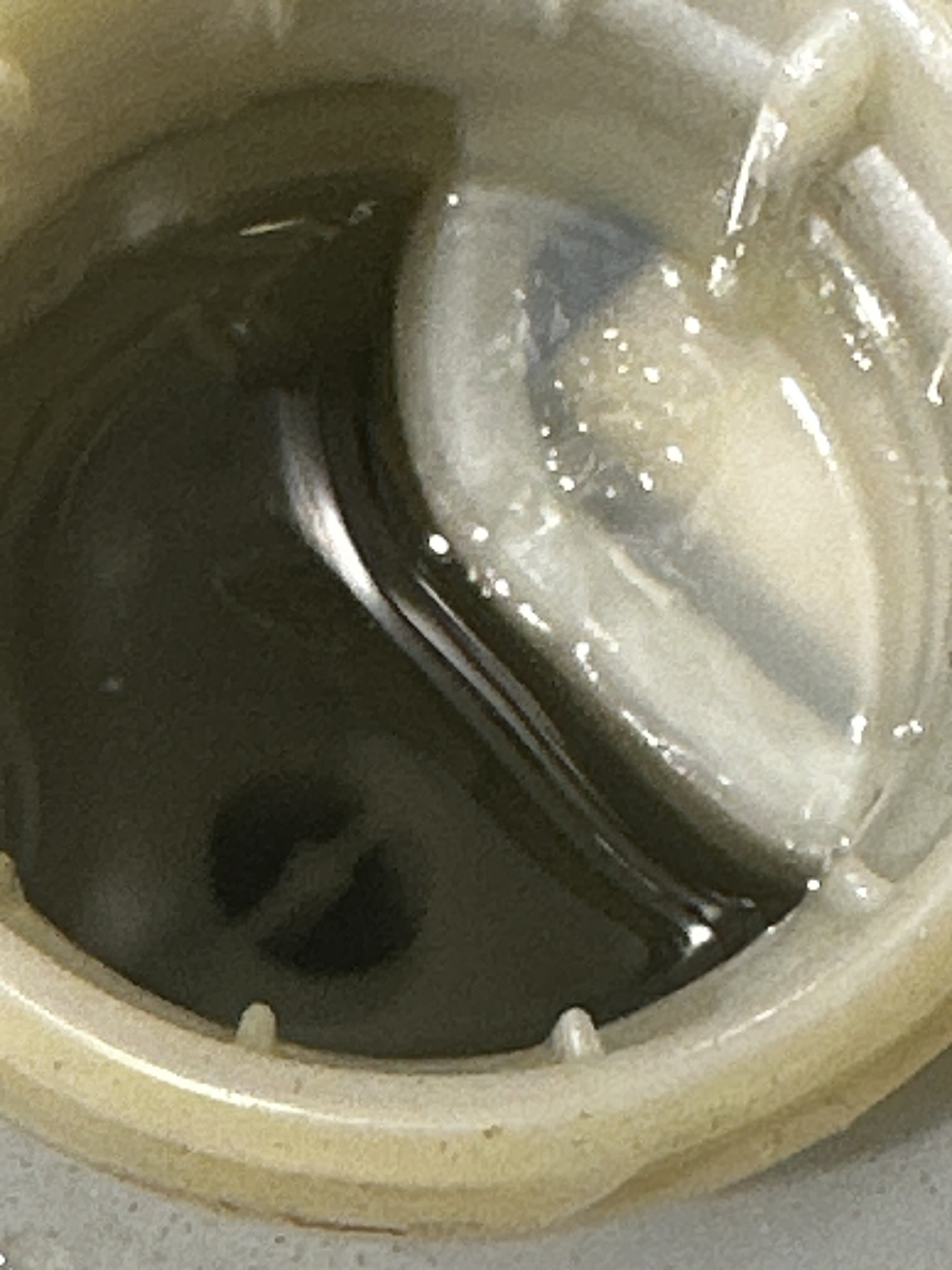
- Brake fluid dark brown in the reservoir rather than clear straw
- Coolant, manual transmission fluid and serpentine belt with no service record at 100,000 miles
- Spark plugs approximately 55,000 miles into a 60,000-mile interval
- Aftermarket angel eye halo wiring in the headlights in need of repair
- Corroded valve stem on one wheel
Diagnostic Process
Start from the service history, not the mileage. A 100k service sold as a fixed package is guesswork with a price on it. Reading this car's records first changed the list twice: it removed nothing the car needed, but it explained why the coolant, gearbox oil and belt were the priorities and why the ignition coils were not.
Separate the plugs from the coils. Both had been replaced at about 45,000 miles. Those two parts get fitted together and are then usually assumed to age together, but they do not. At 100,000 miles the plugs had roughly 55,000 miles on them and were effectively due against the 60,000-mile factory interval, while the coils were nowhere near a wear-out point. Replacing coils that are working is spending the customer's money to reduce the shop's uncertainty.
Ask why the coils were replaced so early. A set of coils at 45,000 miles is unusual enough to be worth a question — a warranty failure replaced as a set, a misfire diagnosis, a preventive request or an underlying cause such as a tune. The records did not say. It was noted rather than guessed at, and it did not change what the car needed.
Confirm the transmission type before quoting fluid. The estimate was drafted on the assumption of an automatic, based on a VIN decode. The car is a manual, and it got a manual gearbox fluid service. Fluid specification, fill procedure and labour all differ between the two, so this is a detail worth settling with the car in front of you rather than from a VIN lookup.
Scan and inspect as part of the service, not as an upsell. A full fault code scan, a battery and alternator charging test and an inspection for oil and coolant leaks were quoted as line items so the customer could see they were included. The leak inspection came back clean.
Repair Performed
- Engine oil and filter change
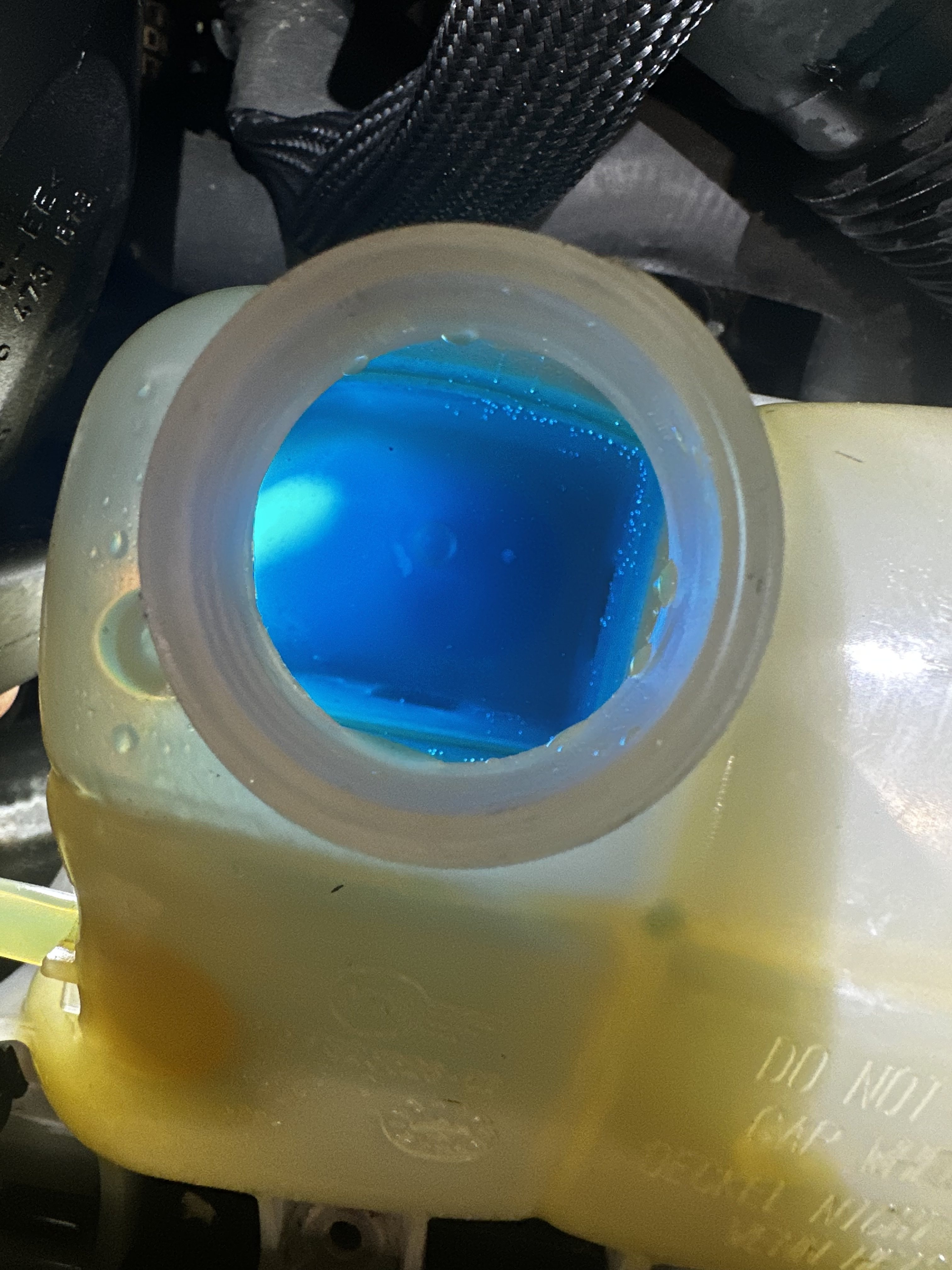
- Coolant drain and refill
- Brake fluid flush
- Manual transmission fluid service
- Engine air filter replacement
- Cabin air filter replacement
- Serpentine belt replacement
- Spark plug replacement
- Inspection for oil and coolant leaks
- Brake fluid and oil change service intervals reset
- Rewired the aftermarket angel eye halo lighting in both headlights
- Replaced a corroded tire valve stem
The service was estimated at $900–$1,100 plus tax before the headlight wiring and valve stem were found.
Parts Used
- Engine Oil Filter Replacement
- Engine Air Filter Replacement
- Cabin Air Filter Replacement
- Serpentine Belt Replacement
- Spark Plugs Replacement
- Tire Valve Stem Replacement
Verification
- No oil or coolant leaks found during inspection
- Oil change service interval reset in the vehicle
- Brake fluid service interval reset in the vehicle
- Aftermarket halo lighting confirmed working after the rewire
- Corroded valve stem replaced and the wheel returned to service
Technician Notes
The value in this job was in the half hour spent reading the car's history before writing the estimate. Every item on the final list was there because the record showed the car had not had it, and the one item that was removed and then put back — the spark plugs — was argued on mileage in service rather than on the odometer reading. That is also the honest way to explain a price to a customer: this is what your car has missed, not this is what the package costs.
Leaving the coils in was the more defensible call, but it carries a risk worth stating out loud. If the car develops a misfire a few thousand miles after a four-figure service, the customer does not experience that as an unrelated failure — they experience it as the service not working. That is precisely why the plugs went back on the list even though they were technically short of the interval, and why the coils were documented as inspected and left rather than silently skipped.
The transmission type is the detail that could have gone wrong. A VIN decode put this car down as an automatic and the quote was written that way; the gearbox is a manual. Nobody was harmed because the car was in the shop before the fluid was bought, but a quote that names the wrong fluid and the wrong labour time is a conversation you do not want to have at pickup.
The two extra items are typical of what a car this age hands you once it is on the lift. Aftermarket angel eye halos are almost always wired in by someone in a hurry, and a corroded valve stem is a slow leak the owner would have discovered on a cold morning. Neither was on the estimate; both were cheap to correct while the car was already there.
The brake fluid was worth photographing. The history said it had been serviced regularly, and the fluid in the reservoir was still dark brown. Brake fluid does not darken from dirt — it darkens with age and absorbed moisture — so "serviced regularly" in a record and "serviced recently" are not the same claim. It is also the one fluid on this list where the failure mode is a pedal that goes long under heat rather than an inconvenience.
Resetting the oil and brake fluid counters matters more than it sounds. An unreset counter tells the next technician — possibly you, in two years — that the service is still due, and it makes the customer's own reminder useless.
Lessons Learned
- Read the service records before writing the estimate. The history, not the odometer, decides what a major service contains.
- Parts fitted at the same time do not age at the same rate. Plugs and coils replaced together at 45,000 miles are not both due at 100,000.
- Judge wear items on miles in service, not on the vehicle's total mileage.
- Do not replace working components preventively just because the car is already apart, but do document what was inspected and left.
- Confirm the transmission type on the car. A VIN decode is a starting point, not the answer.
- Anything unusual in the history — a coil set at 45,000 miles — is worth a question even when it changes nothing.
- Reset the condition-based service counters. The work is not finished until the car agrees it was done.
- Expect a car near 100,000 miles to hand you one or two small faults on the lift, and quote them separately from the service.
Final Outcome
The car left with its fluids, filters, belt and plugs current, no leaks found, both service counters reset and two unrelated faults corrected: the aftermarket headlight halo wiring and a corroded tire valve stem. The ignition coils were left in service with about 55,000 miles on them and the reasoning recorded, so the next technician knows they were considered rather than overlooked.
Photos From This Repair
Questions About This Repair
What is included in a MINI Cooper 100,000-mile service?
On this 2012 Cooper S it was engine oil and filter, a coolant drain and refill, a brake fluid flush, a manual transmission fluid service, engine and cabin air filters, a serpentine belt and spark plugs, plus a computer scan, a leak inspection and a service interval reset. The exact list should come from the car's own service history, not a generic package.
How often should MINI Cooper S spark plugs be replaced?
The factory interval on the N18 is 60,000 miles under normal use. On this car the plugs were fitted at about 45,000 miles and the car arrived near 100,000, so they had roughly 55,000 miles on them and were replaced as part of the service.
Does a MINI manual transmission need a fluid change?
The manufacturer treats the gearbox oil as a lifetime fill, but on a car near 100,000 miles with no record of it ever being changed, servicing it is cheap insurance. This car had never had it done in its documented history.
How much does a MINI Cooper S 100k service cost?
This one was estimated at $900–$1,100 plus tax before the two extra items were found. The exact figure depends on which items your own service history says are actually due.
Do the service reminders reset themselves after maintenance?
No. The condition-based service counters for oil and brake fluid have to be reset with a tool after the work is done, otherwise the car keeps reporting the service as due and the next shop has no accurate record of when it was performed.
Repairs Like This One
- 11 documented Electrical repairs. See them all →
- 5 documented Cooling repairs. See them all →
Diagnosis documented in real time during the repair.