2013 MINI Cooper Coupe S Complete Brake Service
Quick Summary
This 2013 MINI Cooper Coupe S received a complete four-wheel brake service: front and rear ceramic pads and rotors, brake-fluid replacement, hub cleaning, front caliper-bracket preparation and front slider-pin service. The parts installation was only one part of the job. Much of the work went into removing corrosion and buildup so the new rotors could sit flat and the pads and floating calipers could move correctly. The rear Detroit Axle kit cost $75.53 and the front drilled-and-slotted Detroit Axle kit cost $110.00 for this repair; those figures are historical job costs rather than current retail pricing.
- Vehicle
- 2013 MINI Cooper Coupe S (R58)
- Difficulty
- ★★★☆☆
- Repair Time
- Not documented hours
- Outcome
- Complete front and rear brake service finished with new ceramic pads, rotors and brake fluid after careful hub, bracket and slider-pin preparation
Vehicle Information
| Year | 2013 |
|---|---|
| Model | Cooper Coupe S |
| Chassis | R58 |
| Transmission | Not documented |
| Mileage | Not documented |
Repair Timeline
- Service request Complaint Complete four-wheel brake service requested for a 2013 MINI Cooper Coupe S.
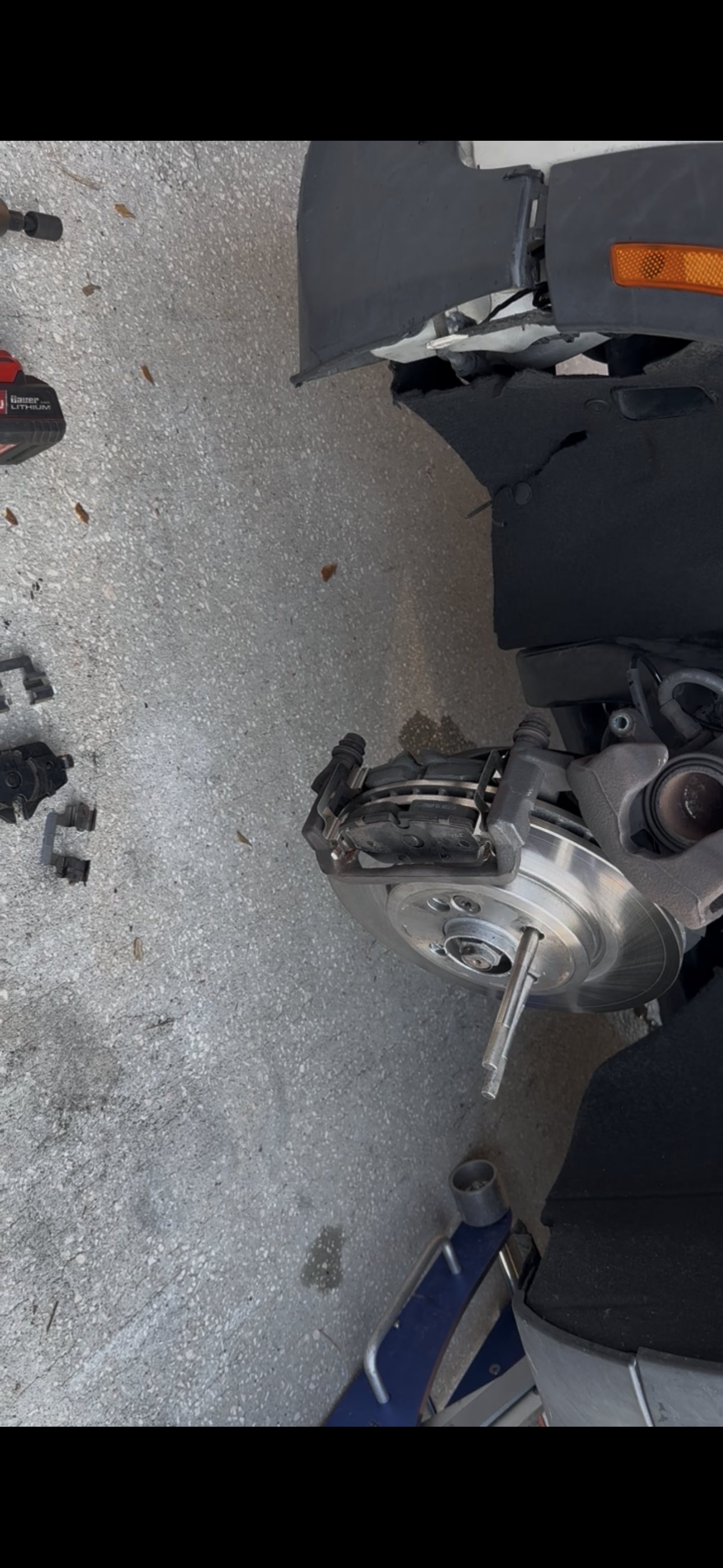
- Disassembly and inspection Diagnosis Front and rear brakes were disassembled; hub faces, caliper brackets and caliper hardware were inspected for corrosion and buildup.
- Preparation Repair Hub mounting surfaces and front pad-contact areas were cleaned, and front caliper slider pins were cleaned and re-greased.
- Installation Repair Front and rear ceramic pads and rotors were installed, followed by brake-fluid replacement and wheel installation.
- Completion Verification The brake pedal, fluid level, assemblies, wheel-fastener torque and brake operation were checked after service.
Customer Complaint
The vehicle was presented for a complete front and rear brake service. A customer had previously reported spending approximately $1,200 for an aftermarket pad-and-rotor job. This repair illustrates how carefully selected aftermarket parts can reduce the parts cost while still allowing time for the cleaning, preparation and verification that a proper brake service requires. It is not a universal price quote: vehicle condition, labor and current parts prices vary.
Symptoms
- Front and rear brake pads and rotors were due for replacement
- Brake fluid was included in the complete service
- Corrosion and buildup were present at front caliper-bracket pad-contact areas
- Hub mounting surfaces required cleaning before the new rotors were fitted
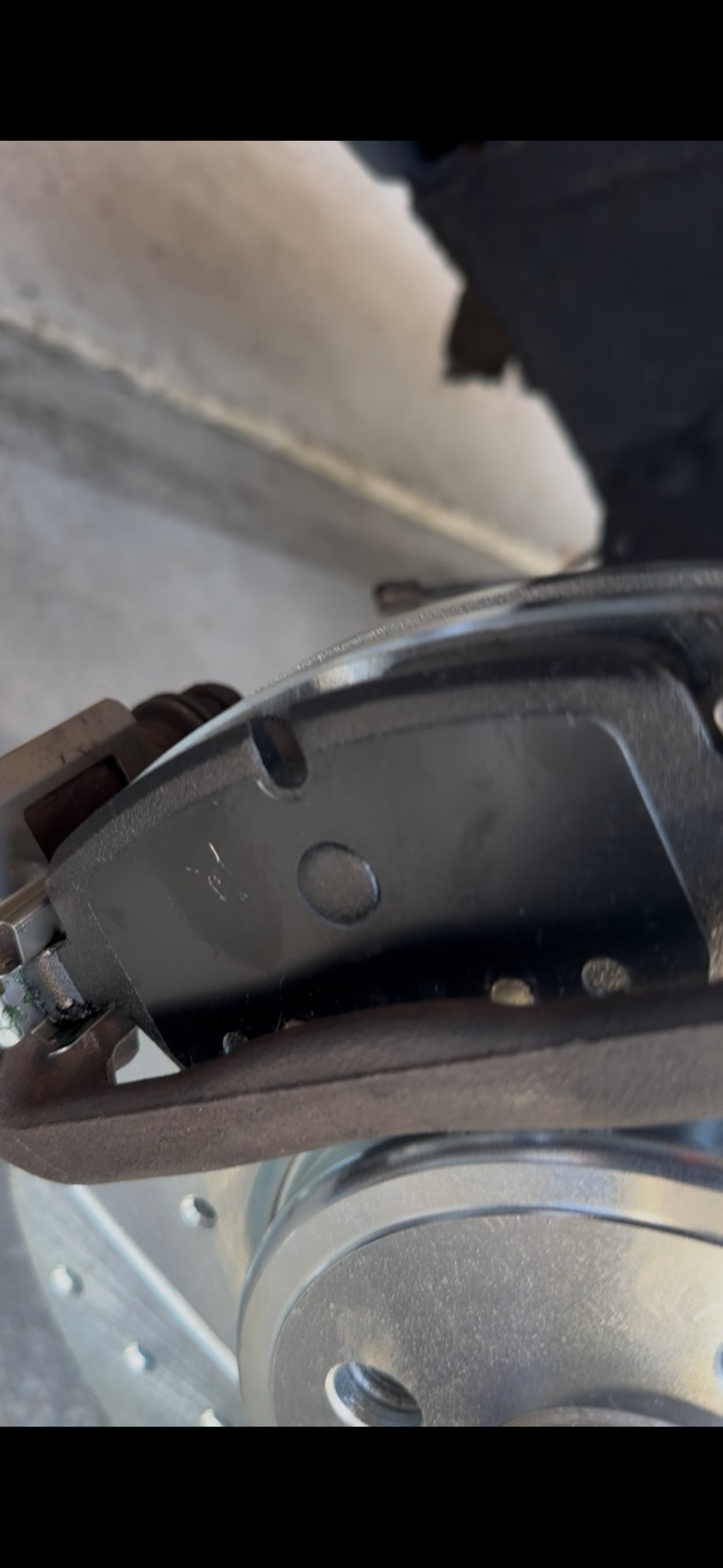
- The front rotor friction surface was slightly wider than the brake-pad contact area; the fit was inspected and retained
No pad-thickness, rotor-thickness, runout or brake-fluid moisture measurements were documented, so none are inferred here.
Diagnostic Process
Inspect before installing. With all four wheels removed, the brake assemblies and related hardware were inspected. This was not treated as a remove-and-replace operation. The condition of the hub faces, caliper brackets, slider pins, boots, hoses and visible hardware determines whether new parts can fit and move as designed.
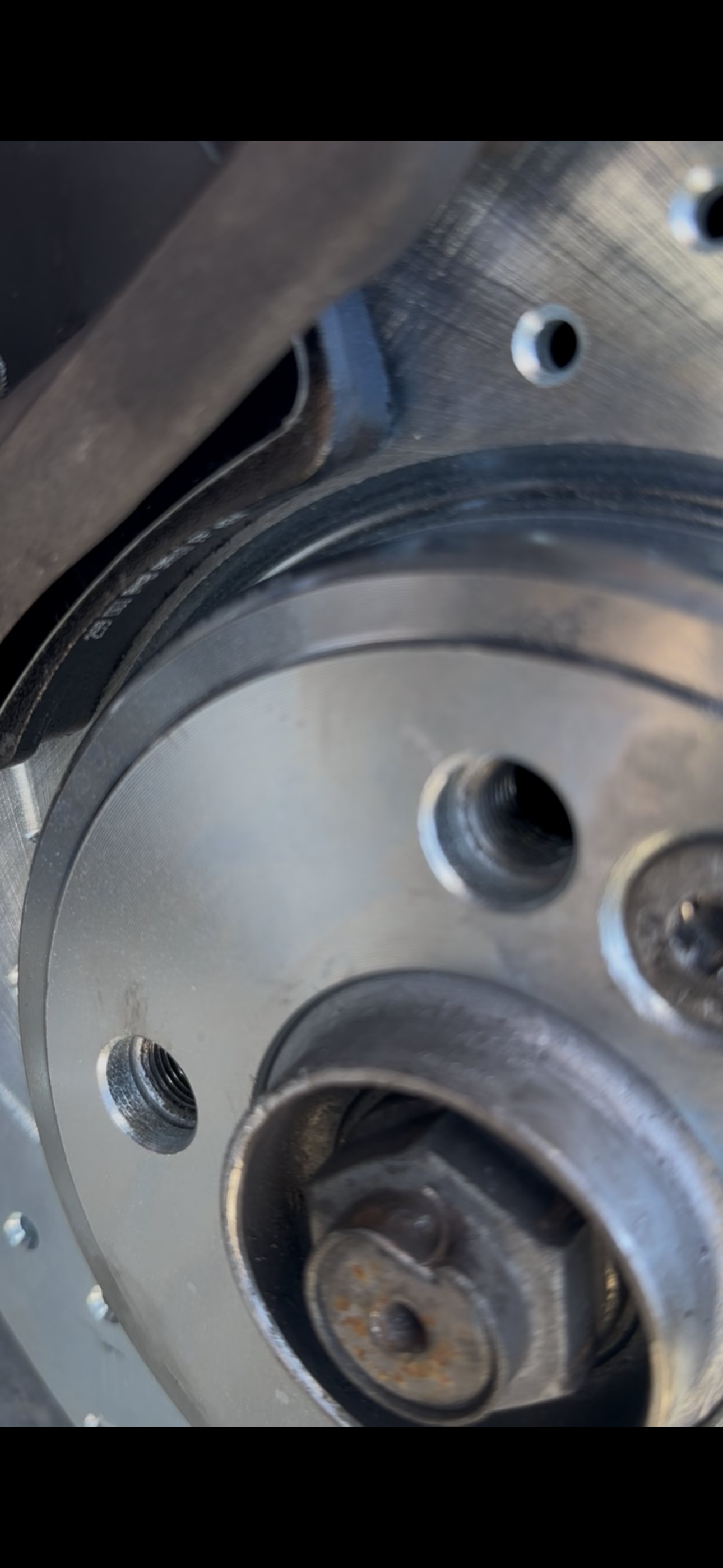
Check the rotor-to-hub mounting surface. Rust, scale or debris trapped behind a rotor can prevent it from sitting flat. That can contribute to runout, pedal pulsation, vibration and uneven wear even when the rotor itself is new. The hub faces on this car were cleaned before installation.
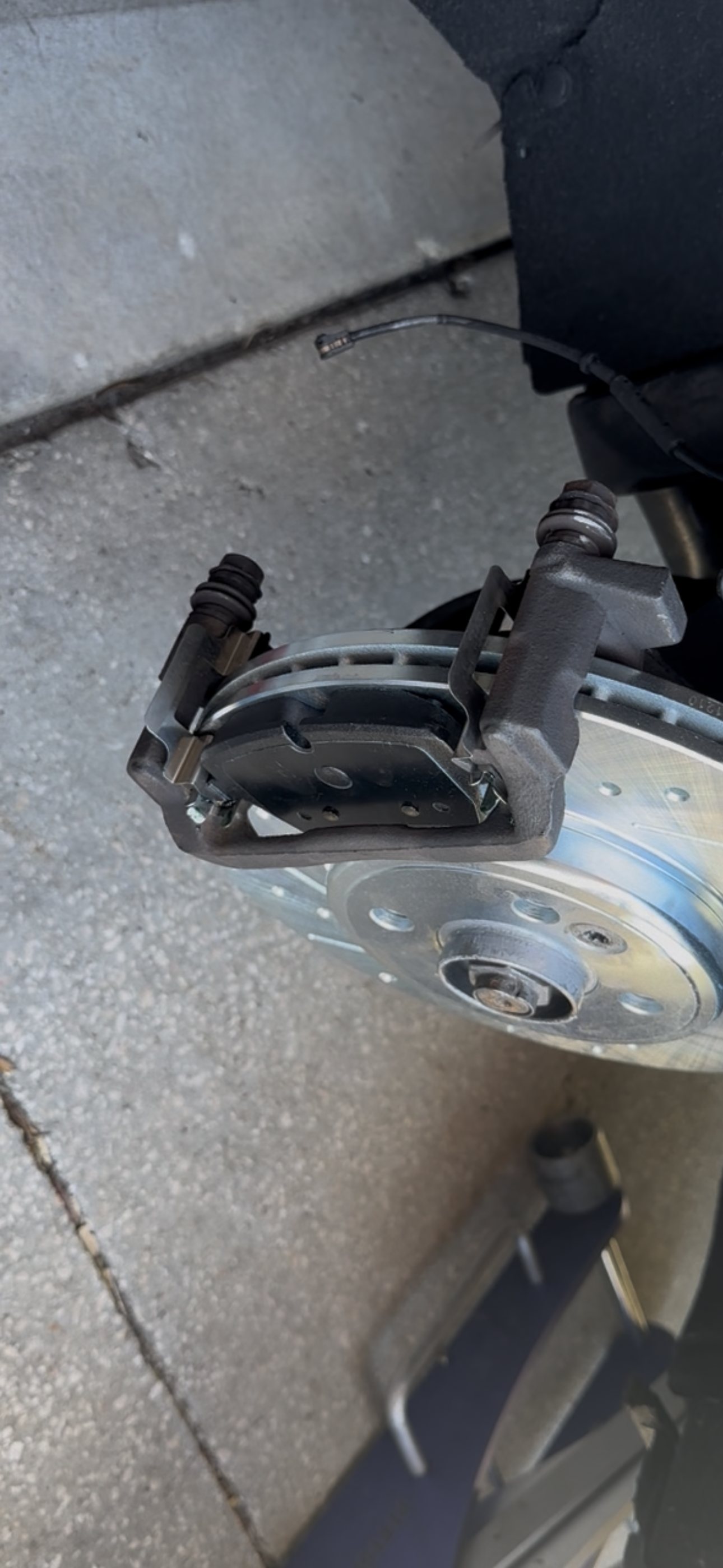
Check the pad-contact areas. Corrosion was cleaned from the front caliper brackets where the pad ears move. Buildup in these areas can restrict pad movement and contribute to drag, uneven wear, heat or noise. Cleaning removes the obstruction without removing structural material from the bracket.
Confirm floating-caliper movement. The front slider pins were removed, cleaned, inspected and re-greased with a small amount of suitable brake lubricant. A floating caliper depends on free slider movement to apply and release evenly.
Treat the front rotor appearance as an observation, not a diagnosis. The front rotor friction surface extended slightly beyond the area swept by the pad. The fitment was inspected and the parts were kept in service. No measurements or manufacturer specifications established a defect, incorrect size or unsafe condition, and a pad does not necessarily sweep every visible part of a rotor face.
Repair Performed
- Replaced the front brake pads with ceramic pads
- Replaced the front rotors with drilled-and-slotted rotors
- Replaced the rear brake pads with ceramic pads
- Replaced the rear rotors
- Cleaned all rotor-to-hub mounting surfaces
- Applied a very light coat of anti-seize at the hub/rotor mating surfaces, away from friction surfaces
- Cleaned corrosion from the front caliper-bracket pad-contact areas
- Removed, cleaned, inspected and re-greased the front caliper slider pins
- Applied minimal brake lubricant only at appropriate pad-ear/contact points
- Replaced and bled the brake fluid
- Reinstalled all four wheels and torqued the fasteners to the manufacturer-specified value
The installed rear Detroit Axle four-piece rotor and ceramic-pad kit cost $75.53 for this job. The installed front Detroit Axle four-piece drilled-and-slotted rotor and ceramic-pad kit cost $110.00. These amounts document this repair only and should not be read as current retail prices.
Remove wheels
      ↓
Inspect brake assemblies
      ↓
Remove pads, calipers and rotors
      ↓
Clean hub mounting surfaces
      ↓
Clean caliper-bracket contact areas
      ↓
Clean and lubricate slider pins
      ↓
Install new rotors and pads
      ↓
Replace and bleed brake fluid
      ↓
Reinstall wheels and torque fasteners
      ↓
Verify pedal and brake operation
Parts Used
- Front Brake Pads Replacement
- Front Brake Rotors Replacement
- Rear Brake Pads Replacement
- Rear Brake Rotors Replacement
- Brake Fluid Replacement
Verification
Before driving, the brake pedal was pumped until normal firmness returned. The fluid level and serviced areas were checked, the pads and calipers were confirmed seated, and the wheels were verified installed with their fasteners torqued to specification. Initial low-speed operation was checked for normal stopping, abnormal scraping, grinding, obvious drag or pulling.
Final verification included normal pedal feel, straight-line braking, stopping response and the absence of abnormal vibration or noise. No numerical torque value is published because the exact service specification used was not documented in the source material.
Technician Notes
The visible new parts are not the whole brake job. Rust left on a hub can compromise how a new rotor seats. Corrosion left under pad hardware can stop a new pad from sliding. Dry or binding slider pins can prevent a floating caliper from applying evenly. Installing premium-looking parts over unprepared surfaces does not correct those underlying conditions.
Lubrication is equally dependent on restraint. A small amount belongs at specified moving contact points; none belongs on pad friction material or rotor braking surfaces. More grease is not more protection when excess can collect debris or contaminate friction material.
The front rotor/pad relationship was documented rather than dramatized. A visible unswept band by itself does not prove a rotor is defective. Fitment concerns should be decided with verified application data, measurements and manufacturer guidance, not appearance alone.
Brake fluid was included because it is hygroscopic: it absorbs moisture over time. Periodic replacement helps preserve hydraulic performance and reduce internal corrosion risk. The exact fluid specification and measured moisture content were not documented and are therefore not claimed.
Lessons Learned
- A quality brake service is cleaning, inspection, preparation, installation and verification—not merely a parts swap.
- Clean the rotor-to-hub mating surface so corrosion cannot hold the rotor away from the hub.
- Clean pad-contact areas so the pad ears can move without binding.
- Service slider pins whenever access and condition call for it; floating calipers depend on free movement.
- Apply brake lubricant sparingly and never contaminate pad or rotor friction surfaces.
- Treat visual fitment differences as observations until measurements or verified specifications establish a problem.
- Historical parts costs can explain one repair, but should not be advertised as current or universal pricing.
- Follow the installed pad-and-rotor manufacturer's bedding instructions and avoid unnecessary hard stops immediately after replacement unless safety requires one.
Final Outcome
The MINI left with new front and rear ceramic brake pads, new front and rear rotors and renewed brake fluid. The hubs, front caliper brackets and front slider pins were prepared so the new components could seat and move correctly. Wheel fasteners and brake operation were verified at completion. The result was a complete four-wheel brake service built around careful preparation, not simply low-cost parts replacement.
Customer Feedback
A customer once told the technician they had spent approximately $1,200 for an aftermarket pad-and-rotor service. By sourcing aftermarket components carefully, this shop can often bring a comparable brake-service total closer to 50% - 80% of that amount, depending on the vehicle's condition, parts availability and labor required. This case records $185.53 in front and rear pad-and-rotor kits for this specific job; it is not a standing quote or guarantee.
Photos From This Repair
Questions About This Repair
What was replaced during this MINI Coupe S brake service?
Front and rear ceramic brake pads and rotors were replaced, and the brake fluid was renewed. The work also included cleaning the hubs and front caliper brackets, servicing the front slider pins and verifying wheel-fastener torque.
Why does cleaning matter when the pads and rotors are new?
Rust behind a rotor can keep it from sitting flat, while corrosion at the pad-contact areas can restrict pad movement. Preparing those surfaces helps the replacement parts fit and move as intended.
Was the wider front rotor friction surface considered a defect?
No defect was established. The rotor friction surface was slightly wider than the pad contact area, the fitment was inspected and the parts were retained. A pad does not necessarily sweep every visible portion of a rotor face.
How much did the brake kits cost for this repair?
The rear Detroit Axle rotor and ceramic-pad kit cost $75.53 and the front drilled-and-slotted rotor and ceramic-pad kit cost $110.00 for this specific job. Those are historical prices, not current retail quotes.