2014 MINI Cooper S: Headlight Coding, Parking Sensor and DSC Module
Quick Summary
A 2014 MINI Cooper S Hardtop (F56) came in with three electrical complaints at once: the front-left headlight would not stay on, a front parking sensor was physically missing, and the instrument panel showed no vehicle speed. Nothing tied them together, and each needed a different repair. The left headlight has its own control unit, and that unit reported that it was not encoded and that its coding data did not match the vehicle; coding it to this car fixed the complaint without touching the lamp. The missing front outer left ultrasonic sensor matched a recorded signal-line fault at that exact position and was replaced with a plug-and-play sensor. The absent speed display traced to DSC messages that never arrived — the instrument cluster and the body controller both recorded the vehicle-speed message as missing, with DSC named as the transmitter. Fuses, connector supply, ground, board supply, pin contact and pump-circuit continuity were all checked before the control unit was condemned. After a full module backup, the DSC/ABS unit was replaced, reset and coded, the brakes and ABS were bled, the steering angle was recalibrated and the gateway was reset. A road test confirmed speed in the head-up display, the speedometer and the cluster, a headlight that stayed on through repeated cycles, and a working parking-assist display.
- Vehicle
- 2014 MINI Cooper S Hardtop (F56)
- Difficulty
- ★★★★☆
- Repair Time
- Not documented hours
- Outcome
- Three unrelated electrical complaints resolved separately — the left headlight module was coded to the vehicle, the missing front outer left ultrasonic sensor was replaced, and a DSC/ABS control unit was replaced, reset and coded to restore the vehicle-speed display
Fault Codes
024308 — Encoding: Control Unit Is Not Encoded02430B — Encoding: Coding Data Does Not Match The Vehicle03058E — DSC Entry Noted As Possibly Programming-Related135A08 — Valvetronic Servomotor Position Sensors, Signal: Not Plausible1F054D — Drive, Safety Function: Wheel Speed Or Acceleration Implausible80322E — Ultrasonic Sensor, Front Outer Left, Signal Line: Short Circuit To Ground Or Open CircuitD915A1 — No Message (Vehicle Speed), Receiver BDC, Transmitter ICM/DSCE11464 — No Message (Vehicle Speed), Receiver Instrument Cluster, Transmitter ICM/DSC
Vehicle Information
| Year | 2014 |
|---|---|
| Model | Cooper S Hardtop |
| Chassis | F56 |
| Transmission | Not documented |
| Mileage | Not documented |
Repair Timeline
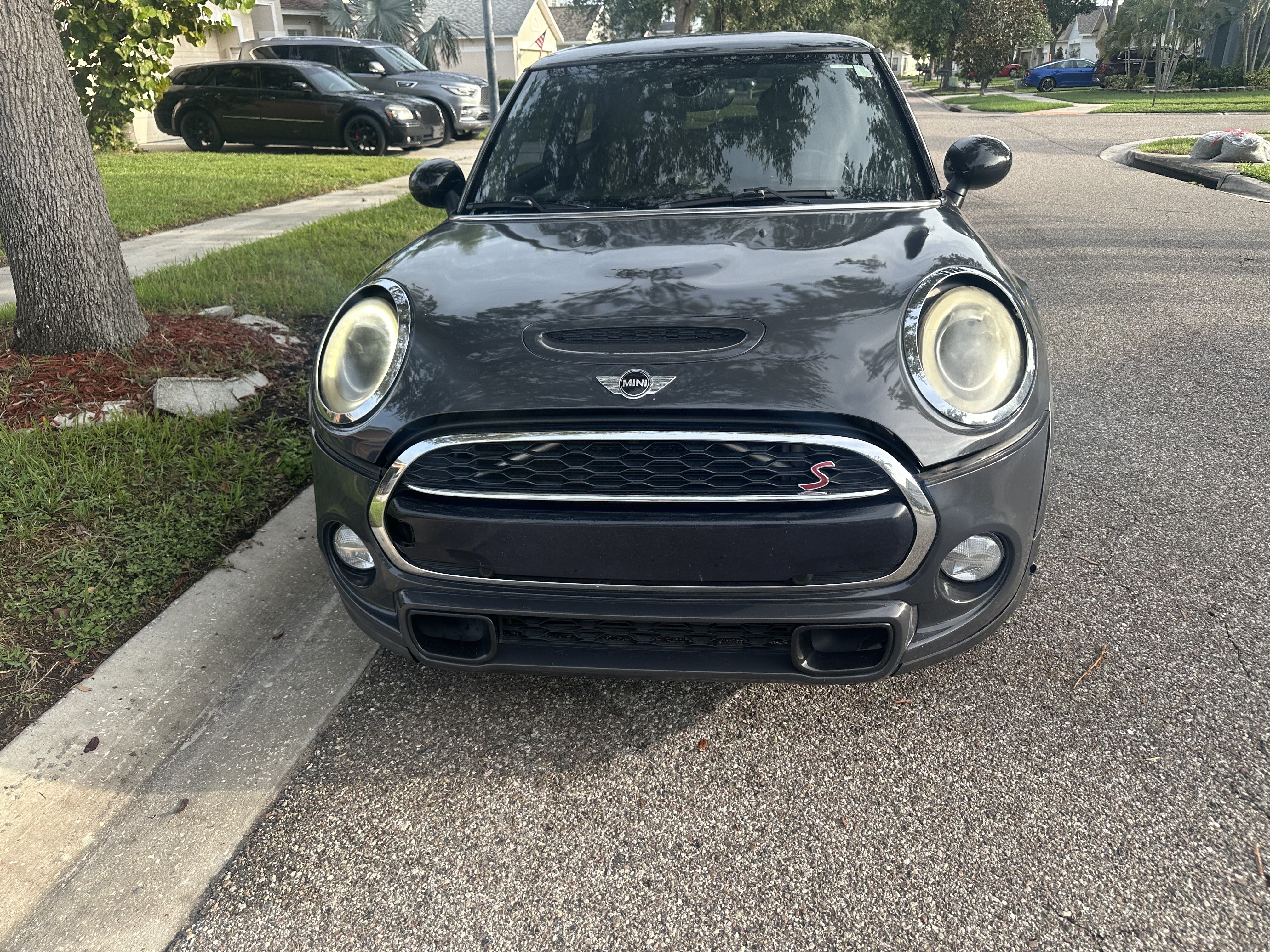
- Intake Complaint A 2014 MINI Cooper S Hardtop arrives with three electrical complaints — the front-left headlight will not stay on, a front parking sensor is missing, and no vehicle speed is shown in the instrument panel.
- Initial scan Diagnosis A full quick test is run rather than diagnosing each complaint by itself. Faults are recorded in the left headlight electronics, the parking manoeuvring assistant, the instrument cluster, the body domain controller and the engine module.
- Headlight diagnosis Diagnosis The left headlight is controlled by its own FLE control unit, and that unit reports that it is not encoded and that its coding data does not match the vehicle. No bulb or housing failure is established.
- Headlight repair Repair The left headlight control unit is coded to the vehicle, then confirmed by rereading the coded vehicle identification and by switching the lamp through several start and stop cycles. 024308 and 02430B no longer return.
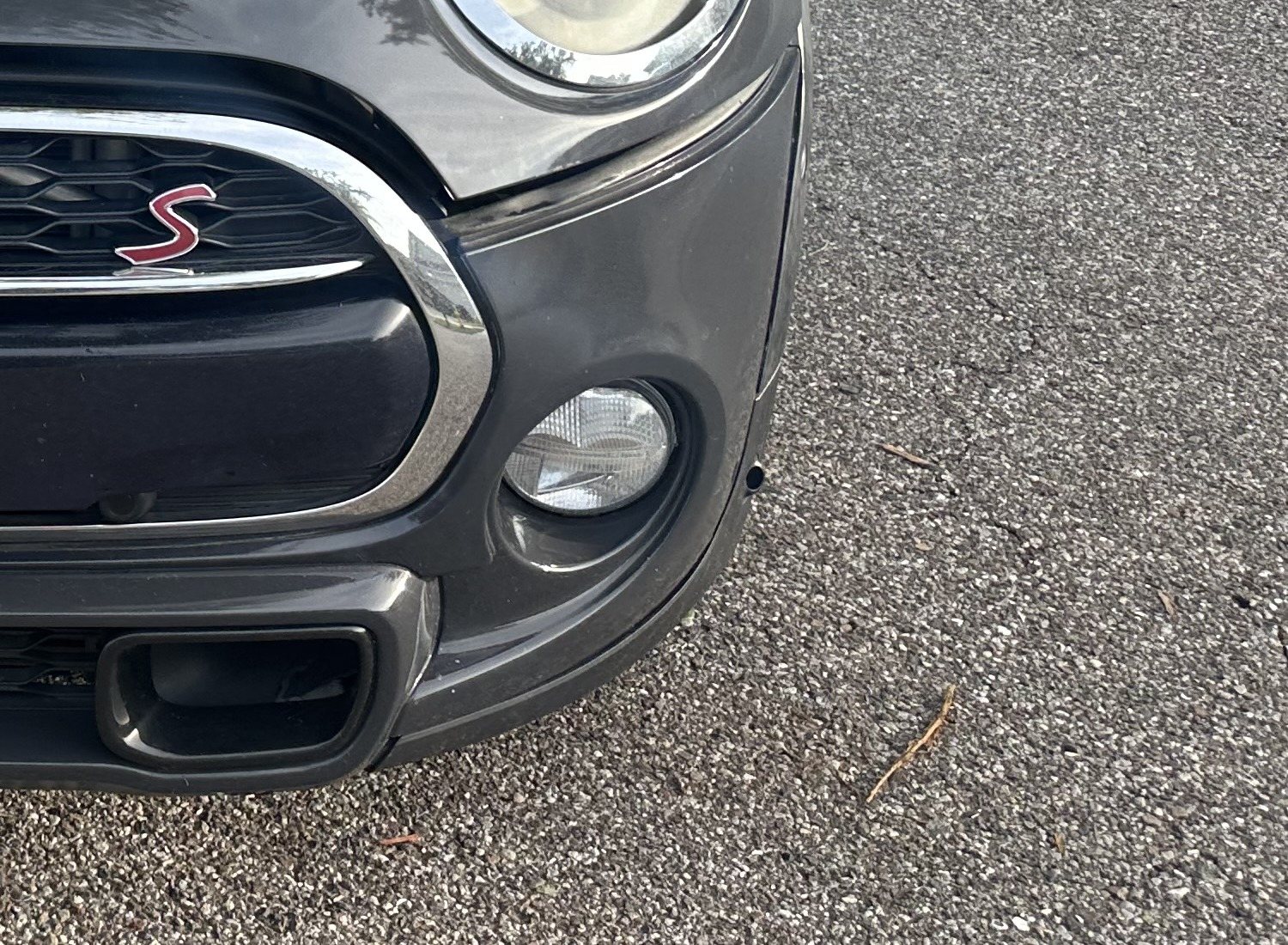
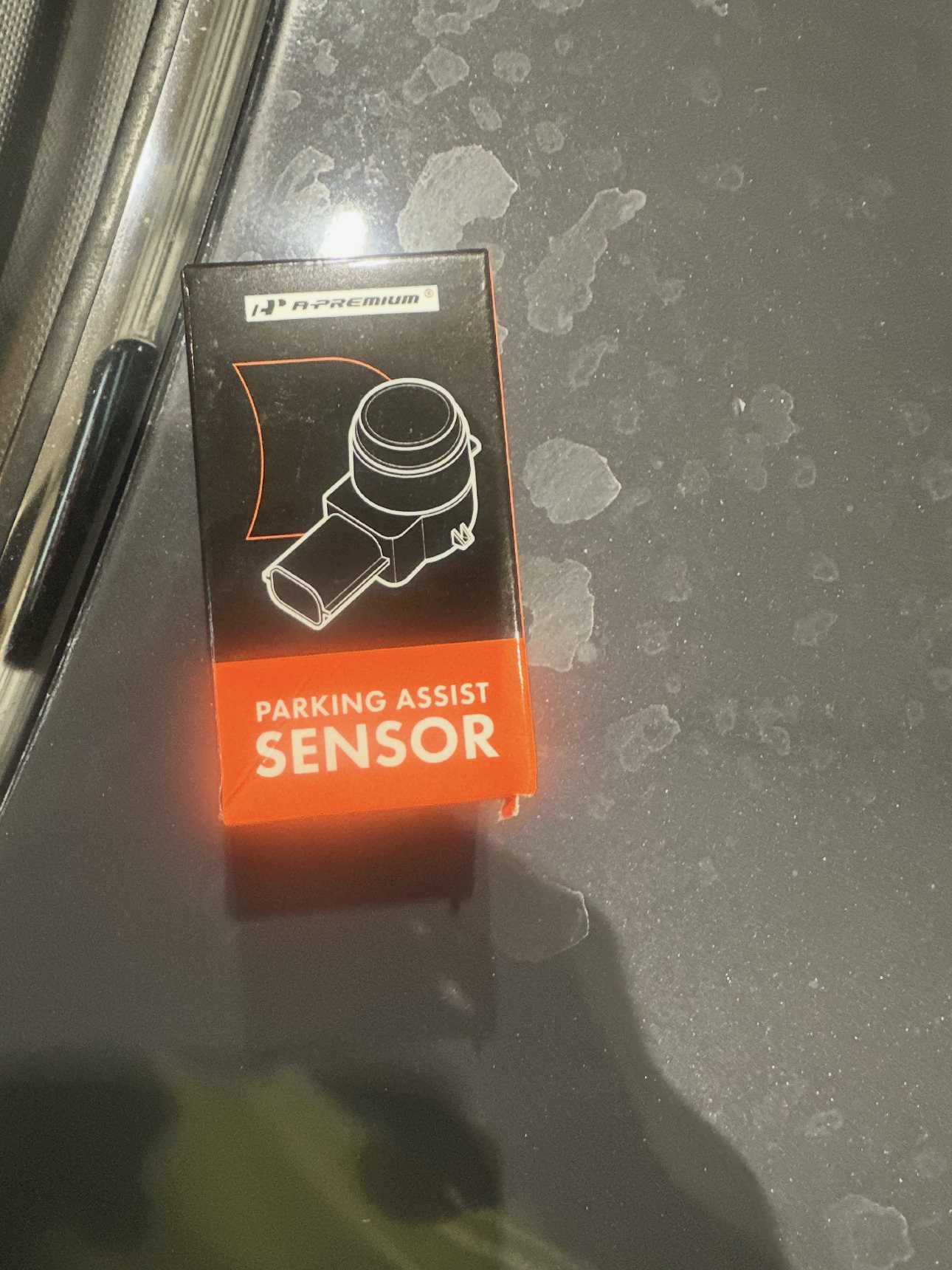
- Parking assist Repair The front outer left ultrasonic sensor is physically absent, which matches the recorded signal-line fault for that position. A plug-and-play replacement sensor is fitted; no programming is required for the sensor itself.
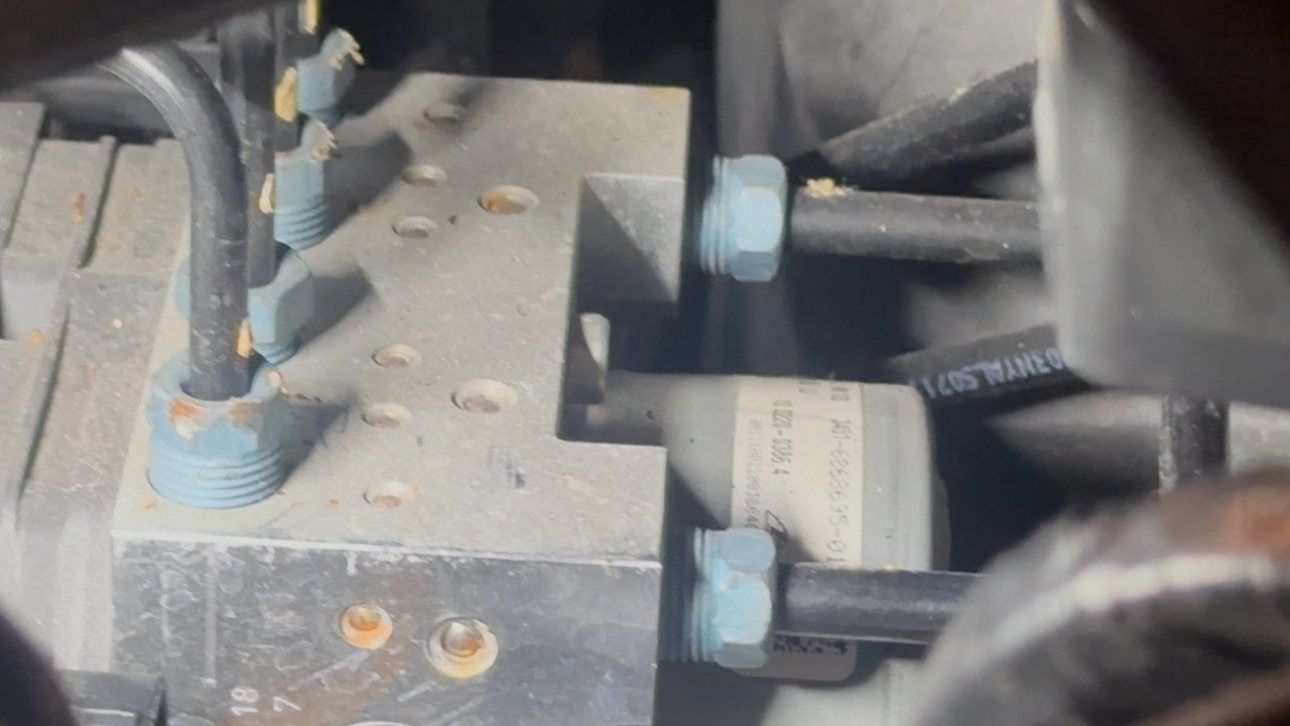
- Speed-display diagnosis Diagnosis The missing speed reading traces to DSC messages that never arrive. Fuses for the pump, valves and electronics are intact, supply is present at the DSC connector pins and ground is present at its ground pin, and with the unit opened, board supply, pin contact and pump-circuit continuity all check out. The control unit itself becomes the suspect.
- DSC repair Repair A full backup of the module data is taken before any writing. The DSC/ABS control unit is replaced, reset and coded to the vehicle, the brake and ABS hydraulics are bled with fresh fluid, the steering angle is recalibrated, the central gateway is reset and tyre pressures and TPMS are reset.
- Verification Verification The car is road tested. Vehicle speed reads in the head-up display, the speedometer and the instrument cluster, the headlight stays illuminated through repeated cycles, and parking assist reports live distances again.
- Left for the customer Diagnosis A separate startup noise from the engine compartment, alongside 135A08 for the Valvetronic servomotor position sensors, is documented as an open item outside this repair. 03058E on the DSC is noted as possibly programming-related and worth rechecking against current software level.
Customer Complaint
The customer described three separate problems on the same car:
- The front-left (driver-side) headlight would not stay illuminated.
- The front-left parking sensor was missing.
- No vehicle speed appeared in the instrument panel.
Three complaints on one car invite the assumption of one common cause. That assumption was not made here; each concern was diagnosed on its own evidence.
Symptoms
- Front-left headlight would not remain on
- Front outer left ultrasonic parking sensor physically absent from the bumper
- Parking-assist system inoperative
- No vehicle-speed reading in the instrument panel or speedometer
- Left headlight control unit reporting encoding faults
- Instrument cluster and body controller reporting that the vehicle-speed message was not being received
- Undervoltage entries recorded across several modules
- Separate startup noise from the engine compartment, unrelated to the three complaints
Diagnostic Process
Scan the whole car before repairing any one complaint. A full quick test was run first. That matters with multiple complaints, because it shows which modules are reporting their own faults and which are only reporting that they are missing data from somewhere else. Codes are recorded below as observations. A code names a condition and a circuit; it does not name a part to replace, and several entries in this scan turned out to be downstream consequences rather than causes.
| Code | Module | Status | Recorded description | How it was treated |
|---|---|---|---|---|
| 024308 | FLE left headlight electronics | Permanent | Encoding: control unit is not encoded | Directed the headlight repair; cleared and did not return after coding |
| 02430B | FLE left headlight electronics | Permanent | Encoding: coding data does not match the vehicle | Directed the headlight repair; cleared and did not return after coding |
| 8059BD | FLE left headlight electronics | Temporary | Undervoltage detected | Recorded alongside the encoding faults; not treated as the cause |
| 80322E | PMA parking manoeuvring assistant | Permanent | Ultrasonic sensor, front outer left, signal line: short circuit to ground or open circuit | Consistent with the physically missing sensor, confirmed by inspection rather than by the code |
| 80337E | PMA parking manoeuvring assistant | Temporary | Voltage supply: undervoltage at the control unit | Recorded as an accompanying supply entry |
| D41473 | PMA parking manoeuvring assistant | Permanent | No message (actual steering angle, front axle reduced, 0x18F), transmitter ICM | Missing-data entry consistent with the DSC communication loss |
| E11464 | Instrument cluster | Permanent | No message (vehicle speed, 0x1A1), receiver KOMBI, transmitter ICM/DSC | Key evidence that the cluster was not being sent a speed value |
| E1145A | Instrument cluster | Permanent | No message (ID code, speed conversion, 0x3CB), receiver KOMBI, transmitter ICM/DSC | Same missing-data path as E11464 |
| B7F6B6 / B7F6B7 | Instrument cluster | Temporary | Fault in voltage supply to the electronics unit / to the display unit | Supply entries; no cluster replacement was performed or proposed |
| D915A1 | Body domain controller | Permanent | No message (vehicle speed, 0x1A1), receiver BDC, transmitter ICM/DSC | Confirms the speed message was absent from the bus, not just from the cluster |
| D91654 | Body domain controller | Permanent | No message (actual wheel speed, unsecured, 0x254), transmitter DSC | Missing DSC data; not evidence of a wheel-speed sensor failure |
| D916ED | Body domain controller | Permanent | No message (status vehicle standstill, 0x2ED), transmitter DSC | Missing DSC data |
| 1F054D | Digital motor electronics | Permanent | Drive, safety function: wheel speed or acceleration implausible | Consequence of the engine module also losing DSC data |
| CD9B04 | Digital motor electronics | Permanent | No message (wheel actual speed), receiver DME, transmitter DSC | Consequence of the same missing DSC messages |
| 135A08 | Digital motor electronics | Permanent | Valvetronic servomotor position sensors, signal: not plausible | Separate finding, documented with the startup-noise concern and left outside this repair |
| 03058E | DSC | — | Noted on the DSC as possibly programming-related | Documented for recheck against current software level; no software claim is made here |
The headlight was a data problem, not a lamp problem. On this car the left headlight is operated by its own FLE control unit, and that unit must carry coding that matches the vehicle. It reported both that it was not encoded and that its coding data did not match. That is a complete explanation for a lamp that comes on and then goes out, and it is reached without condemning a bulb, a housing or the harness. Nothing in the evidence establishes a physical lighting failure.
The missing sensor was confirmed by looking, not by the code. The parking module recorded a signal-line fault at the front outer left ultrasonic position. That is exactly what an absent sensor looks like electrically, but the same code can also be produced by wiring damage, so the bumper was inspected and the sensor was found to be genuinely missing.
The speedometer complaint was traced upstream, not to the cluster. The instrument cluster does not measure speed; it displays a value that other modules provide. Both the cluster and the body controller recorded that message as absent, naming DSC as the transmitter, and the engine module independently recorded implausible wheel speed. That pattern points at the source of the data rather than at the display.
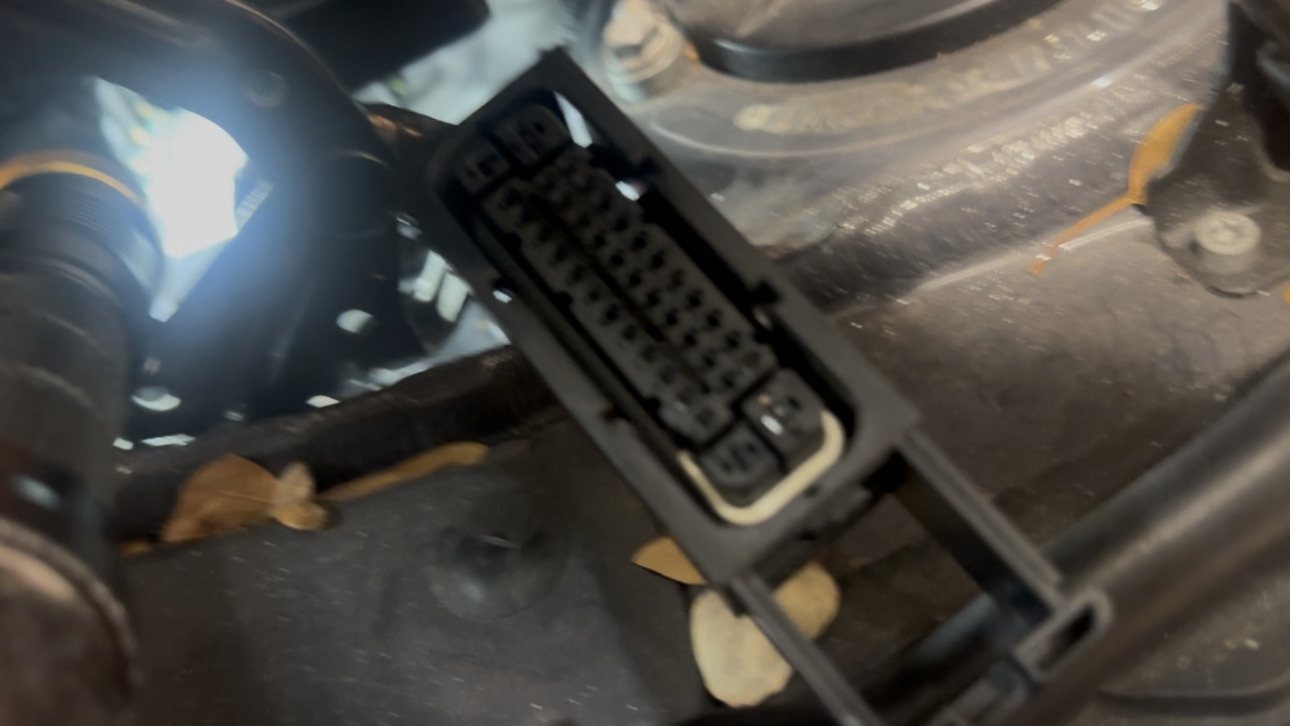
Everything cheap and reversible was ruled out before the module was condemned. Fuses for the pump, valves and electronics were verified intact. Supply was verified present at the DSC connector, and ground was verified at its ground pin. The unit was then opened: supply reached the circuit board, all pin connections were sound, and the pump circuit had continuity. With power, ground and the circuits accounted for and the module still not transmitting, the control unit itself was the remaining suspect.
Repair Performed
Headlight. The left headlight control unit was coded to the vehicle. Coding was then verified by rereading the vehicle identification held in the module and confirming it matched the car.
Parking assist. The front outer left ultrasonic sensor was replaced with a new sensor. The replacement is a plug-and-play part; no programming is required for the sensor itself.
DSC/ABS. A full backup of the module data was taken before anything was written, so a coding error would not leave the car worse off than it arrived. The DSC/ABS control unit was then replaced, reset and coded to the vehicle.
Work that the DSC replacement made necessary. Because the hydraulic unit had been opened, the brakes and ABS module were bled — old fluid was removed from the brake lines and the ABS control lines and replaced with fresh fluid. The electromechanical power steering was recalibrated, the central gateway module was reset, and tyre pressures were checked and the TPMS reset.
Parts Used
- DSC/ABS Control Unit Replacement
- Front Outer Left Ultrasonic Parking Sensor Replacement
- Brake Fluid Replacement
Verification
Each of the three original complaints was tested as a function, not as a successful programming session:
- Headlight. The lamp was switched through several start and stop cycles and stayed illuminated. Codes 024308 and 02430B no longer appeared, and a coded-identity check confirmed the module matched the car.
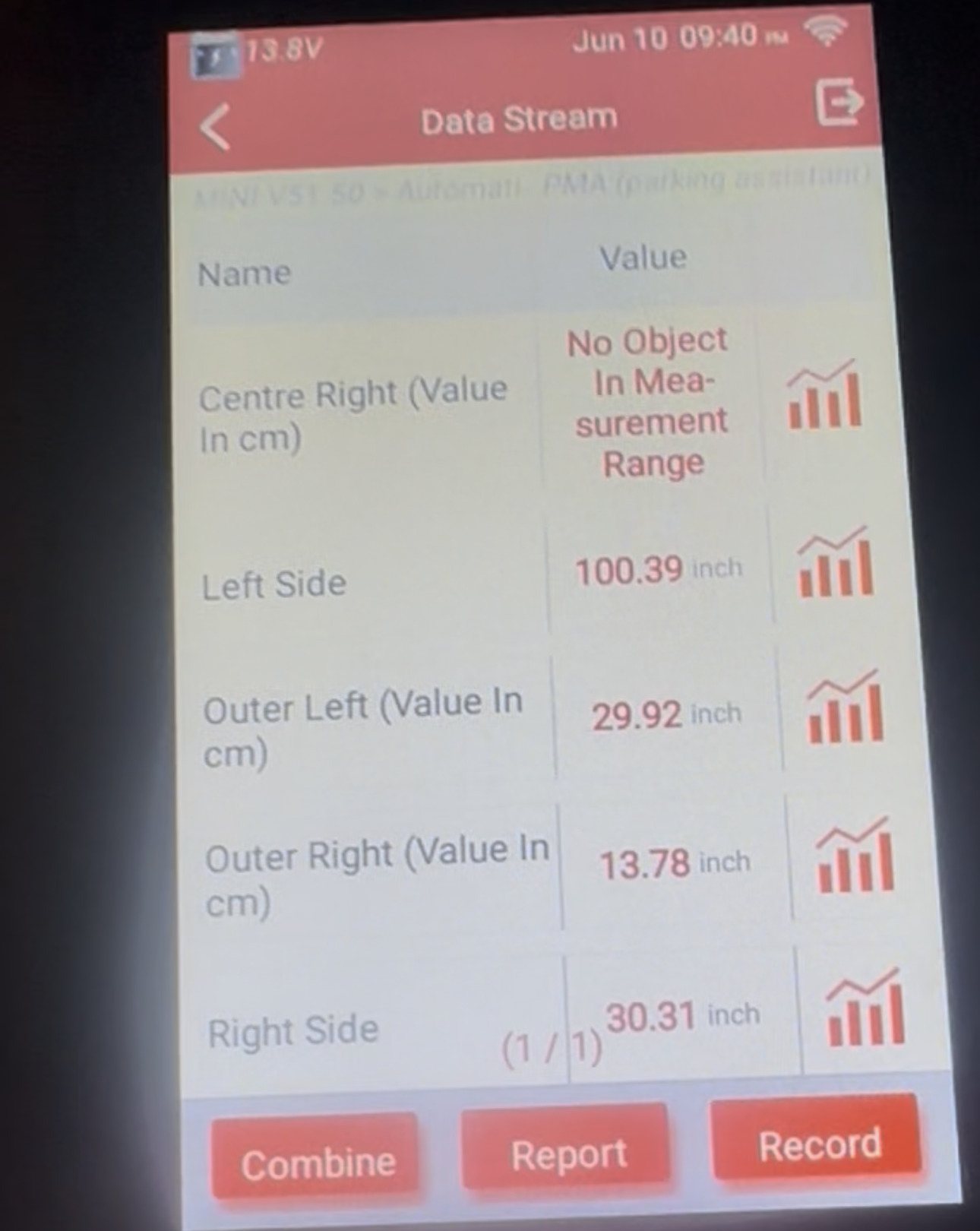
- Parking assist. The system operated again and reported live distances per sensor position in the data stream, including the previously missing outer left position.
- Vehicle speed. The car was road tested and speed was confirmed reading in the head-up display, the speedometer and the instrument cluster.
Technician Notes
The temptation with three simultaneous electrical complaints is to look for one failure that explains all of them — a bad ground, a supply fault, a network problem. This car did not work that way. The lighting fault was a coding-data problem, the parking fault was a part that was not there, and the speed fault was a control unit that had stopped sending its messages. Undervoltage entries did appear in several modules and are recorded above, but they were not used as a substitute for diagnosing each complaint.
Replacing the DSC/ABS unit was the last step of that diagnosis, not the first. The value of the supply, ground, board and continuity checks is that they are what makes "the control unit is bad" a conclusion instead of a guess. The backup taken before coding is the other half of that discipline: writing to modules is the point in the job where a small mistake becomes an expensive one.
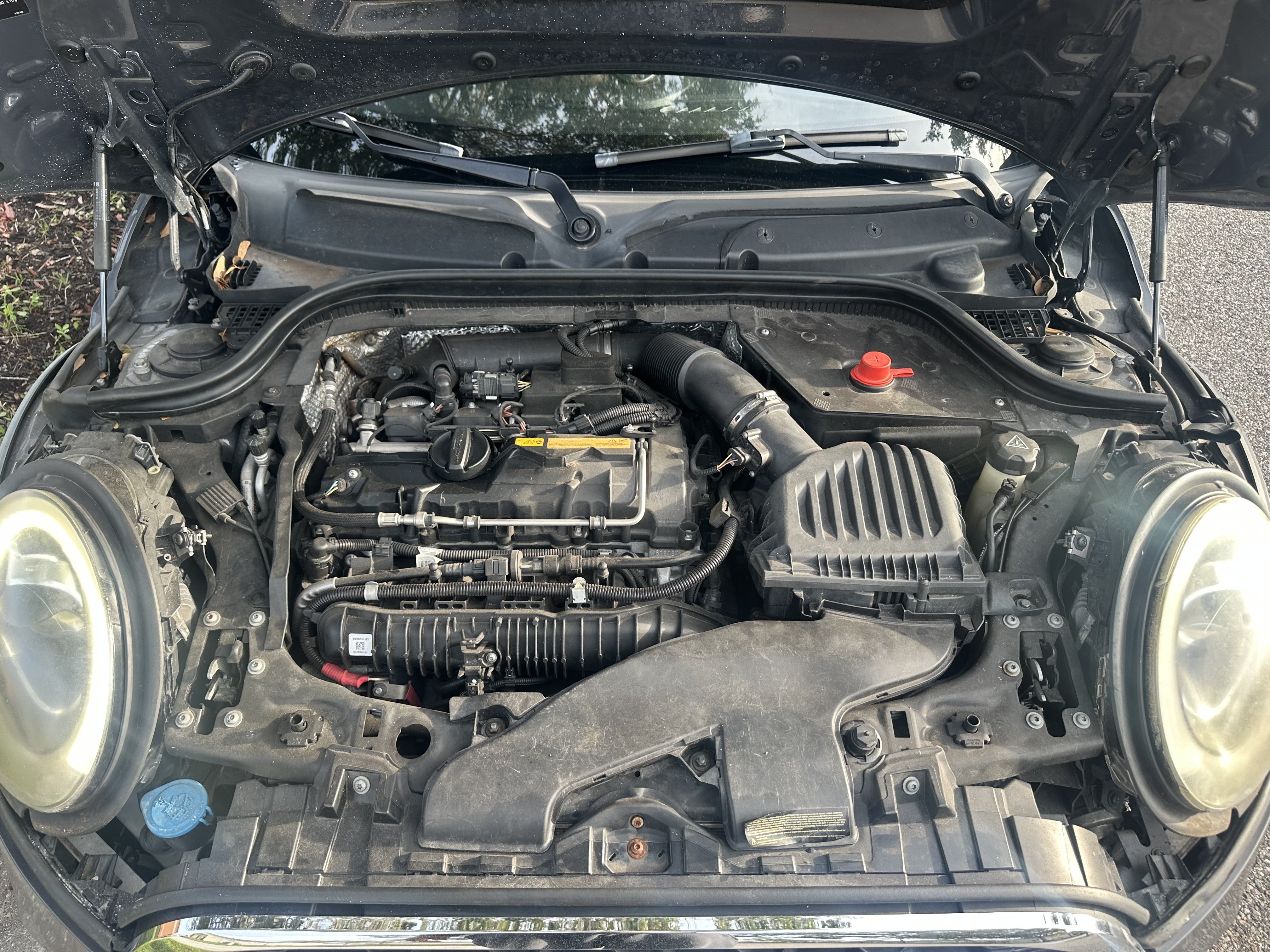
Two items are left open rather than papered over. A startup noise from the engine compartment appeared alongside 135A08 for the Valvetronic servomotor position sensors, and that has nothing to do with the three complaints repaired here. And 03058E on the DSC was noted as possibly programming-related; it is worth rechecking against the current software level rather than assumed resolved.
One documentation inconsistency is worth recording: a line of the paperwork refers to the front right sensor, while the customer concern, the recorded ultrasonic fault and the repair all refer to the front outer left position. The scan and the repair support front left.
Lessons Learned
- Multiple symptoms on one car do not have to share a root cause. Diagnose each on its own evidence.
- Fitting an electronic control unit is not the repair. Reset, coding and any calibration the installation makes necessary are part of it.
- A missing speed reading is not automatically a bad instrument cluster. The cluster displays what other modules send it.
- A "no message" code identifies a message that did not arrive, not the failure of the sensor the message describes. Missing wheel-speed data is not the same finding as a failed wheel-speed sensor.
- Check fuses, supply, ground and continuity before condemning a module — those checks are what turn a suspicion into a diagnosis.
- Back up module data before coding.
- Verify the customer's actual complaint. A clean coding session is not proof that the headlight stays on, the speedometer reads or parking assist works.
Final Outcome
All three complaints were resolved by three separate repairs. The left headlight control unit was coded to the vehicle and the lamp stayed on through repeated cycles. The missing front outer left ultrasonic sensor was replaced and parking assist operated again. The DSC/ABS control unit was replaced, reset and coded, and vehicle speed displayed correctly in the head-up display, the speedometer and the instrument cluster on the road test. The engine-compartment startup noise associated with 135A08, and the DSC entry 03058E, remain documented as open items rather than repaired.
Customer Feedback
Not documented.
Photos From This Repair
Questions About This Repair
Why did coding fix a headlight that would not stay on?
On this generation the left headlight is run by its own control unit, and that unit reported both that it was not encoded and that its coding data did not match the vehicle. Coding it to this car restored normal operation and the two encoding faults stopped returning. That is evidence about the module's data, not proof that the lamp, bulb or wiring was ever faulty.
Does a dead speedometer mean the instrument cluster is bad?
Not on its own. The cluster displays a speed value that other modules send to it. In this scan the cluster and the body controller both recorded that the vehicle-speed message was simply not arriving, with DSC named as the transmitter, so the fault was upstream of the display.
Why was the DSC/ABS control unit replaced instead of repaired?
The supply side was checked first — fuses for pump, valves and electronics, supply at the connector pins, ground at the ground pin, and with the unit opened, supply on the board, pin contact and continuity through the pump circuit. With power, ground and the circuits accounted for and the module still not sending its messages, the control unit itself was the remaining suspect.
Did the replacement module work as soon as it was installed?
No. It had to be reset and coded to this vehicle before the system would function, and the brake and ABS hydraulics were bled afterwards because the hydraulic unit had been opened to the atmosphere. A module that is fitted but not coded is not a finished repair.
Were all of those scan codes caused by the three complaints?
No. The scan is documented as observed findings. Several entries are consequences of the DSC not communicating, several are undervoltage entries recorded across different modules, and at least one — 135A08 for the Valvetronic servomotor position sensors — belongs to a separate startup-noise concern that was not part of this repair.
Was the missing sensor left or right?
The customer concern, the recorded ultrasonic fault and the repair all refer to the front outer left position. One line of the paperwork says front right; that inconsistency is flagged here rather than smoothed over, and the front-left position is what the scan and the repair support.
Repairs Like This One
- 11 documented Electrical repairs. See them all →
- 5 documented Programming repairs. See them all →