MINI DME Cloning: Second-Generation Donor ECU Case
Quick Summary
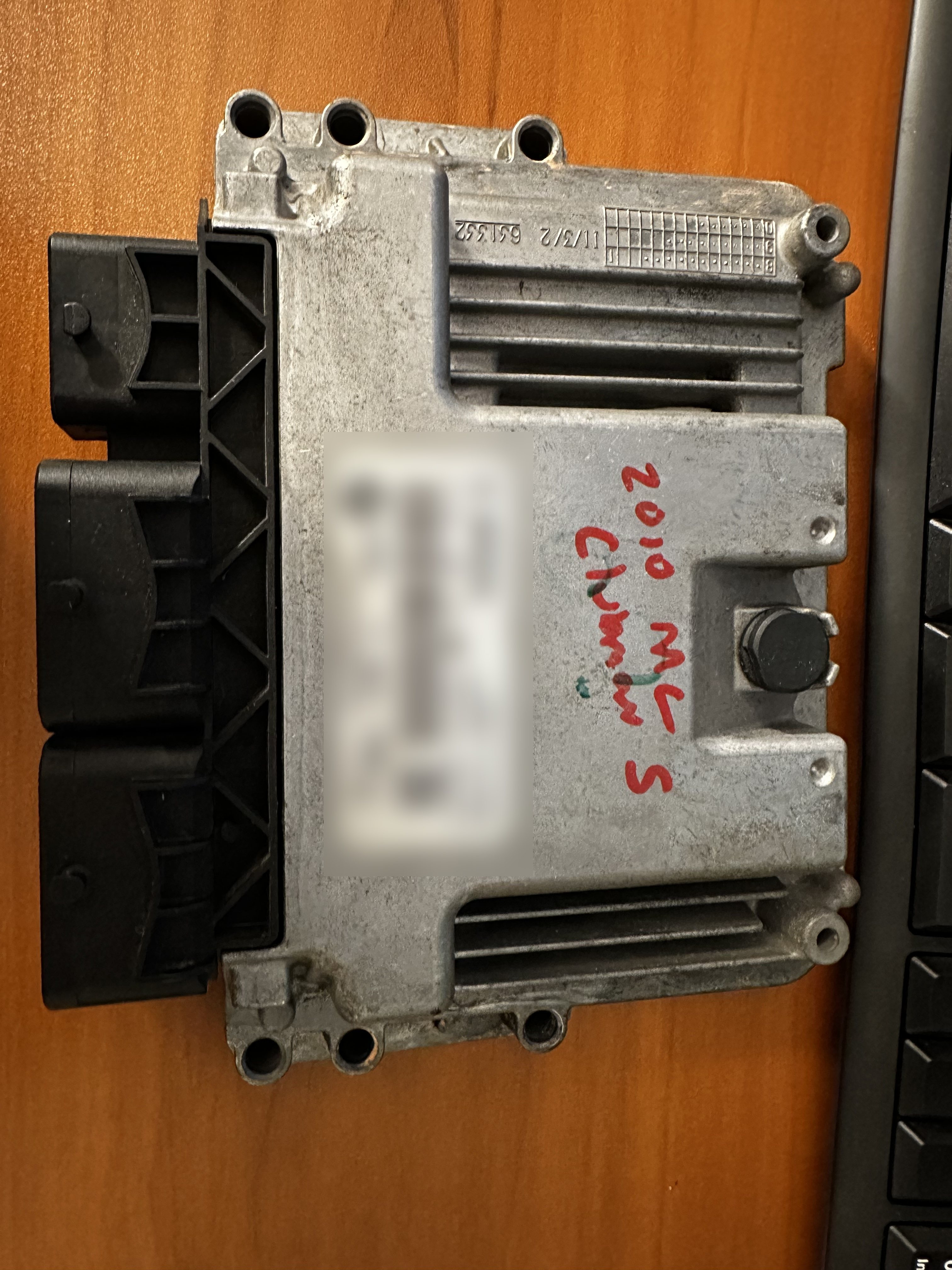
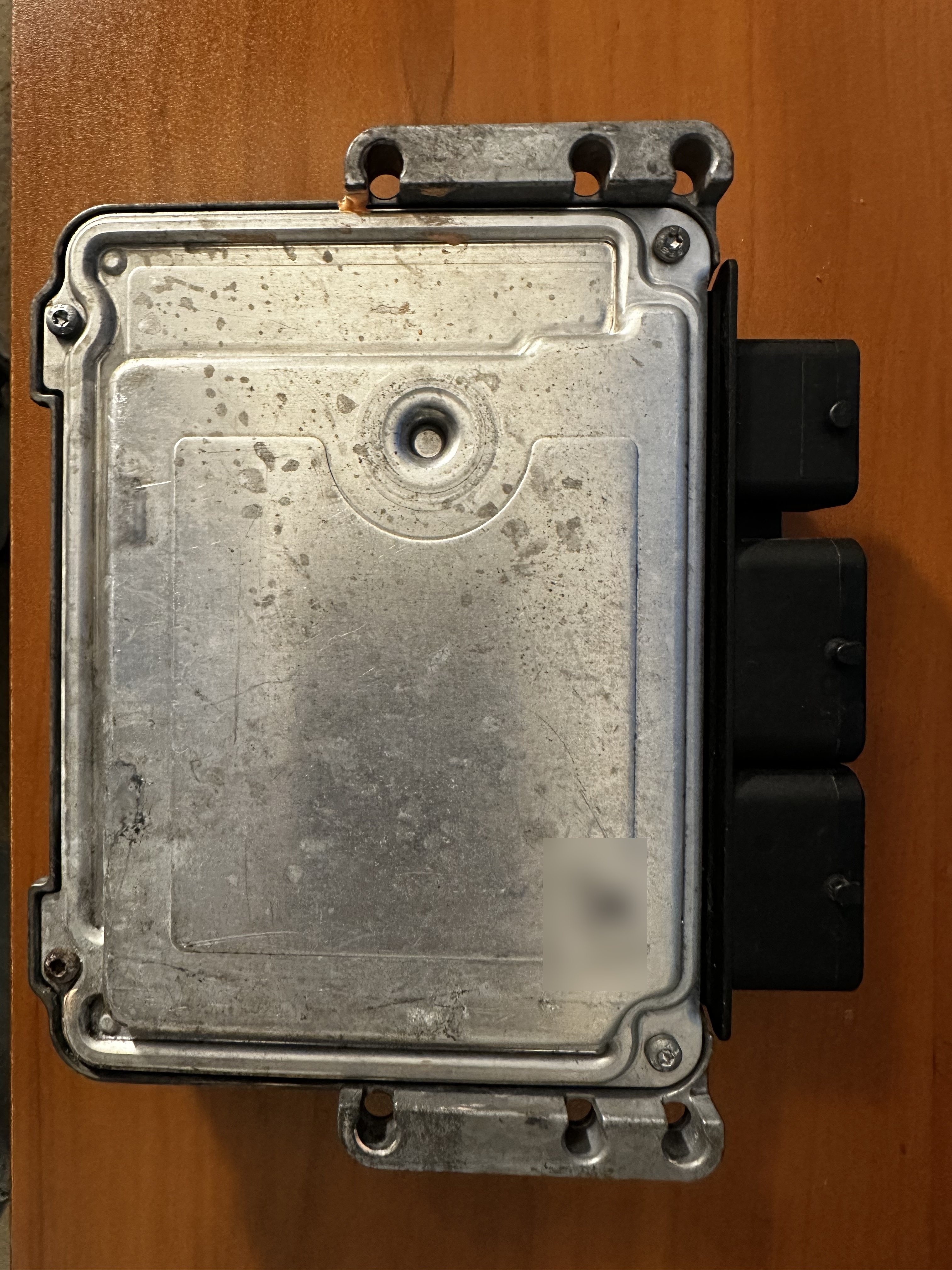
A mechanic supplied the original engine-control module from a second-generation MINI and a compatible used donor DME after diagnosing the original module as defective. Mini Cooper Service Center performed the off-vehicle cloning service: the two modules were identified, the source data was preserved, and the required vehicle-specific data was transferred into the donor. The mechanic then installed the cloned DME and confirmed that the MINI started.
This distinction matters. The referring mechanic diagnosed the vehicle, selected and supplied the donor, installed the finished module and performed the vehicle-side confirmation. Mini Cooper Service Center performed the compatibility review and DME cloning. No actual memory contents, security data, access method, password, pinout or bypass procedure is published here.
- Vehicle
- 2007-2016 MINI Models (R55-R61 family)
- Difficulty
- ★★★★★
- Repair Time
- Off-vehicle module service
- Outcome
- Required data transferred from the original DME to a mechanic-supplied compatible donor; the mechanic installed the cloned module and confirmed that the MINI started
Vehicle Information
| Year | 2007-2016 |
|---|---|
| Model | Models |
| Chassis | R55-R61 family |
Repair Timeline
- August 2026 Complaint A referring mechanic supplied the original DME and a donor module after diagnosing the original engine-control module as defective.
- August 2026 Diagnosis Mini Cooper Service Center checked the original and donor identification for compatibility. The vehicle diagnosis itself remained the referring mechanic's responsibility.
- August 2026 Repair The required original-module data was backed up and transferred into the compatible donor DME without publishing protected memory contents or the access method.
- August 2026 Verification The cloned DME was returned to the mechanic, who installed it and confirmed that the MINI started.
Customer Complaint
Clone the original MINI DME into the mechanic-supplied donor so the replacement can operate in the vehicle.
The mechanic had already removed both modules and retained responsibility for installation. The service request was therefore module work, not a complete diagnosis of the car.
Symptoms
The source information documents the mechanic's conclusion that the original DME was defective, but it does not document the complete symptom history, fault-code report or tests used to reach that conclusion. Those details are intentionally not invented here.
Problems that can lead a shop to request DME evaluation include no communication, internal module faults or a replacement DME that communicates but does not operate the receiving vehicle. Each can also be caused by power, ground, wiring, network or immobiliser faults, so none proves a bad DME by itself.
Diagnostic Process
The first job was to separate vehicle diagnosis from module compatibility. The referring mechanic was responsible for the diagnosis that condemned the original DME. The cloning service could establish whether the supplied modules were suitable for data transfer, but it could not recreate every vehicle-side test with the car absent.
Compatibility is more than matching plugs or aluminium cases. The useful checks include:
- BMW/MINI and manufacturer part numbers
- DME family and processor generation
- Hardware and software versions
- Engine, transmission and production application
- Connector and circuit-board revision
- Whether the original module can supply complete, internally consistent data
- Whether the donor already contains unknown programming or modifications
A donor that looks identical can still be unsuitable. The original module is equally important: even when it no longer controls the engine correctly, it may remain the only source of the vehicle-specific data needed to prepare a replacement.
Repair Performed
The supported high-level workflow was:
Original DME and mechanic-supplied donor received
        ↓
Module identities and compatibility checked
        ↓
Original and donor data preserved before modification
        ↓
Required original data transferred to the donor
        ↓
Completed write checked
        ↓
Cloned donor and original module returned to the mechanic
        ↓
Mechanic installed the donor DME
The exact data set and read/write path depend on the DME family. A clone may involve a complete supported transfer or selected vehicle-specific data while retaining compatible donor software. That decision is made from the exact module identification and condition, not from a generic model name in a tool menu.
Parts Used
- DME Mechanic-supplied donor
Verification
The documented vehicle-side result is concise: the mechanic installed the cloned donor DME and confirmed that the MINI started.
Because the vehicle was not present for the cloning service, this case does not claim that Mini Cooper Service Center personally performed a road test, charging-system test or final full-system scan. A complete installation check by the shop should include DME identification, immobiliser start authorization, idle quality, fault-code review, charging voltage and a post-repair scan after multiple key cycles.
Technician Notes
DME means Digital Motor Electronics: the engine-control computer responsible for fuel, ignition, throttle, emissions monitoring, torque coordination, diagnostic storage and communication with the vehicle's immobiliser and other modules. It contains software, calibration, coding and vehicle-specific information. That is why a used donor is not an ordinary plug-in part.
Preserve the original module until the vehicle is confirmed operational. The original and donor reads are the recovery path if a write is interrupted, the selected donor proves incompatible or vehicle-side testing exposes another problem.
A successful engine start is meaningful confirmation that the cloned DME contained the required relationship for the receiving car. It does not retroactively document every step of the referring mechanic's original diagnosis, and it does not mean every DME listed by the programming system can be cloned in every condition.
Lessons Learned
- A connector match is not a compatibility check; identify the exact DME family, hardware and software before accepting a donor.
- Preserve both modules before changing either one, and keep the original until installation is confirmed.
- A module-cloning service is not the same as diagnosing the complete vehicle. State clearly who diagnosed, supplied, programmed, installed and verified each part of the job.
- Tool-menu coverage is a useful intake reference, not a promise that a damaged source module can be read or that an arbitrary donor will work.
- Do not expose immobiliser data, protected memory contents or operational access details in a customer-facing case study.
- Require proof of ownership or written repair-shop authorization before security-sensitive module work begins.
Final Outcome
The required data from the original second-generation MINI DME was transferred into the compatible donor supplied by the referring mechanic. The cloned module was returned with the original DME, the mechanic installed it, and the MINI started.
That outcome demonstrates the purpose of a supported clone: preserve the receiving vehicle's required module identity in compatible replacement hardware without treating a used ECU as a plug-and-play part.
Photos From This Repair
DME Coverage Reference
The following table transcribes the MINI model selections and DME families visible in the supplied programming-system photographs. It is included so an owner or repair shop can make an initial comparison with the label on a particular DME.
A listing is not confirmation that a specific module can be cloned. Final coverage depends on the VIN, original and donor part numbers, hardware and software versions, processor, module condition and the supported read/write method. Some menu names overlap model generations.
| MINI model selection shown | DME/ECU families displayed |
|---|---|
| Clubman | EDC17C41, MED17.2, MEV17.2, MEVD17.2.3, MEV17.2.2 |
| Cooper | EDC17C41, MED17.2, MEV17.2, MEVD17.2.3, MEV17.2.2 |
| Cooper Clubman | MEVD17.2.3, MEV17.2.2 |
| Cooper Clubman ALL4 | MEVD17.2.3 |
| Cooper Countryman | MEVD17.2.3, MEV17.2.2 |
| Cooper Countryman ALL4 | MEVD17.2.3 |
| Cooper D Paceman ALL4 | EDC17C56 |
| Cooper JCW | MEVD17.2.3 |
| Cooper S | MEVD17.2, MEV17.2, MEVD17.2.3, MEVD17.2.K |
| Cooper S Clubman | MEVD17.2.3, MEVD17.2.K |
| Cooper S Clubman ALL4 | MEVD17.2.7 |
| Cooper S Countryman | MEVD17.2.3, MEVD17.2.7 |
| Cooper S Countryman ALL4 | MEVD17.2.7 |
| Cooper S E Countryman ALL4 | MEVD17.2.7 |
| Countryman | EDC16C35, EDC17C41, MED17.2, MEV17.2, MEVD17.2.3, MEV17.2.2 |
| Countryman ALL4 | MEVD17.2.3 |
| Coupe | EDC17C41 |
| First | MEV17.2.2 |
| MINI / generic tool entry | MEVD17.2.3, MEVD17.2.K, MG1CS201 |
| One | EDC16C35, EDC17C41, MED17.2, MEV17.2, MEVD17.2.3, MEV17.2.2 |
| One Clubman | MEVD17.2.3, MEV17.2.2 |
| One Countryman | MEVD17.2.3, MEV17.2.2 |
| One First | MEVD17.2.3 |
| Paceman | EDC17C50, MEVD17.2.7 |
| Roadster Cooper SD | EDC17C41 |
| Cooper Paceman | MEV17.2.2 |
| Cooper S Paceman | MEVD17.2.7 |
Processor suffixes visible in the reference photographs include TC1766, TC1767, TC1793 and TC1797. Those suffixes matter during compatibility review; customers should send photographs of both labels rather than selecting a donor from the family name alone.
Requesting A DME Compatibility Check
Mini Cooper Service Center provides supported bench-level DME cloning and replacement preparation for selected MINI engine-control modules in the Tampa Bay area. To request a compatibility check, send:
- VIN, model year and chassis
- Engine and transmission
- Clear photographs of the original DME label
- Clear photographs of the proposed donor DME label
- The diagnostic report and reason the original DME was condemned
- Whether the original module still communicates
- History of water intrusion, reverse polarity, wiring damage or prior programming
- Proof of ownership, or written authorization from the repair shop acting for the owner
Acceptance is confirmed only after the exact original and donor modules have been reviewed.
Questions About This Repair
Can a used MINI DME be installed without programming?
Usually not. A used DME can contain software, coding and immobiliser-related information from another vehicle. The donor has to be compatible and prepared for the receiving MINI rather than installed solely because its connectors fit.
How can I find out whether my MINI DME can be cloned?
Send the model year, chassis, engine and transmission together with clear photographs of the original and donor labels. The DME family, hardware, software and part numbers must be checked before the job is accepted. A family listed in the table is a starting point, not a guarantee.
Does DME cloning preserve the existing keys?
A supported clone is intended to preserve the vehicle-specific relationship needed by the receiving car, but the exact result depends on the DME and immobiliser generation. No security data or bypass procedure is published.
Can a DME be cloned if it no longer communicates in the car?
Sometimes a module that does not communicate in the vehicle can still supply usable data through a supported off-vehicle method. Complete hardware failure or corrupted memory can make a clone impossible, so the original module must be assessed first.
Can any DME from the same MINI model be used as the donor?
No. Model name and physical appearance are not enough. Part number, hardware, software family, processor, engine, transmission and circuit-board revision can all affect compatibility.
What proof is required for DME cloning?
The owner must provide proof of ownership and identification, or the referring repair facility must provide written authorization showing that it is acting for the owner. DME cloning is security-sensitive module work.
Repairs Like This One
- 11 documented Electrical repairs. See them all →
- 5 documented Programming repairs. See them all →