MINI Cooper S CAS Replacement: Immobiliser, DME and ISN
Quick Summary
The owner of a 2010 MINI Cooper S (R56) asked for the CAS — Car Access System — module to be replaced, believing the existing one had failed. That request is a repair the customer wants; it is not a diagnosis. Unlike a lighting module or a climate panel, the CAS sits inside the vehicle's immobiliser: it recognises the key, controls power modes, evaluates the start request and exchanges protected data with the DME before the engine is allowed to run. A replacement CAS cannot simply be plugged in and expected to start the car — the two modules must agree on the protected identifier commonly called the ISN first. On this car the repair took the DME-side path: the ISN was obtained from the vehicle's own DME, the replacement CAS was calculated from the VIN together with that ISN, and two new keys were then added to the key data and the module and returned to the customer. This write-up covers what was ruled out before accepting the job, why the DME is part of a CAS repair, why a used CAS is not plug-and-play, and what had to be verified afterwards. Proof of ownership and valid government-issued photo identification are required before any immobiliser work begins. Exact procedures vary by CAS and DME hardware and software version, and no security data, memory address, pinout or bypass method is published here.
- Vehicle
- 2010 MINI Cooper S (R56, N18 1.6L Turbo)
- Difficulty
- ★★★★★
- Repair Time
- Multi-stage appointment
- Outcome
- ISN obtained from the vehicle's own DME, a replacement CAS calculated from the VIN and that ISN, two new keys added to the key data and the module, and both returned to the customer programmed and tested
Vehicle Information
| Year | 2010 |
|---|---|
| Model | Cooper S |
| Chassis | R56 |
| Engine | N18 1.6L Turbo |
Repair Timeline
- August 2026 Complaint Owner of a 2010 MINI Cooper S (R56) asked for the CAS — Car Access System — module to be replaced, on the belief that the existing CAS was defective.
- August 2026 Diagnosis Request treated as a request, not a diagnosis. Vehicle power, key behaviour, module communication and start-request inputs assessed before any module was ordered or removed, because a key, a supply fault or a network fault produces the same complaint as a failed CAS.
- August 2026 Repair ISN obtained from the vehicle's own DME, then the replacement CAS calculated from the VIN together with that ISN so the access and engine-control sides agree. Two new keys written into the key data and into the module.
- August 2026 Verification Both new keys tested individually for start authorisation and engine start, then remote, body functions and a full post-repair scan checked after the car had been cycled off, allowed to sleep and restarted. Two programmed keys returned to the customer.
Customer Complaint
Replace the CAS module because the existing CAS is believed to be bad.
That establishes what the customer wants done. It does not establish that the CAS is the root cause, and on an immobiliser system the difference between those two things is the whole job.
Symptoms
Complaints that bring a car in under this heading — any of which the customer may describe as "the CAS is bad":
- Key symbol, or a crossed-out key symbol, in the instrument cluster
- No ignition response, or a dead or only partially active dashboard
- Remote locks and unlocks the car, but the car will not start
- Starter does not operate at all
- Starter operates but the engine does not run
- Intermittent key recognition
- Multiple low-voltage or communication faults on a scan
Diagnostic Process
Separate the request from the fault. Before a CAS is condemned, the following all have to be distinguished from each other: a failed CAS, a damaged or unrecognised key, low vehicle voltage, a failed key-slot reader or Comfort Access antenna, a missing brake, clutch or selector input, a CAS power or ground loss, a CAN communication failure, a DME communication failure, a CAS-DME synchronisation problem, a coding or programming problem, and an ordinary starter, engine management or mechanical no-start.
Confirm vehicle power first. Battery condition, voltage during wake-up and during cranking, CAS supplies, grounds, fuses and terminal feeds. Low voltage alone will light up CAS, DSC, airbag, cluster and communication faults together and make several modules look defective at once. Condemning a module against a weak battery is the most common way this job goes wrong.
Document key behaviour precisely. Whether the remote locks and unlocks, whether the key is detected in the slot, whether Comfort Access detects it, whether a second known-good key behaves differently, whether a key symbol appears, whether the cluster wakes and whether ignition terminals become active. Remote locking and immobiliser authorisation are related but separate functions, and a car whose buttons work has proven nothing about start authorisation.
Scan the whole vehicle, not the CAS. Record whether CAS, DME, JBE/gateway, instrument cluster, DSC, transmission and body modules respond at all. The fault categories that matter here are: no communication with CAS, no communication with DME, start authorisation denied, terminal-supply faults, key not recognised, CAS-DME synchronisation, undervoltage, missing brake/clutch/selector status, and network-message faults.
Verify the start-request inputs. Depending on configuration: brake input, clutch input, selector position, starter request, terminal status, key authorisation, DME start enable, and engine RPM during cranking.
Then decide whether the CAS is actually defective. Evidence that supports replacement: verified power and ground with no CAS communication; internal CAS faults that return immediately; physical or liquid damage; a failed internal key-reading or terminal-control function; confirmed corrupted module data; manufacturer test-plan results pointing at the CAS. Evidence against replacing it yet: low battery voltage, a failed key, a missing clutch or brake input, network wiring faults, DME power or communication loss, a failed starter circuit, or an unrelated engine-management fault.
Repair Performed
Only after diagnosis, ownership verification and confirmation of tool coverage does the module work begin. The high-level sequence:
Verify lawful ownership and customer identity
        ↓
Perform full diagnostic assessment
        ↓
Back up original CAS and vehicle information where accessible
        ↓
Identify the installed CAS and DME versions
        ↓
Confirm replacement-module compatibility
        ↓
Obtain required immobiliser synchronisation information
        ↓
Prepare replacement CAS for the vehicle
        ↓
Restore vehicle-specific coding
        ↓
Program or validate authorised keys
        ↓
Install and verify communication
        ↓
Confirm start authorisation
        ↓
Perform full post-repair scan and functional test
Which of three paths the job takes is decided by what the original module can still give up. This car took Path B.
- Path A — preserve the original CAS data. Where supported, the safest repair is to preserve or transfer the original vehicle-specific data into a compatible replacement module. Nothing about the car's identity changes.
- Path B — prepare the replacement using DME-related immobiliser data. (Taken here.) If the original CAS cannot provide usable data, a compatible replacement is prepared so its immobiliser information agrees with the DME. This is the path that makes DME access part of a CAS repair.
On this MINI that meant obtaining the ISN from the vehicle's own DME, then calculating the replacement CAS from the vehicle's VIN together with that ISN, so the module handed to the car already agreed with the engine-control side rather than with a donor vehicle. Two new keys were then written into the key data and into the module. The ISN itself is not published, and neither is the method used to obtain it. - Path C — install a new or dealer-supplied CAS. Still requires vehicle programming, coding, immobiliser initialisation and key enrolment.
Parts Used
- CAS3 Module Replacement
Verification
Checked after the work, and then checked again after the car had been switched off, allowed to sleep and restarted:
- Both new keys, each tested on its own
- Remote lock and unlock
- Key insertion or passive detection
- Instrument-cluster wake-up
- Accessory and ignition terminal states
- Brake, clutch or selector recognition
- Starter command
- Engine start
- DME communication
- CAS-DME authorisation
- Central locking, windows and body functions
- Stored fault codes cleared and not returning
- Correct vehicle coding
- Battery sleep behaviour
Technician Notes
The CAS is the point in this car where a body controller and a security device are the same object. It recognises the key, manages wake-up and terminal states, processes the start request, evaluates the start conditions, communicates start authorisation, controls or requests starter operation, exchanges protected immobiliser information with the DME, and stores key-position and vehicle-specific data. Replacing it touches every one of those functions at once, which is why it is not comparable to swapping a lighting module.
The engine does not start because the DME decides to. It starts when five things are true: the key is valid, the CAS is valid for this vehicle, the DME belongs to the same immobiliser system, the protected synchronisation data matches, and the start conditions are satisfied. The chain runs key → CAS → vehicle networks and start inputs → DME immobiliser agreement → starter and engine operation, and a break anywhere in it looks identical from the driver's seat.
Authorized key
      ↓
CAS reads and validates the key
      ↓
Driver requests engine start
      ↓
CAS checks required start conditions
      ↓
CAS and DME validate matching immobilizer information
      ↓
Starter operation is authorized
      ↓
DME enables normal engine-start functions
When the CAS and DME do not agree, the car can show a key not recognised, no ignition, no starter command, cranking with engine operation inhibited, start-authorisation faults, synchronisation faults, a dead or partly active cluster, or general terminal-state and communication problems — none of which name the real cause on their own.
A used CAS is the trap. It arrives holding the donor car's VIN, key information, immobiliser synchronisation data, coding and equipment configuration, and stored terminal-state information. Fitted without preparation, it typically produces a module that communicates flawlessly and authorises nothing — a second problem stacked on top of the original complaint.
Whether the DME has to be accessed at all, and how, depends on the DME family, its hardware and software version, the immobiliser generation, tool coverage, whether the original CAS still communicates, and whether the job is a replacement, a recovery or an all-keys-lost. That is the honest answer to "how long will it take": it is not known until the car has been identified.
Lessons Learned
- A customer-requested module replacement is not a confirmed module diagnosis. Treat the request as a symptom of the complaint, not as the conclusion.
- Check vehicle voltage before condemning anything. Low voltage forges faults across CAS, DSC, airbag, cluster and network at the same time.
- Remote locking working proves nothing about start authorisation. They are separate functions in the same key.
- Compatible hardware does not mean compatible immobiliser data. A matching part number is the beginning of the compatibility question, not the end.
- A used CAS is not plug-and-play, and a new CAS is not plug-and-play either. Both need programming, coding, immobiliser initialisation and key work.
- Back up whatever the original module will still give you before removing it. Data you did not read is data you will have to obtain the hard way.
- Verify ownership and identity before touching a security module, every time.
- Test after a sleep cycle. Authorisation faults and terminal-state problems hide behind a car that has not been allowed to shut down properly.
Final Outcome
The ISN was extracted from the customer's DME, the replacement CAS was calculated from the VIN and that ISN, and two new keys were successfully added to the key data and to the module. Both keys were tested on the car and returned to the customer programmed and working.
The job was accepted as an immobiliser repair rather than a parts swap: diagnosis first, ownership verified, the replacement path chosen from what the original module could still supply, then key work and a full post-repair scan after a sleep cycle. The point of the write-up is the order of operations. Replacing a CAS without understanding its relationship with the DME does not fix a no-start — it adds a second one.
Photos From This Repair
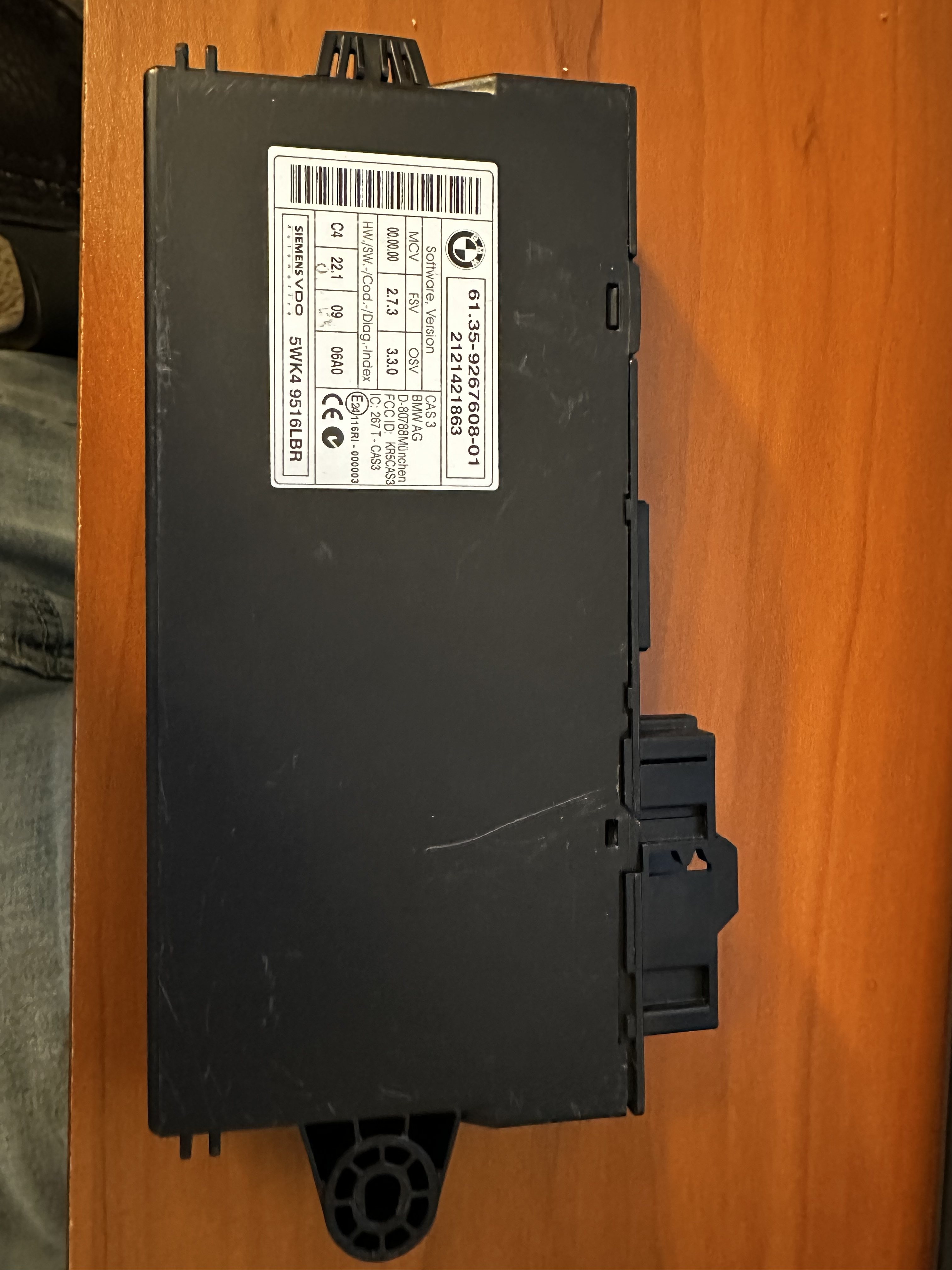
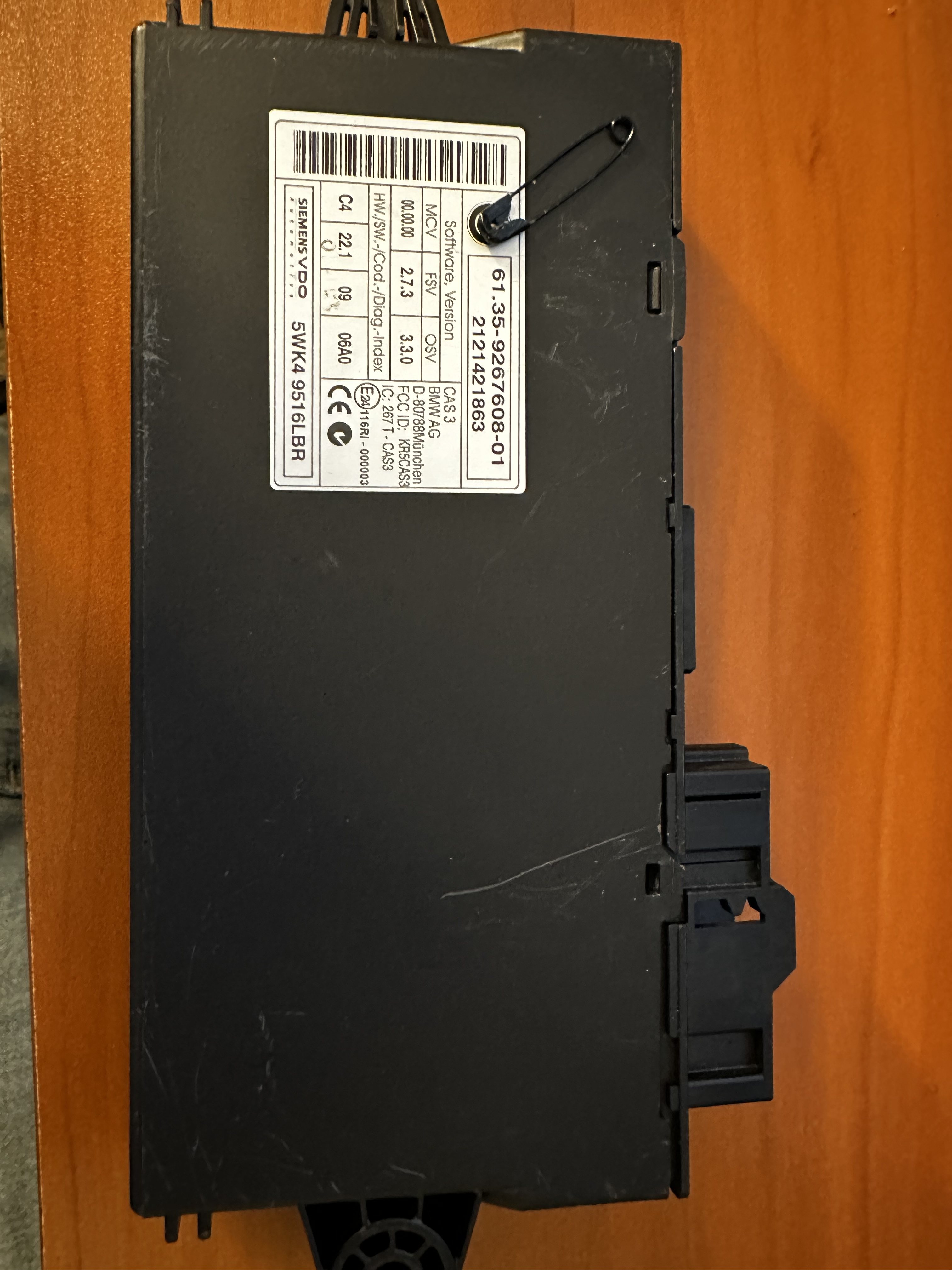
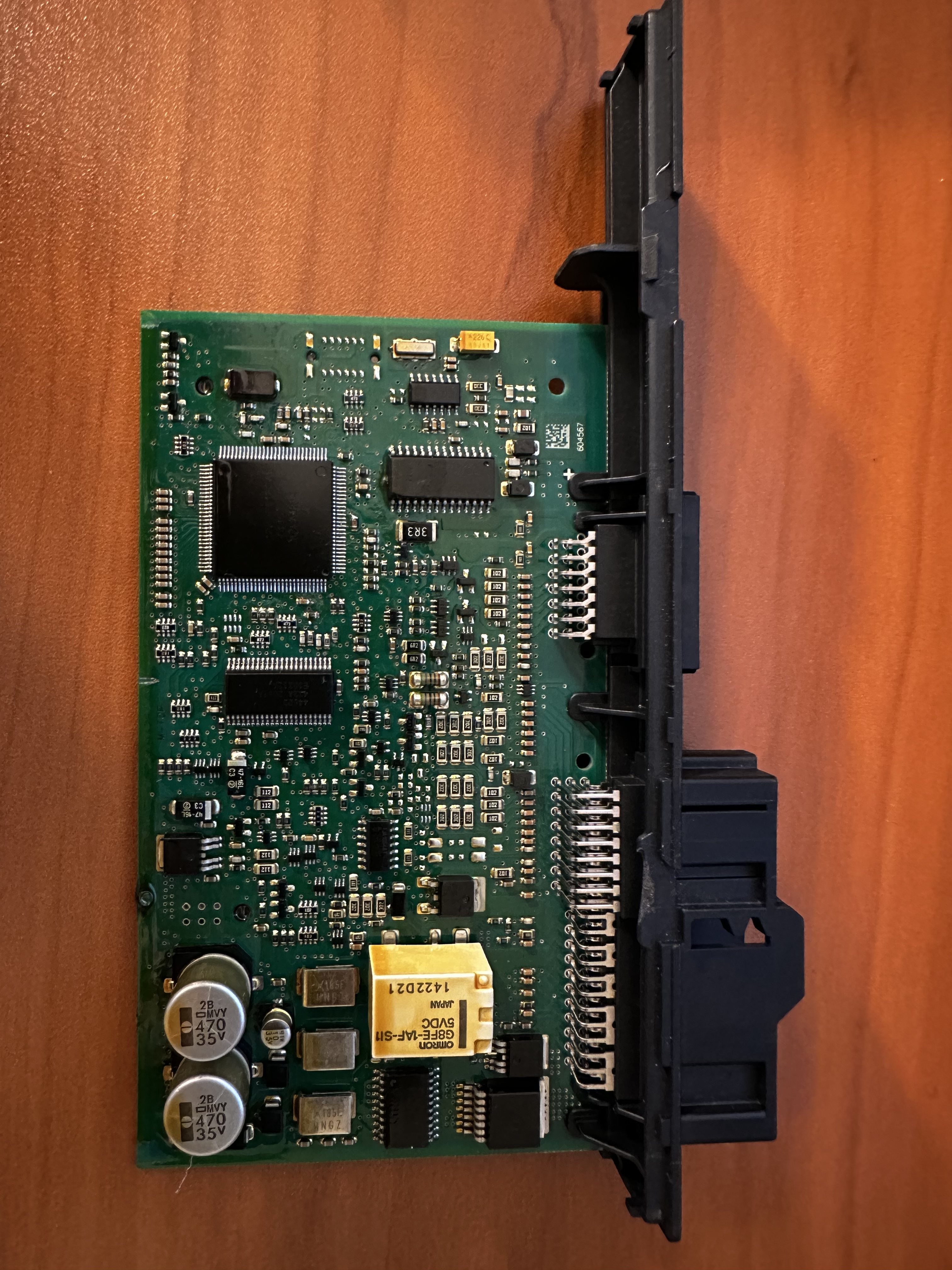
Proof Of Ownership And Identity
Immobiliser work is access control, and it is treated that way here. Before any module is removed or programmed:
- Government-issued photo identification
- Registration and/or title
- VIN verification
- Customer authorisation for module removal and programming
- Documentation of every key supplied
- Written acknowledgement of advanced programming risk
Security-module work is not started for anyone who cannot establish lawful ownership or written authority from the owner.
What The Customer Sees, And What The Modules Are Doing
The customer sees a key symbol, no ignition response, a dead or partly active dashboard, a remote that works while the car will not start, a starter that does not operate, a starter that operates while the engine does not run, intermittent key recognition, or a scan full of low-voltage and communication faults.
Underneath, the CAS reads the key, determines the requested power mode, exchanges information with the other modules, the start-condition inputs are evaluated, the CAS and DME compare protected immobiliser information, and starter and engine-management functions are enabled only if authorisation succeeds. What a technician tests, in order, is battery and terminal voltage, CAS power and ground, key recognition, CAS communication, DME communication, start-authorisation status, brake/clutch/selector inputs, network integrity, the starter request, engine RPM and synchronisation, immobiliser faults, replacement-module compatibility, and finally the coding and function after programming.
Requesting An Immobiliser Evaluation
Mini Cooper Service Center provides supported diagnosis and advanced module services for selected MINI immobiliser systems in the Tampa Bay area. Advanced module replacement is accepted only after diagnostic review and confirmation of tool coverage. To request an evaluation, send:
- VIN
- Model year and chassis
- A description of the current symptoms
- How many working keys you have
- Whether the vehicle cranks
- Any existing scan report
- History of prior programming or module replacement
- Proof of ownership and valid photo identification
Related reading: the CAS3 key add on a 2012 Cooper S covers adding keys to a healthy access module, and the spare-key programming write-up covers immobiliser coverage across EWS4, CAS3, CAS3+ and FEM/BDC.
Questions About This Repair
Can a used CAS module just be plugged into my MINI?
No. A used CAS normally still holds the donor car's VIN, key data, coding and immobiliser synchronisation information. It may power up and communicate perfectly while refusing to authorise a start, because the protected data inside it belongs to a different vehicle. Compatible hardware is not the same thing as compatible immobiliser data.
Does a new dealer-supplied CAS avoid all of that?
It avoids the donor-data problem, but a new module still has to be programmed to the vehicle, coded to its equipment, initialised into the immobiliser system and taught the authorised keys. New does not mean plug-and-play either.
What is the ISN?
The ISN — Individual Serial Number — is protected immobiliser information shared between the CAS and the DME. It lets the engine-control side confirm that a start authorisation really came from the correct access module for that car. It is part of the vehicle's anti-theft data, not a password on a label, and it is never published.
Why does the DME have to be involved in replacing the CAS?
Because the DME does not authorise engine operation on its own. On the car in this write-up the ISN had to be obtained from the DME and used, with the VIN, to calculate the replacement CAS. The engine starts only when the access side and the engine-control side agree on the protected immobiliser data. If the original CAS cannot supply that data, it has to be obtained in a supported way from the DME side instead — which is exactly why this is an immobiliser job rather than a module swap.
My MINI will not start and shows a key symbol. Is the CAS bad?
Not necessarily, and that assumption is expensive. Low battery voltage, a failed key, a key-slot reader or Comfort Access antenna, a missing brake or clutch input, a CAS supply or ground fault, a network fault, DME communication loss or a starter-circuit fault all produce the same customer complaint. The CAS is a conclusion, not a starting point.
What do I have to bring for immobiliser work?
Government-issued photo identification, registration and/or title, the complete VIN, and every key you have. Immobiliser work is access control, so lawful ownership or written authority from the owner has to be established before anything is removed or programmed.
Will replacing the CAS erase my keys?
Keys are tied to key positions in the access module, so a replacement module has to be given authorised key data before your keys work again. Depending on the path taken, existing keys may be revalidated or new keys programmed. Bring every key so all of them can be accounted for.
Repairs Like This One
- 11 documented Electrical repairs. See them all →
- 5 documented Programming repairs. See them all →