2010 MINI Clubman Pre-Trip Inspection: Battery, Oil and Steering
Quick Summary
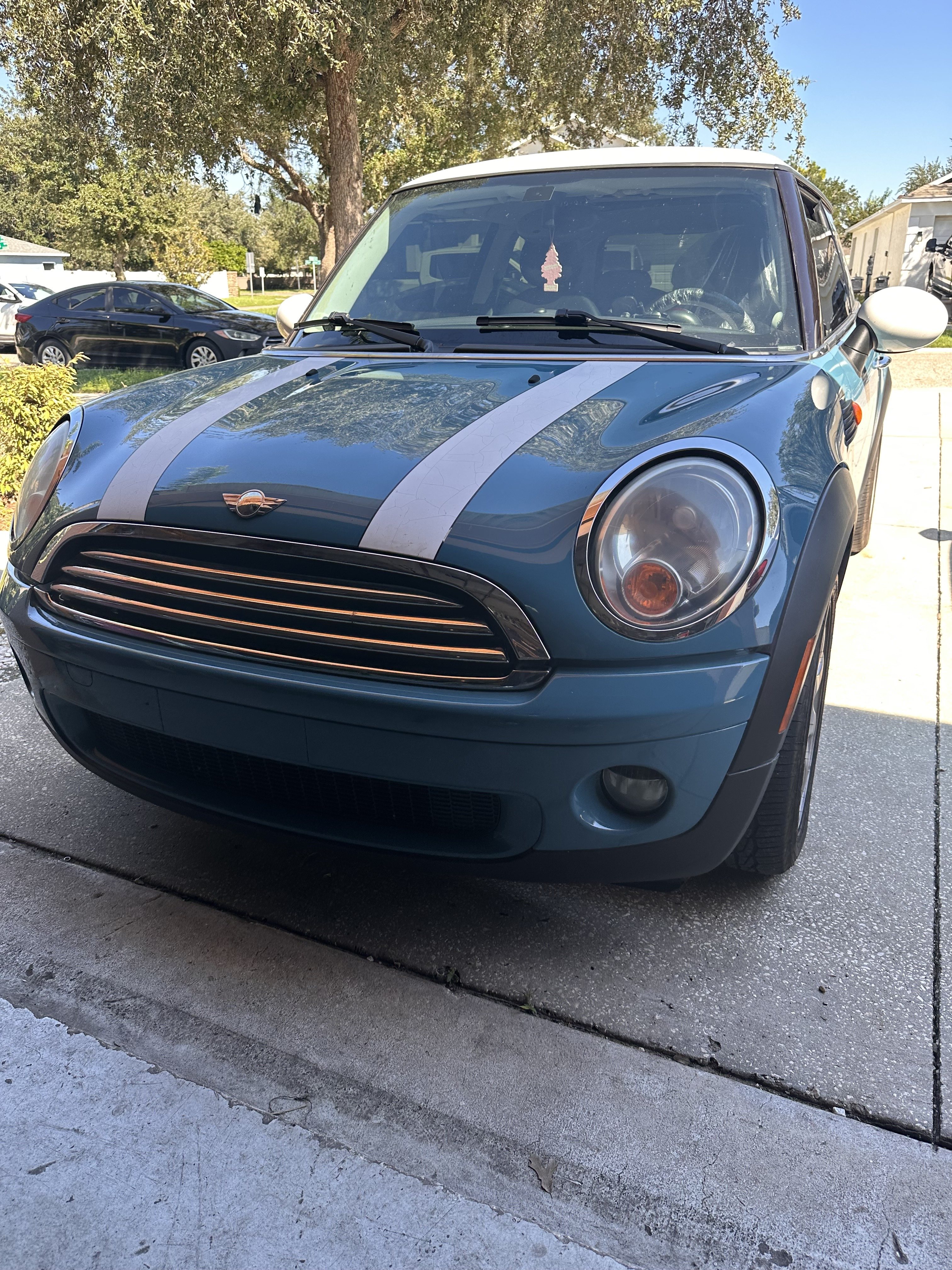
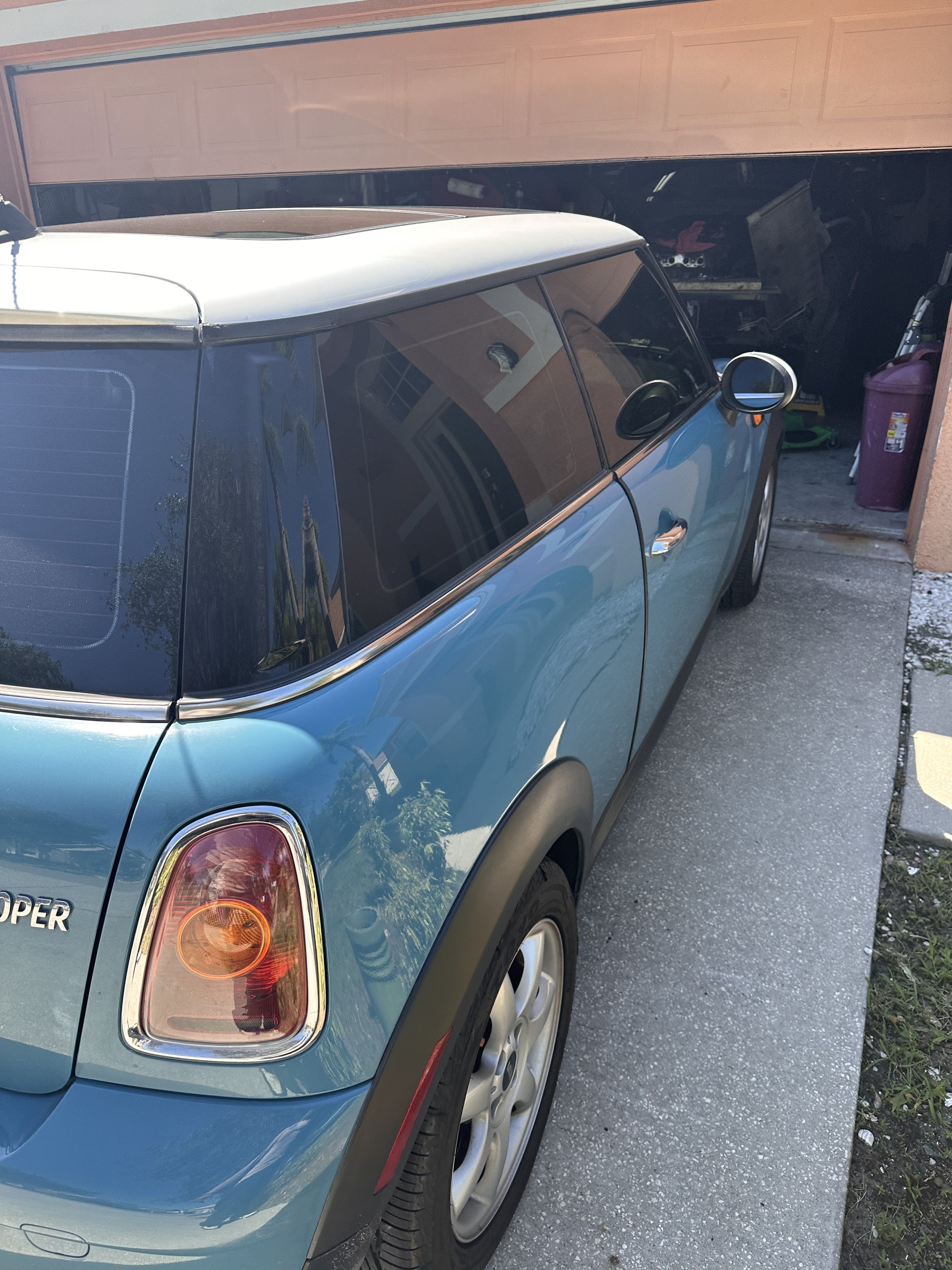
A 2010 MINI Cooper Clubman (R55), with 78,241 miles, arrived for a pre-trip inspection before a planned drive from the Tampa area to Texas. The vehicle presented reasonably well for its age: brakes looked recently serviced, tires appeared relatively new, the air filter looked clean, the serpentine belt appeared serviceable, and the full-system static diagnostic report listed 16 systems as OK. However, the inspection also uncovered several concerns the scan could not detect: a battery tester verdict of BAD-REPLACE, engine oil substantially below the dipstick's minimum range, coolant below MIN as initially observed, steering instability over bumps, and an A/C-load-related rattle. This was a condition assessment, not a clearance or guarantee for interstate travel.
- Vehicle
- 2010 MINI Clubman (R55, 1.6L non-turbo)
- Difficulty
- ★★☆☆☆
- Repair Time
- One inspection appointment
- Outcome
- Pre-trip inspection documented a weak battery, very low engine oil, suspected front suspension wear, and an A/C-load-related rattle; vehicle was not cleared for travel pending additional checks
Vehicle Information
| Year | 2010 |
|---|---|
| Model | Clubman |
| Chassis | R55 |
| Engine | 1.6L non-turbo |
| Transmission | Not documented |
| Mileage | 78241 |
Repair Timeline
- October 12, 2026 Complaint Customer requested a pre-trip inspection before a long drive from the Tampa area to Texas.
- Initial inspection Diagnosis Engine oil and coolant levels found low; engine showed startup whine. Visual checks identified a minor oil-pan seep, suspected seepage near the front crankshaft pulley, and a deteriorating inner CV boot without observed grease leakage.
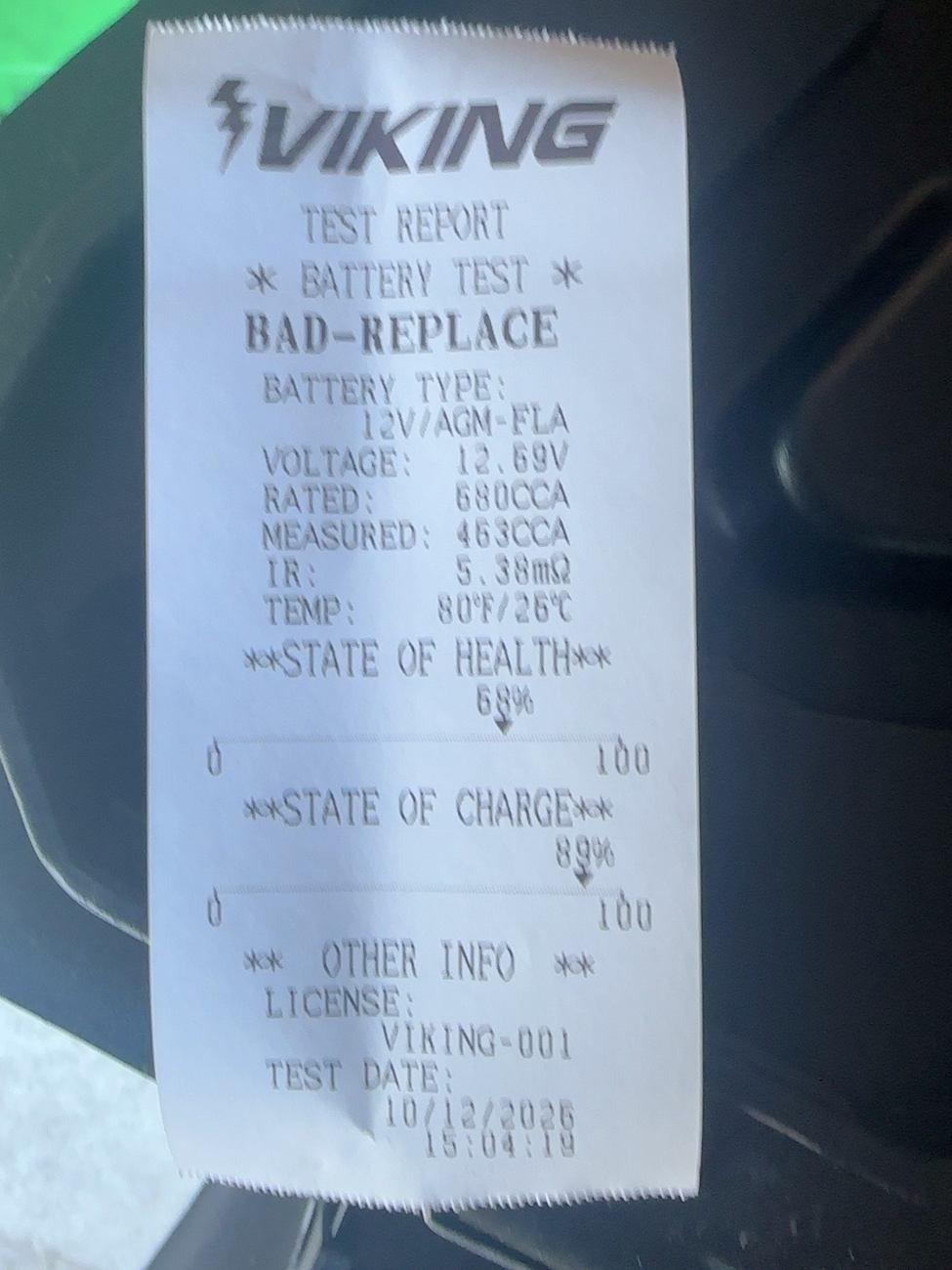
- Diagnostic testing Diagnosis All 16 listed electronic systems reported OK in a static Launch health scan. Battery tester reported BAD-REPLACE at 468 measured CCA against a 690 CCA tester setting (label rating 680 CCA), with 68 percent state of health.
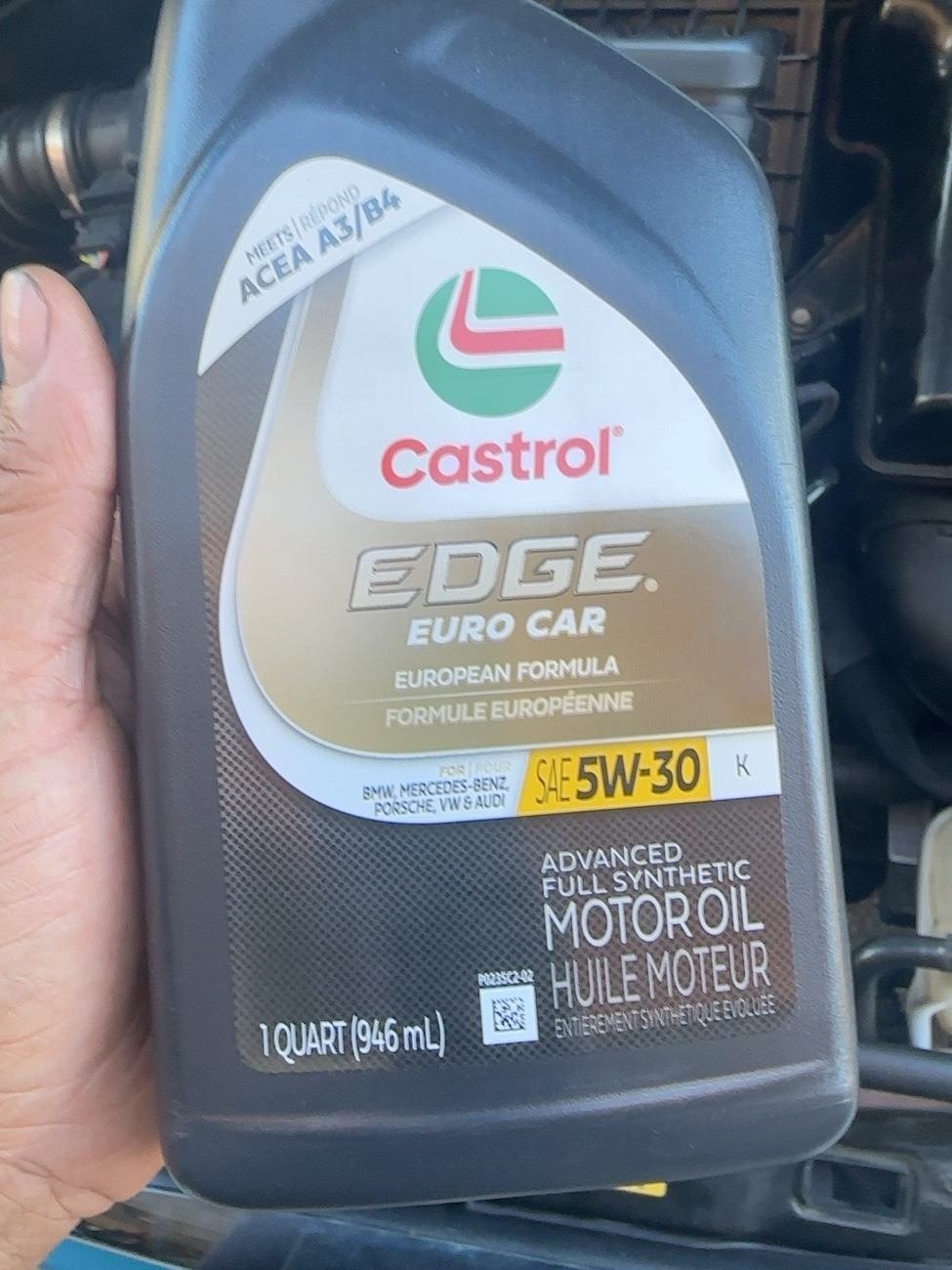
- Service during inspection Repair Added 1 1/8 US quarts of Castrol EDGE Euro 5W-30 engine oil; final reported dipstick reading was approximately one quarter of the way from MIN to MAX.
- Road test Diagnosis Braking performance was satisfactory, but the steering wheel moved excessively over bumps and a rhythmic rattle occurred on takeoff with the air conditioning operating.
Customer Complaint
The customer wanted a professional inspection before another driver took the car on a long-distance highway trip. The request covered tires, braking, steering and suspension, fluid levels and leaks, cooling system, lights, wipers, fault scanning, and a local road test.
Symptoms
- Engine oil was below the dipstick minimum before topping off.
- Startup whining noise was observed; technician reported it became approximately 85% quieter after engine oil was added.
- Coolant was observed below MIN while the engine was hot; final cold-level verification was not documented.
- Steering wheel moved excessively over bumps on road test.
- A repetitive rattle was heard on takeoff when the A/C was operating and was absent when A/C was switched off.
- Battery conductance test indicated replacement despite acceptable resting voltage.
Diagnostic Process
Visual fluid and leak inspection. The valve-cover perimeter, vacuum pump, thermostat housing, radiator/heater hoses, upper fuel line, brake calipers and visible brake lines appeared dry during inspection. No visible water-pump leakage was observed, including behind the pump. A minor seep was noted along the oil pan, and the technician suspected oil residue near the front crankshaft seal/accessory-drive area; the exact source was not proven. The cooling system was not pressure-tested by design.
Engine oil correction. The technician added 1 1/8 US quarts of Castrol EDGE Euro 5W-30. The final reported level reached about 25% of the distance between the dipstick's MIN and MAX marks, not MAX. This established a significant initial oil deficit but did not establish an oil-consumption rate or leak rate.
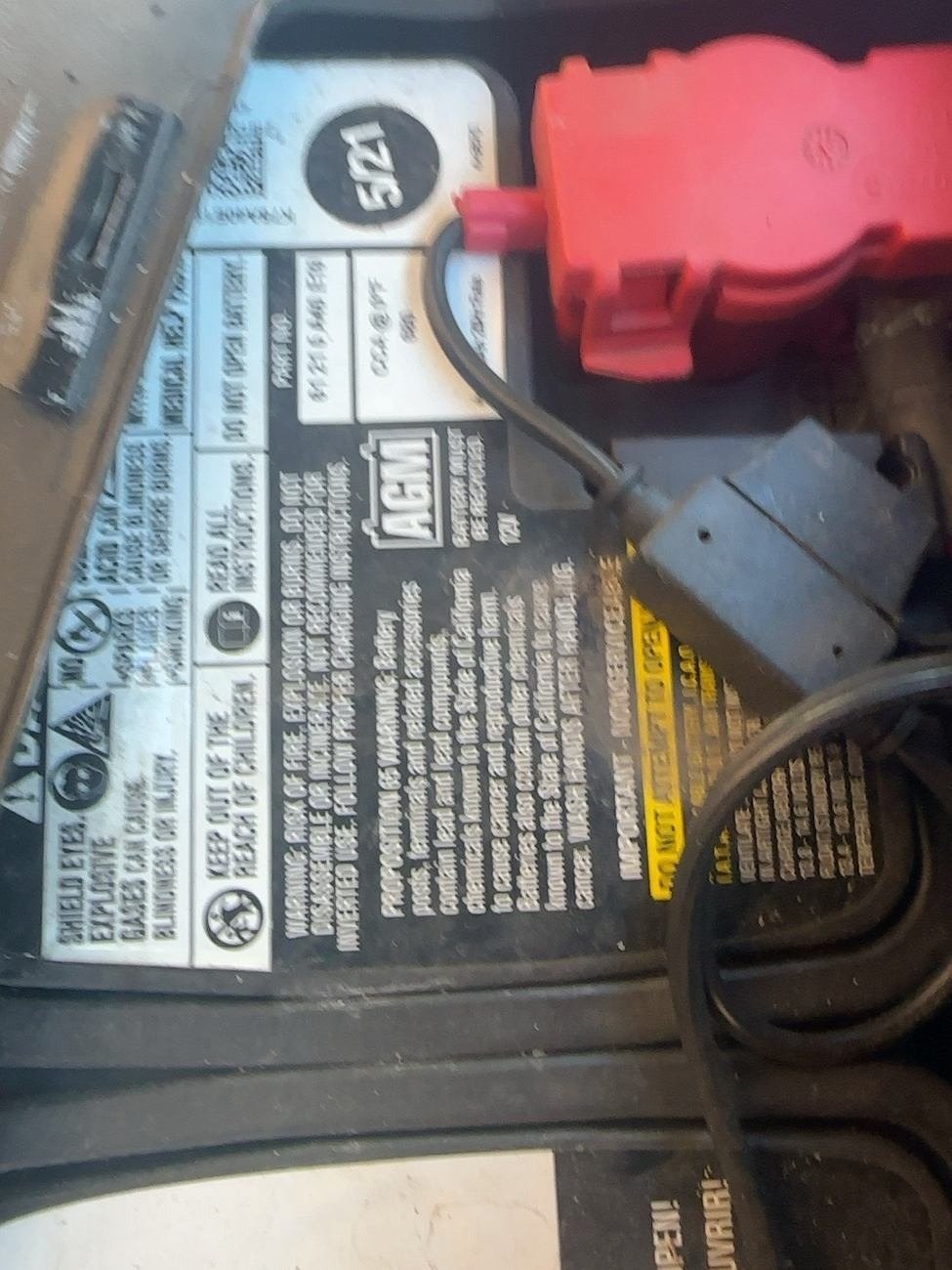
Battery test. A conductance tester returned BAD-REPLACE with 12.69 V, 468 measured CCA against a 690 CCA tester setting, 5.38 mΩ internal resistance, 68% estimated state of health and 89% state of charge. The BMW Group AGM battery's label carries a 5/21 date marking. The label rates the battery at 680 CCA, slightly below the 690 CCA entered on the tester; 468 CCA falls well short of either. Voltage alone did not show its reduced measured cranking ability.
Electronic diagnostic scan. Launch all-system scan at 78,241 miles reported 16 control systems OK, including engine DME, DSC/ABS, steering, airbag, instrument cluster and A/C. It was a static scan performed during the visit, not proof that mechanical systems were fault-free. The scan predates a warning light that was reported afterwards; which warning it was has not been identified.
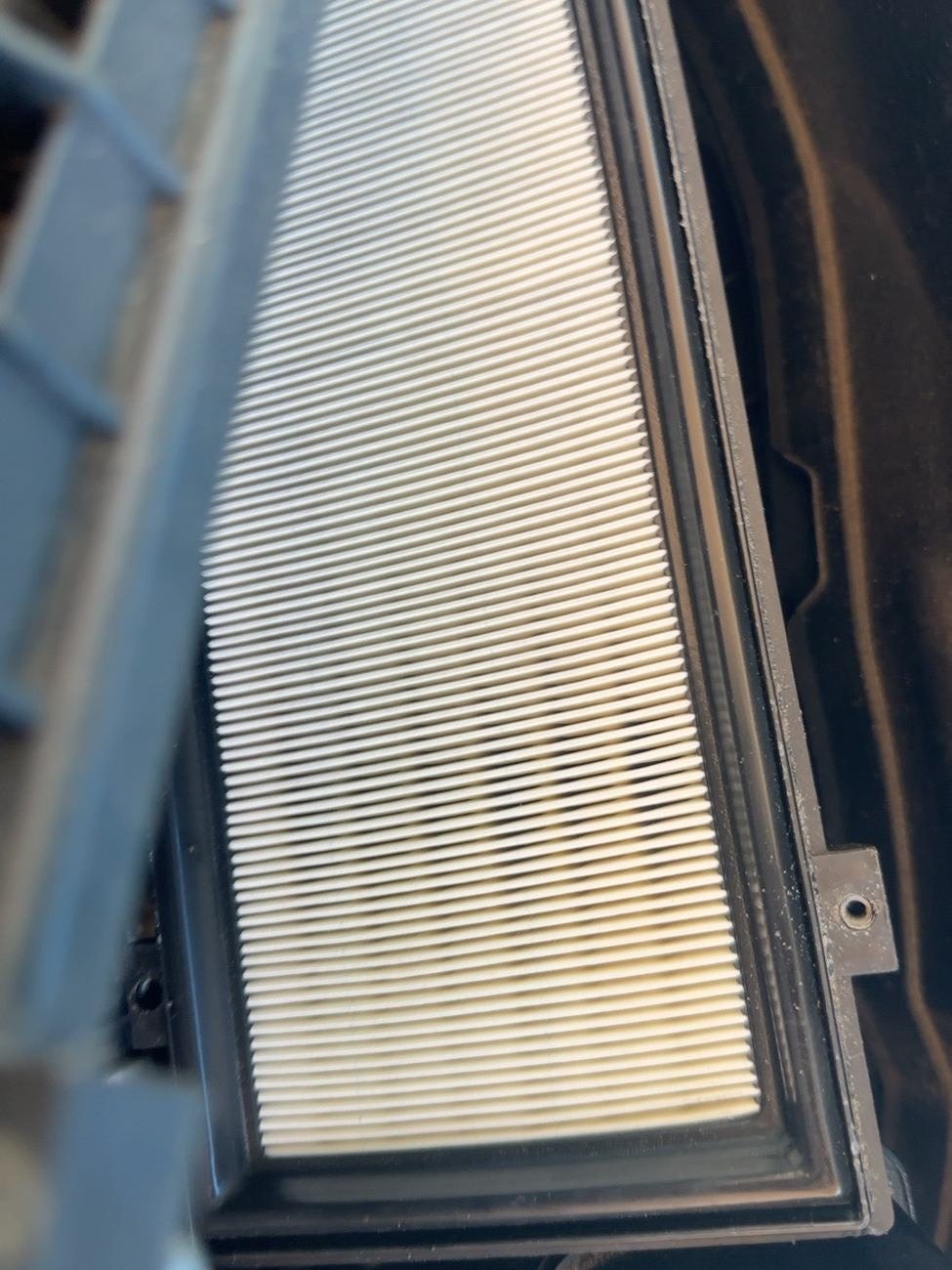
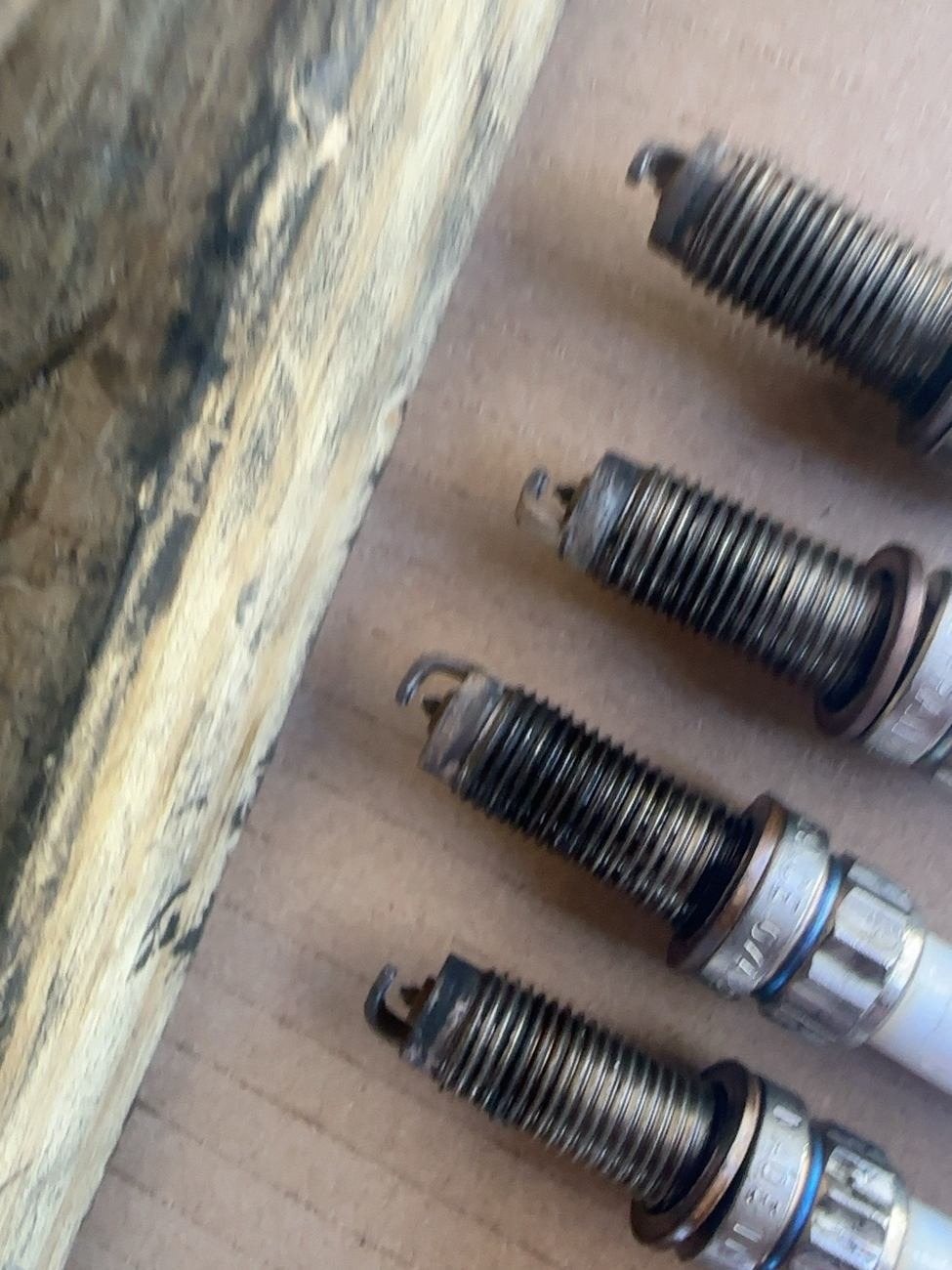
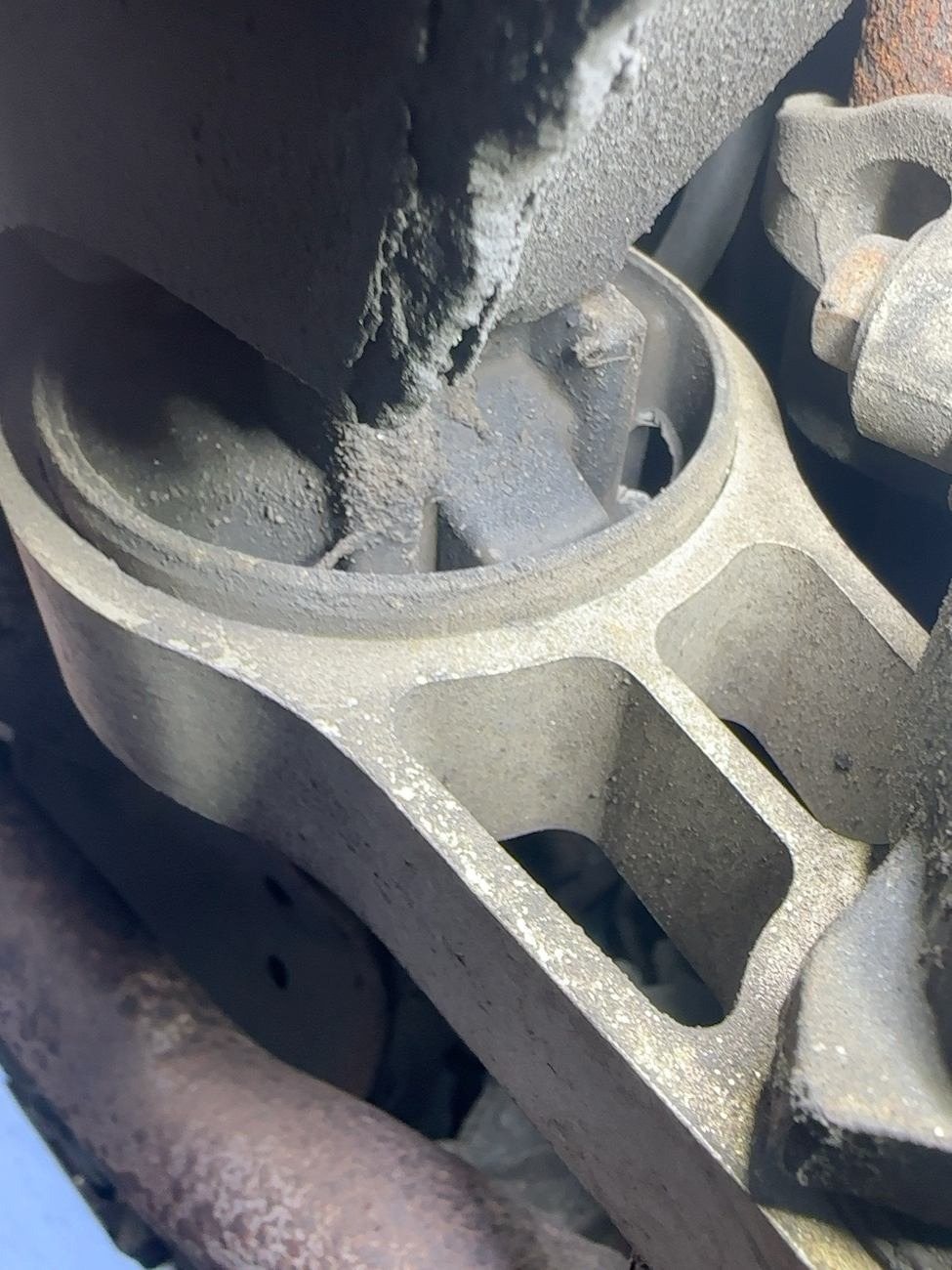
Ignition, intake and belt inspection. The air filter looked nearly new. Four ignition coils and plugs were removed and visually inspected; no clearly damaged housings or severe plug fouling were evident from the observed views, although actual gaps and electrical performance were not measured. The serpentine belt looked good. The lower engine torque mount appeared intact on visual inspection.
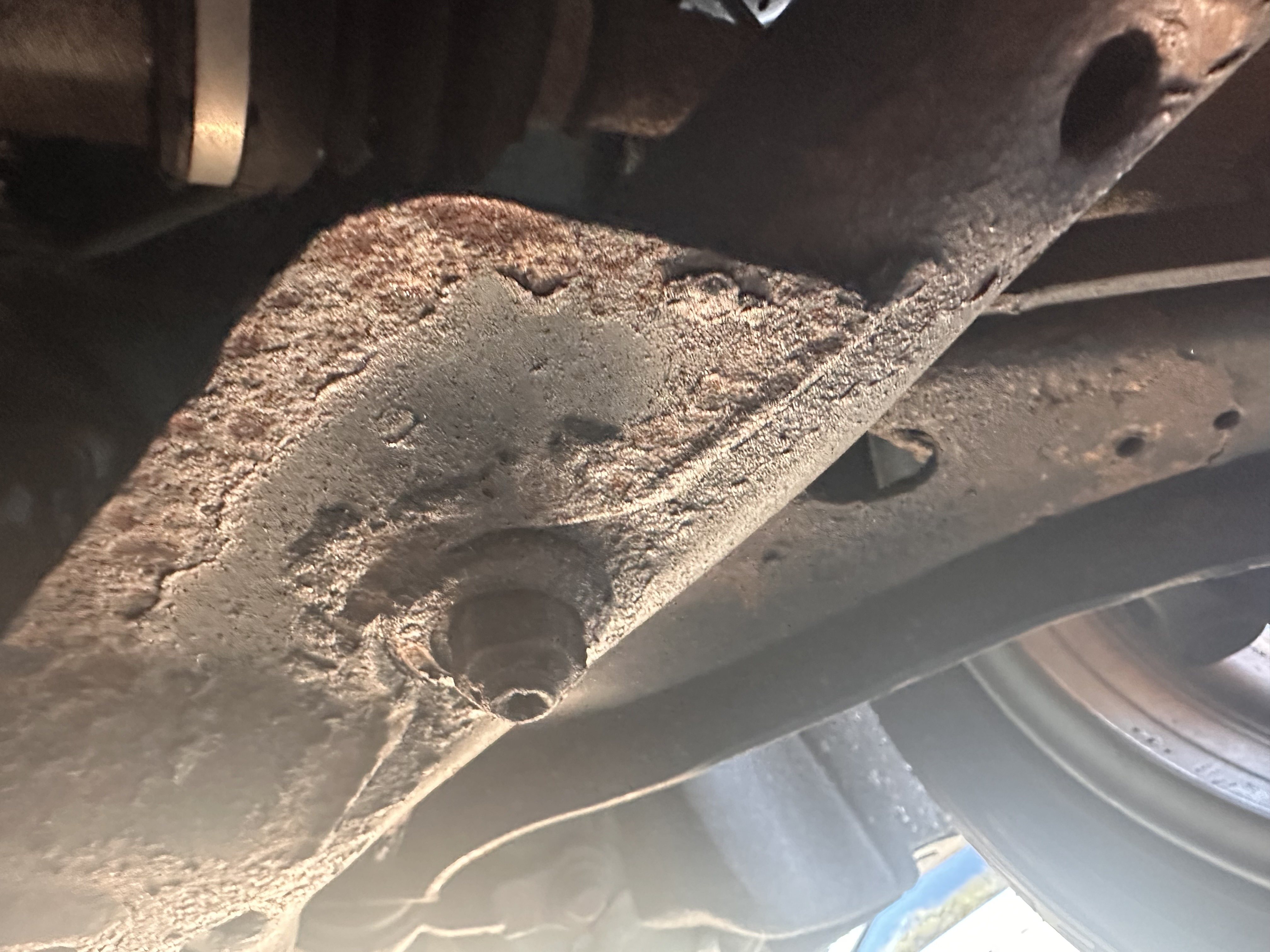
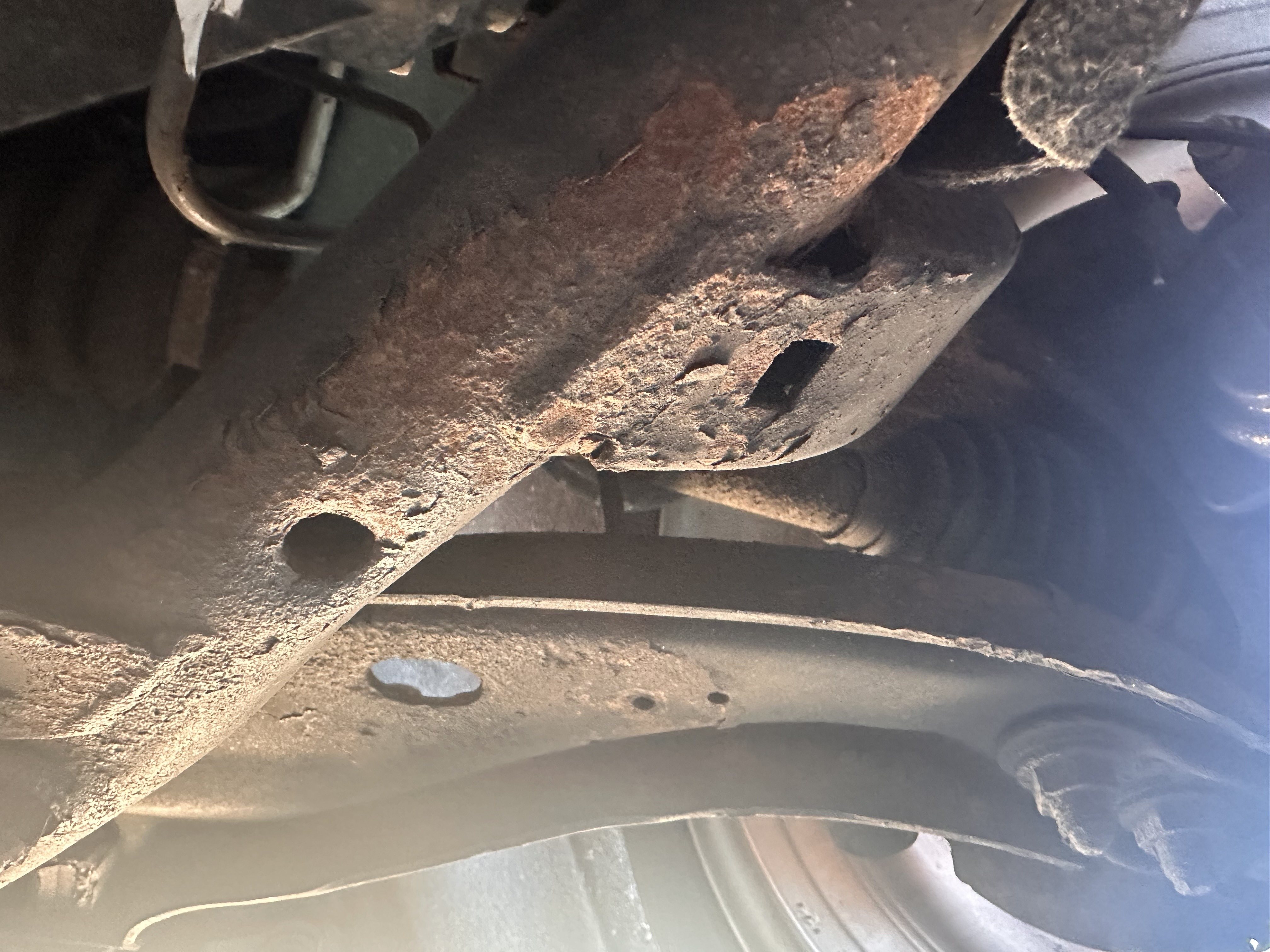
Undercarriage and brakes. Front pads and rear pads/rotors appeared recently renewed. Brake hoses and exposed lines showed no visible leakage; rear shocks looked dry. There was surface corrosion on the front and rear subframes, a steering knuckle, and the axle and exhaust areas. The structural attachment points and brake-line supports should be inspected for deeper corrosion. A front inner CV boot showed age-related deterioration but no observed grease leakage. The spare tire was present and appeared serviceable; tires generally appeared relatively new, but tread depths, DOT dates and pressures were not recorded.
Road test. Brake performance felt satisfactory. Significant steering-wheel reaction to bumps raised suspicion of front lower control arm bushings or another steering/suspension issue; no specific failed component was confirmed. A rhythmic rattle during acceleration with the A/C active went away with A/C turned off. That observation alone does not prove a failed compressor.
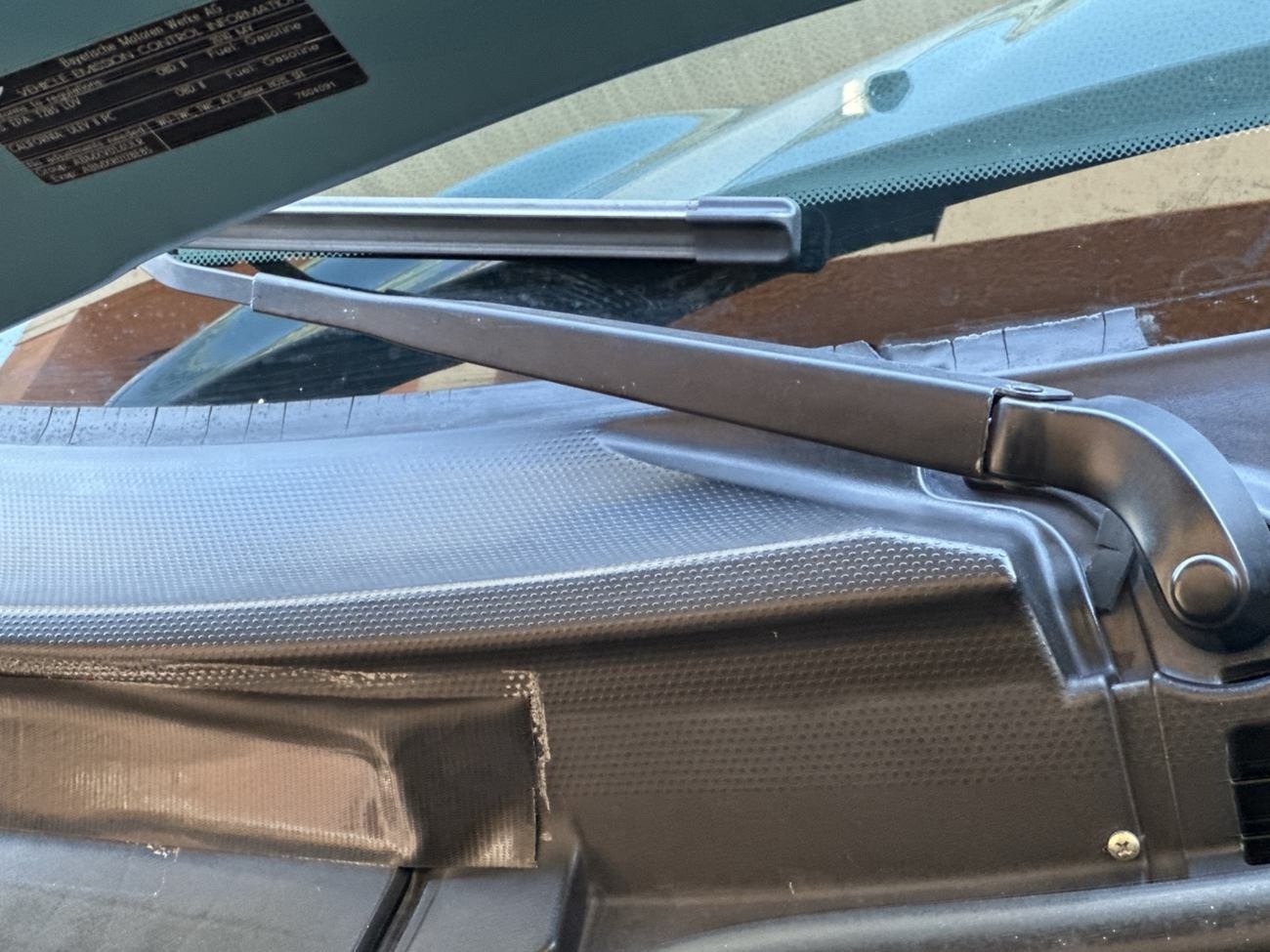
Body and accessories. The windshield cowl cover at the base of the glass was cracked and missing material. Replacement was recommended as maintenance, together with checking cowl security, drainage and wiper operation. No functional confirmation of every lamp, horn, wiper, cooling fan or A/C output was recorded.
Repair Performed
- Added 1 1/8 US quarts of Castrol EDGE Euro 5W-30 engine oil as a top-off during inspection.
- Completed visual checks and road test described above.
- No battery, steering, CV boot, crankshaft seal, A/C or cowl repair was documented as completed.
- Spare key-fob programming was discussed as a separate, optional job. No key work was performed during this visit.
Parts Used
- Engine Oil Top-off (1 1/8 US quarts)
Verification
- Engine oil level was improved to approximately one quarter of the way between MIN and MAX after topping off.
- Technician observed roughly 85% reduction in the startup whine, not a verified repair of its root cause.
- Brake response during local test drive was good.
- Full system static scan reported no faults in the 16 listed modules at the time of testing.
- No final cold coolant-level reading, measured hot oil pressure, battery retest, suspension repair or repeat road test after repairs was documented.
- Cooling-fan cycling, charging voltage, brake-fluid moisture, lights, horn, wipers and tire tread depths were not documented as checked, and should not be read as passed.
Technician Notes
The vehicle's cosmetic condition and several recently serviced wear items were positives, but the diagnostic scanner did not predict the important physical findings. The battery's resting voltage looked healthy yet the tester recommended replacement. The oil level needed a substantial top-off, with the reason for the loss unknown. The technician planned to show the driver how to check the engine oil dipstick and the coolant reservoir's MIN/MAX marks, including the instruction to check coolant only when cold.
The owner should not be told the front control arms or A/C compressor are confirmed defective. The steering concern requires proper inspection of control arm bushings, tie rods, ball joints, mounts, wheel bearings and alignment as appropriate. The A/C rattle requires distinguishing compressor load from tensioner, crankshaft pulley, mounting and adjacent hardware. A red oil-pressure warning, if that is what illuminated, would require an immediate stop and pressure verification before further engine operation.
Lessons Learned
- A clean electronic scan does not replace hands-on inspection and a road test.
- State of charge and state of health are different; test the battery before a long trip.
- Low engine oil plus a changed startup noise is an important observation, but improvement after a top-off is not proof of a timing-chain or oil-pressure diagnosis.
- Document observations separately from suspected failed parts.
- Do not promise a vehicle is ready for interstate travel while steering instability and important fluid/warning-light questions remain unresolved.
- Teaching a customer how to check engine oil and cold coolant levels is a valuable part of a pre-trip visit.
Final Outcome
The customer received a detailed pre-trip condition assessment documenting several positive maintenance observations and specific follow-up concerns. Battery replacement was recommended, along with correction and monitoring of fluid levels and further diagnosis of the steering instability before a Texas trip. The A/C rattle, startup whine, possible front crankshaft seal seepage and deteriorating windshield cowl were also documented. No subsequent repairs or travel clearance were established in the available record.
Questions About This Repair
Does a clean MINI diagnostic scan mean the vehicle is ready for a long trip?
No. In this case all 16 listed electronic systems reported OK, but hands-on inspection still found a failing battery test, low engine oil, and steering instability over bumps.
Why recommend replacing a battery that shows 12.69 volts?
Voltage indicates charge, not full starting capability. The conductance tester reported BAD-REPLACE, 468 measured CCA and 68 percent estimated health. The tester was set to 690 CCA while the battery label reads 680 CCA; 468 is well below either figure, so the small setup difference does not change the verdict.
Did adding oil repair the startup noise?
The technician reported the whine became about 85 percent quieter after adding oil. The cause was not confirmed; an oil-pressure warning, if present, must be investigated before the engine is run again.
Was the air-conditioning compressor proven defective?
No. A rhythmic rattle was heard during takeoff with A/C operating but not with A/C off. Compressor load, belt tensioner, crankshaft pulley, mounts, and nearby brackets remained possible sources.
Repairs Like This One
- 15 documented Electrical repairs. See them all →
- 13 documented Diagnosis repairs. See them all →
- 7 documented Cooling repairs. See them all →
- 5 documented Maintenance repairs. See them all →